

 RSS Feed

 Apple Podcasts

 Spotify

 YouTube
#224 - He Sold His Startup to Accenture. Now He's Building AI to Disrupt Consulting | Tim Lidman, Clyde AI
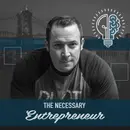
Tim Lidman, co-founder and CEO of Clyde AI, joins Mark Perkins on The Necessary Entrepreneur to explain why this is the most disruptive moment entrepreneurs will ever live through, and what to do about it. Tim opens with a confession: he caught himself delegating original thought to AI, and it scared him. "The second I delegate creative critical thought to AI, I truly have delegated my value to technology." From there, he and Mark dig into what AI actually changes for founders, consultants, and small business owners, and what it should never touch.
Tim has spent 20 years inside high-stakes decisions. He co-founded ThinkTank, the collaboration platform Accenture acquired in 2021, and now leads Clyde AI, an AI-native platform that helps consultants and business owners frame problems, pressure-test decisions, and turn AI from a shiny toy into an actionable plan. He breaks down why consultants are the profession most ripe for disruption, why AI adoption is about to overcorrect, whether the 9-to-5 job survives the decade, and how the efficiency gains from AI should be reinvested in people instead of just extracted as profit.
If you run a business and your head is spinning from ChatGPT, Claude, Grok, and a new AI tool launching every week, this episode gives you a starting point: stop evaluating tools and ask a better question. Tim closes with exactly how a business owner can use Clyde to figure out what to use AI for in the first place.
Key Takeaways:
• Never delegate original thought to AI. That is delegating your value. AI structures problems; you do the thinking.
• The most disruptive moment of our lifetimes, bigger than the internet, and it will play out over decades, not years.
• AI adoption will overcorrect, then swing back to human judgment.
• AI wins when it pairs with humans: machines synthesize, people decide. Adoption means meeting users where they are.
• ThinkTank's edge: product people are trained to say no, consultants are trained to always say yes. His team built in the overlap.
• Consultants build for everyone but themselves. That gap is why Clyde exists.
• The 9-to-5 may not survive. The question is whether AI's efficiency gains get reinvested in people or just extracted as profit.
• Stop comparing AI tools. Ask Clyde what to use AI for and get a plan you can actually implement.
Listen to The Necessary Entrepreneur with Mark Perkins for practical conversations about entrepreneurship, business growth, leadership, mindset, and the decisions that shape successful careers.
📌 Connect With Us:
Website: https://www.thenecessaryentrepreneur.com/
YouTube: https://www.youtube.com/@thenecessaryentrepreneur
Instagram: https://www.instagram.com/thenecessaryentrepreneur/
Facebook: https://www.facebook.com/TheNecessaryEntrepreneurPod
X (Formerly Twitter): https://twitter.com/MPerkinsTNE
LinkedIn: https://www.linkedin.com/company/tnepod/
TikTok: https://www.tiktok.com/@tneclips
Spotify: https://open.spotify.com/show/6xhGUE1yzy2N0AemUOlJPx?si=d1c5c316af404f15
Apple Podcasts: https://podcasts.apple.com/no/podcast/the-necessary-entrepreneur/id1547181167
📌 Find Out More About Tim Lidman & Clyde AI:
https://www.linkedin.com/in/timlidman/
https://meetclyde.com/
0:00 I caught myself using AI so much that I was starting to delegate certain aspects of original thought to AI. It absolutely scared the crap out of me. The second I delegate creative critical thought to AI, then I truly have delegated my value to technology. All right, you all welcome back to another episode.
0:40 Sometimes the intros are fun. Sometimes we wait and they're boring. This is going to be fun because how often do we get to have a really cool person who was Swedish, but now he's American and everything in between? So today's guest is Tim Lidman, co-founder and CEO of Clyde AI. Another name. It's like a human has become an AI. Old Clyde is our friend. So Tim has spent more than two decades in technology, including at WebEx, Cisco, and SAP before co-founding ThinkTank. Which was acquired by Accenture in 2021. He then spent four years at Accenture as a partner before deciding to build again Entrepreneur at Heart. ~ today he's building Clyde, an AI native platform focused on how people and AI work together to solve complex problems.
1:22 But what's interesting about Tim's story isn't just the exit or the AI. It's what he's learned about how companies make decisions, how teams work, and what gets in the way of execution. So today we're going to get into building and selling a company, what he learned at Accenture, and why he charged chose to start all over. So perfect guess for the necessary entrepreneur. Welcome, Tim. Thank you so much for having me. Yeah, man, this is gonna be great. So why do this all over again? In a crazy new world of AI, why do this all over again when you have, when you sell, you stay somewhere for four years, you have a great life and the kids and you get to travel the world and your citizens in multiple countries. Why do this again?
2:02 Wow, there there's there's levels to that answer. I think the the most ethereal answer is I have to. ~ but that's but that's like that doesn't explain too much. I think the the why do it again is, you know, there are moments in time in terms of levels of transformation and disruption that happened in the world, right? And if you think about, you know, the industrial revolution, right? Let's let's look at that, right? What what happened there? It changed people's work forever. Right? Like we automated things to the point where jobs that we didn't know exist became real. Jobs we never thought would be replaced got automated, you know, with with the you know, the whole o automated ~ what do you call it?
2:48 Assem assembly lines. Assembly lines. Like all that, right? And then and then like and then 150 years passed, right? And we had the advent of corporations and, you know, true scale and capitalism and you know the whole world kind of exploded. Then internet comes and it happens again, right? Now the problem is for for me being able to really sit in that moment, you know, I was about 12 years old, and so it became it became hard unless I was like some kind of crazy genius which I'm not to take advantage of that moment, right? And so now I've had the chance to read and study what really happened during the dot com boom and internet era and all of that.
3:30 And it was kind of like the industrial revolution times a hundred, right? So everything was faster. We had to find new jobs again. all these big industries exploded that had never existed, including consulting by the way, becoming like this trillion dollar behemoth of an industry off the back of IT transformation and everything. And now if you look at with AI and what's happening is it's a hundred times faster than the internet revolution. Right? And now what I find myself if I look at where I am at this moment in time, now I'm, you know, thirty eight years old. I've been in big tech, small tech, I've run companies, I've been a partner in a large consulting firm.
4:11 And this happens to be one of the most disruptive moments that I will live through, certainly until until it's time for me to pave the way for younger people. ~ so to me this is just the moment. It has to happen. And and if the stars don't align around this moment, they won't in my lifetime. So so that's like a I have to based on personally just being able to be part of this moment. ~ I think if you look at what we're building in Clyde, I also think it's a moment where technology has reached a level and is advanced enough for the first time ever. that true disruption can happen in spaces that have been very protected for a long time. So take consulting, right? Trillion dollar plus industry, they've been doing business the same way for about 150 years, right? You show up with smart people, time and materials, you do your thing, and you leave. And because of the intellectual intensity involved in that, it's been pretty untouchable from true tech disruption.
5:18 Kind of until now. So I think in the industry I'm part of and and serving, there's also this moment in time where how many times do you get to see, you know, over a trillion dollars representing about, depending on who you ask, one to two percent of the world's economy like go through the disruption that we're gonna see with them. So it's all lining up to the point where the only answer is that I have to. ~ and honestly walking away from You know, Accenture partner role and the security that brings you and you know, you'd mentioned it, you know, being able to be pretty secure with a family and kids and travel the world and to kind of give all that up at this moment of uncertainty, you kinda have to have a good reason to.
6:02 So so yeah, there were a few answers there, but I wanted to give you a couple of lenses as to why. Yeah. When when you said the moment of uncertainty, what's that mean to you? I think moment of uncertainty to me right now is that there's been a playbook since the I don't know, since the early eighties, maybe seventies, around what it takes to kind of make it and to, you know, kind of be okay in the modern world, right? You get out of college, you get a job, you work hard, you know, you get to a place where eventually you can retire. And then depending on risk levels, you know, that can go very, very well or just kind of be slow and steady.
6:42 I think for the first time now, everything we know is either under threat or has an opportunity to massively change. So like I don't know that my kids are going to go to a standard university experience in the way that has been very secure for decades. I don't know that retirement funds will exist in the same way they've existed, right? Where you can depend on like a retirement income. ~ I don't know that nine to five jobs will exist in the way we've known and and thought about them, right? I don't know how the gig economy is going to or not replace, you know, your standard kind of W-2 career type jobs.
7:27 ~ I don't know how we're going to socially adapt with AI and social both at the same time, changing how we think in society. ~ all of that just compound all of that, and that's just uncertainty. And and I think that you can choose to be very scared in those moments, which I think to be honest, I am some days. ~ Or you can choose to be part of it and actually be part of the whole disruption. And so that's that's kind of what I mean by uncertainty. Do you think there's a time you brought up the Industrial Revolution, you know, the dot-com boom, whether that's the internet boom of the nineties, going into the two thousands? Looking at it retrospectively, since you were twelve, but you live through the the rise and the boom of the internet, which we call the internet, being able to connect the world with a computer at our fingertips, have websites, have search engines.
8:25 Do you think reflecting now, do we look back on the internet and how it evolved and how it changed the world? Do you believe that's how the leaders were talking that it would be? Or did it end up being different? No, so I I think what's what's kind of interesting with with the dot com boom and how the internet evolved is I think that they were talking about it in the way it ended up becoming. It's just the way we got there was dramatically different, right? Because the investors in the dot com boom, they they did not think there was going to be a major crash, right? And and basically an economic crisis off the back of all the growth.
9:07 And so they were investing in I think where we ended up only just a few years ago. And they actually thought it was going to happen significantly faster than it than it did. And and I think the reason for that is, and and I talk about this a lot, is that when you're going through global change, disruption, and transformation, there's one thing a lot of people forget. They tend to forget that you have to meet people kind of where they're at. Right. And that just because technology can do something doesn't mean that everyone's instantly ready to embrace and adopt that. Right. And so I think when the internet, you know, sort of came into existence, I think venture capitalists, I think entrepreneurs just kind of looked at this my God, there's this new thing.
9:56 Let's take every industry imaginable and every process and like just internet it. Right. Like just put it on the internet. ~ And so that's what they started doing. And some processes and some industries were ready for that, but other ones still haven't fully adopted even the digital era, right? Just because again, people will change based on if you meet them where they're at and show them the path to kind of get there. And I think with AI, we're in it we're in the same spot, right? Because ChatGPT came along. And then everyone, you know, all the investors just went insane and just thought, okay, this is another one of these moments.
10:41 We've got to flood this with capital. ~ and then they everyone just launched all of these very ambitious AI pilots, AI initiatives. ~ and what's kind of interesting is that report that came out almost two years ago now, ~ you know, showed from MIT that ninety-five percent of all these pilots just failed because people didn't build for where we are and show a roadmap for how we can get to all this crazy cool stuff. ~ and so I think what's going to happen now is there's going to be this, for my theory at least, is that there's going to be this kind of overcorrection of okay, we tried to automate everything with AI.
11:26 Now we've run into all these issues, whether that's security, governance, sustainability, adoption, ROI And I think people are gonna overcorrect and start looking at, okay, what what are the baby steps we can take to at least sort of get everyone enabled on AI? And I think there's opportunity then for entrepreneurs to take advantage of the swing that'll sort of start happening from a pendulum standpoint on AI versus kind of no AI. Is that how you've built Quad with this framework in mind?
12:06 And then where do you see it fitting in? Yeah, so when we built when we built Clyde, ~ the f the first thing we did is, you know, we we actually wrote down this list of what is AI really good at and what are humans really good at. Right. And the reason that was important is, you know, our first sort of prototype or stab at building Clyde, and you know, Clyde is meant to really help ~ you know, consultants sell solution and deliver in in a significantly faster, better, cheaper way. We tried to automate kind of everything. Right. So we literally just looked at the workflow of consulting and thought, how do we automate as much as possible?
12:51 And then what we realized was, back to the humans are good at, AI are is good at, conversation, is that there are still a lot of things that humans are much better than AI at. ~ So for example, human beings can invent new information, right? We can actually create. AI cannot. AI is based on pattern recognition and unless it's been thought of before, a AI cannot sort of dream it. Whereas as humans, we can take philosophical concepts and we can actually turn that into new data and new information and new ideas. And so when we built Clyde, we realized, well, if human beings are still really good at that, Then we need our product to use AI to facilitate human beings doing that and continuing to do that.
13:45 ~ another thing we found was decision making, right? So AI is, you know, historically actually profoundly bad at layered decision making because there's still a human judgment that comes into play of really being able to look at A number of aspects and actually make a decision that will stick and that has sound judgment. ~ So that's another thing that we decided, okay, let's build in our product the right way to help human beings make the best decisions that they can make. ~ Then on the flip side of AI, we looked at what is AI really good at?
14:26 Well, AI is really good at synthesizing very large data sets, right? AI is very good at taking an extremely large piece of of knowledge, since it knows everything since the history of the world. And it can do that significantly faster than any human can. And so then we thought, okay, well let's make sure that the product is really helping to accelerate in those aspects. And so to your question on did did Clyde w did we think about that as terms of meeting people where they're at, was that in our th in our head as we built Clyde, it was fundamentally a part of it because the only reason you're gonna get broad adoption of a product is if you've met people just a little bit ahead of where they are as opposed to like fifty years of ahead of where they are, if that makes sense.
15:22 Through your business planning and building it, this is what's very interesting on having a business and being an entrepreneur that's not in AI, but AI being developed around it and how can we utilize it to scale, to improve, to make better decisions? But then you actually having a business in AI, how does the speed operating and running a company that's in the business that's changing the world, how does that speed feel to you? The evolution, the change? all of the ~ conversation around it. What's that feel like? I know how it feels like to be here. What's it feel like to be there where you are in it? No, it is it is it is rapid to say the least. So when I was running think tank, the the company we sold to Accenture in twenty twenty one, that was pre you know Gen AI.
16:09 And it took us on the build side, it took us about eighteen months and two million dollars to build what ultimately got bought by by Accenture. ~ for Clyde, we built a a similarly complex product for 250 K in three months. Right? Just to give you an idea of just the sheer scale of how different it is. And what that does is obviously it's great from an efficiency standpoint, but the level of change that my team has had to go through and has to go through, like on a weekly basis, is is incredible because the the workflows that we use this like this week are night and day from what we used like just three months ago.
17:00 Right? So what we're having to do is we're having to constantly evolve our way of working to the point where it's not even change management anymore. It's just our people wake up every day knowing I'm probably going to have to work differently today than I did yesterday. And if we don't adapt to the latest, you know methodology of how to build software fast, then you're just gonna be left behind like very, very, very quickly. So Outpaced. Abs Yeah, absolutely. So constant constant adaptation. And, you know, I've said many times to the team in the office, I'll just I'll tell them like there will never be a moment where you can just kinda go, Okay, so we're in we're in business as usual now.
17:48 Like that's gone. Like there's no more business as usual as far as we're concerned. For the foreseeable future. When you were building think tank, you talked about it again, two million bucks, 18 months. What do you think made that highly valuable valuable to an Accenture ~ that other people hadn't built or didn't build? And and I asked that from the question of is that how you also need to frame the thing you're building now? Because there's so many different tools that are being built. So what made that unique and different? Was the people? Was it an idea? Was it just a small little silver lining in the tech? What was it then? And then how does that frame what you're doing now?
18:30 Yeah, that's a great question. So, you know, one thing that was unique about about Think Tank is that we we built a software product that was meant to help professional services, so help consultants, right? So instead of showing up with, you know, PowerPoint, Excel, whiteboards, different tools to a client, we had this purpose built collaboration tool that had everything that a consultant needed to show up for their client in the in the best way kind of possible. And the reason that was unique is there's a pretty widely accepted sort of thing, which is that product and services people are like oil and vinegar, right? And that like product people are really good at building and scaling productizing. ~ And their job is to kind of say no a thousand times and say yes one time, right? To make sure that your product is built in a user-friendly way.
19:34 Consultants are taught the opposite, right? We need to say yes a thousand times and no zero times, right? Because our goal is to serve the client and to always be there for our client. And so one thing our team had and still has is we had if you take the Venn diagram of product knowledge and expertise and services expertise. We fit in that little Venn diagram in a way that very few startups and entrepreneurs ~ or big companies for that matter ~ in in a way that they just don't. And so the edge that that gave us was knowing how to build the right user experience for people that are so focused on their clients that they they historically haven't really done a good job building for themselves.
20:29 And so second part of your question, how does that go into Clyde now and how we're building Clyde? Well, you know, I spent four years operating as a partner at Accenture and seeing how all that sausage is made in an even deeper way than than with think tank, to the point where I really got to see what what it was that made consultants really great. But then what it was where they are just ready for a lot of disruption. And we know that now almost empirically, like where it is that we need to really help consultants and where we need to basically replace a lot of the manual kind of heavy lifting tasks they do. ~ so we kind of have the same advantage with Clyde that we did with Think Tank is the in that we know how to build a high highly usable valuable product, but we also know how to serve consultants, which are just historically a very, very hard group of people to serve with technology.
21:35 If you look at what so you know that saying I I don't know what so there's a bunch of Swedish sayings. I don't know what the Americans one American ones are, but there's like the, you know, the shoemaker kids have bad shoes, ~ the ~ you know the the roof The roof maker has like a leaky roof. I'm not sure what the American one would be, but there's like all these sayings that, you know, the the the guys that are You basically are taking care of yourself last. Right. And and what cons and what consulting firms do is, you know, they advise on the most high tech pressing business problems in the world, right? And they help their clients solve all these really complicated problems.
22:18 But the problem is that they they spend all their time either selling or delivering to those people to the point where they never really have time to disrupt themselves. and to innovate within their own sort of house. ~ and it's the c it's the it's not limited to consulting. It's you I think they call it the the innovator's dilemma or what whatever the term is for that, right? Which is that, you know, I if you think about consulting, you know, these companies are running billion dollar PLs that are only just profitable. And so they don't have the luxury at all to go look inward and truly disrupt themselves.
23:00 Whereas what they can do is partner with like a company like mine who understand their world, we understand exactly how they operate, but we have the agility, we have the ability to very quickly go and help them disrupt while they kind of keep their huge tankers kind of moving and sl slowly turning while we're just zipping around and helping them in all these different ways that they just they just can't do because of their scale. Do you think like so here's the big question for AI that everyone's scared about? It's this scarcity mindset thinking selfishly about themselves or their company and not kind of foretelling what the future's gonna hold.
23:41 But is there a place where there's not a consulting job where there's a company like yours, a platform like yours that the business owner can interact with? And that advice, those decisions are made at an elite level, maybe even better than our human consulting brains. Like that's the thing. Can can we foresee that is that gonna happen? Could it happen? One thing I kind of talk about with that regard like many times is that ~ until they automate until they can automate actual CEOs and leaders, you're still going to need people that help you drive change, right? Implement transformation within an organization, because you're still gonna have people that need to adapt to that change and you still have people they need to change their way of working.
24:33 ~ once we get to a point where we have truly automated, you know, ninety-five percent of existing jobs and how we think of them today, then at that point the traditional consultant will will not be required. As long as but as long as we still have people in our traditional workforce, you're you're gonna need consultants to help drive and implement change. ~ now Once you've automated ninety-five percent of what we think about as today's jobs, there are going to be new jobs that people haven't even thought of yet. Right? There's gonna be new ways of adding value to the world.
25:15 And helping companies then transition their workforces into what those new jobs are that people don't even know about yet. That's gonna require consultants to help drive and implement that change. And so I think we're a ways away from Completely not needing consultants. But I do think the traditional model of let's let's hire hundreds of consultants and drop them off with the school bus at a client and just have them deliver millions and millions of dollars of work, that is going to go away. so consulting as we know it, I don't think will stay the same.
25:58 What's your prediction? Or maybe it's not a prediction. Maybe it's happening right now with what you're seeing. I'm going to try to ask the question correctly. I think this it seems like it goes to the core of everybody wondering what's AI going to mean to us. I'll try to make the proper distinction in the question. Do you believe that AI is going to make the average human worker? Worker could be VP, worker could be CEO, could be everyone in the workforce. Do you think AI is going to make All of us, including maybe you, all of us, more efficient because it takes a lot of the workload of the strategy, of the data, of the information.
26:39 Is it gonna make us more efficient in the job so we have more time? We can still the job, so we have more time to enjoy our lives, to do something else, to do stuff more stuff around. Is it gonna do that? It's almost like we have a reduced. Paid employee that's better than all of us, but we still get to have our jobs because they're not human and they're just helping us be better. Or is it therefore going to eliminate a ton of jobs, allowing one or two humans doing the job of 10 or 12 people because the system is so efficient? Is it going to make our lives better currently as they are? Are we going to have to completely change? I know you just talked about it, but because if the answer to that question is how you build businesses then?
27:24 Because there's these layer of employees and middle managers and then VPs. Are those jobs going to be completely eliminated or are the responsibilities required going to be completely reduced, allowing us to really focus on what makes the job, the company, the product for the consumer better? Yeah, no, that's that's a really good I I I get the question. So I think my answer is, of course, it's gonna have a lot of nuance and it's the answer is it depends on your job, it function, the exact industry, a lot of nuance. But at the highest level, the way I think about it is yes, AI is gonna make the average knowledge worker's job, you know, call it between five and tenx more efficient, right, depending on how you apply it.
28:06 The question is How do you then reinvest that saved time? Right? And to me, there's a few ways you can reinvest it. You can reinvest it in a better work life balance, right? So that I just don't have to work as hard to do the same to get the same output, right? That's one way to reinvest it. Another way to reinvest it is to have it free up your mental load to to drive more original thought, critical thought, creative thought, right? What one of the things I caught myself doing ~ you know about what, six to nine months ago is I caught myself using AI so much that I was starting to delegate certain aspects of original thought to AI. And when I caught myself doing that, it absolutely scared the crap out of me because I was like, whoa The second I delegate my original thought, right, creative critical thought to AI, then I truly have delegated my value to technology, in my in my opinion. At that point, it's only a matter of time before I would get replaced because I'm literally delegating it to to a machine.
29:29 Now, if you reinvest that one time at an employee level into okay, I'm gonna become a thinker. I am going to really learn how to be a strong, strong thinker. Then I think there's all kinds of value that you could deliver that you could never deliver before because you were stuck doing these tedious manual tasks that AI is better off doing because you're not actually providing like incremental thought value to it. So that's kind of at the employee level. My answer is you're going to be more effective. How you choose to reinvest that efficiency is is gonna be up to you. Right? And there's nothing wrong by the way with saying I can go fishing in the afternoon now because I can do my job in the morning.
30:15 There's nothing wrong with that. ~ but also saying I'm gonna reinvest the What are companies gonna do? So then I get to the company part, right? So the company part, ~ I think the I think companies are gonna some are gonna do it the really right way and some are gonna do it the very, very much wrong way. I think the wrong way of doing it is looking at pure efficiency and literally just start, you know, scratching off the org chart, right? And just saying, okay, all these processes we've been able to automate, so we're gonna reorg. And we don't need many people. And it's just a it's like a CFO's dream, right? They're just gonna try to cut cut cut cut costs in reorg wherever they can.
31:02 A better way, which is the way I hope it's gonna go down, is that we will realize we have all these efficiencies and that the current job descriptions are no longer effective, right? And that that structuring the work in the way that we have is no longer going to bring value to like shareholders and stakeholders and you know investors, but it's also not going to help develop people in the right way. And it's not going to help develop talent and help people get a better sense of purpose in their job and so on. And so what I'm hoping companies will then do is drive and reinvest part of the efficiency that you're getting at the company level.
31:50 into workforce like reimagining, right? Like what what could everyone's job be? And what's the path to get them there? What training do they need? How do we empower them to do that? ~ that's what I'm hoping is going to happen. ~ and I think it's going to be a bit of both. So my prediction is you're going to have some you're going to have some things that in the history books go down is some terrible short term leadership thinking. And then I think you're going to have some some people that we get to read and study about that helped reimagine what work means. From all of your experience ~ building the startup, selling it to Accenture, being a partner there, starting this, having that lens of all this professional experience and thirty-eight years old.
32:41 The customers that you have with Quad, these consultants. What do you see, the human part of this, whether it's the consulting business or the individual consultant? What are you seeing in the attributes of the human in your space in your world that are still extremely beneficial, valuable, and winning? Because you have multiple clients, and even you saw other part your partners at Accenture. What are the characteristics, the styles, the attributes that you love that you're like, man, I love working with this client? I believe they're going to win. S some of it's gonna sound obvious, but it's just so true. It's be being truly adaptive and not in any way married to the the current state are the clients I love working with the most, right?
33:37 It's it's people that are willing to throw their entire methodology out the window and rebuild it kind of in the age of AI. I I think one of the biggest challenges that we have facing us right now is people are just trying to put AI on top of an existing workflow, right? That that was built with on the basis of technology that was available twenty years ago, thirty years ago. ~ the reality is a lot of our processes and our workflows need to be completely re engineered from the ground up. And the clients I love working with are people that are willing to take the courage to go and rebuild, even though what they have is a cash cow that's been working very well, you know, for for the last twenty, thirty years. So extreme adapt adaptability, willingness to disrupt, ~ and take true risk.
34:41 And I think, you know, one of the big ~ also big challenges is We talk about risk in the corporate world, but but the risk never seems to accept the consequence that you might lose something in the process of doing it. Right. And and I think entrepreneurs inherently understand that because we kind of live it and we've seen we've we've been hurt before. We have battle scars. Like we know what it means to take a risk and actually have that risk not work out. ~ whereas I feel like Corporate risk, it's it hedges to the point where it's not a risk anymore. And so I think I respect and love the clients that are willing to take true risk.
35:24 ~ And then I think the other one is embracing the benefits of of the change that we're going to go through. And so at the consultant level, I'll give you an example of that. ~ one of the dreaded things that a consultant has had to do for the last, yeah. dec few decades is the the famous staying up till two, three in the morning, trying to cobble together a PowerPoint presentation from three days of workshops, a bunch of scribble down post it notes, and you know, just go talk to any consultant and just say that sentence and they will have PTSD immediately from, you know, being in a cool city and not being able to go out because you're just in your hotel room. Right? You don't have to do that anymore.
36:14 With AI, like that's not gonna happen to you. And if you think about how much better your life just got, because you could go out to that, I don't know, blues bar in Chicago instead of being up till two writing a PowerPoint deck. ~ my kind of client are people that see that and go, ~ that sounds amazing. What do I have to do to not do that anymore? Is it as simple as like this is like the huge marketing plug for quad? It is is it as simple as just sign up and use the system? Like is that how simple this is? Yeah, I mean it's just sign up and use the system. ~ and then obviously there's you know, if you think about our big consulting clients, you know, some things that they love about Clyde is that in addition to just being able to sign up and use the system, you can also put sort of guardrails on top of Clyde that allow you to, you know, make sure that you're showing up consistently in the same way for your client, regardless of which consultant is using the tool as an example.
37:16 Right. So there's there's corporate sort of enterprise features that go beyond just sign up and use it. But for a consultant, you know, like if you're listening to this and you have, you know, a tight deadline and you just want to feed it into Clyde and see what comes out, it's absolutely as simple as go in and just sort of sign up for it. Simple world. I have a question as we wrap up here that I don't know if it's going to seem relevant to you or the audience, but I have a point after we establish the answer to the question. These two huge tech companies, you probably know some more, but like take like an Oracle and take a Salesforce, right? Take those two companies. In the traditional ways of what they build, what do you think that those companies were doing for the business environment and clients?
38:05 What what do you think like those cause those are big, a huge enterprise level? What do you think those companies were doing? I'm gonna have an AI question after that. But what were the what were the how can we define what they were doing for companies that companies weren't doing for themselves? They were finding ways to ~ massively scale and standardize processes using technology to be a lot faster, better, and cheaper. Is is the way I think about it. Then you're gonna understand the the the follow up. Yep. Right. Then then we're gonna understand the follow up and where my brain's going with this. ~ are there AI companies? Maybe not as specific in general as, hey, we've been built for consultants.
38:46 Is there gonna be an AI company that might not be the current top ten companies that's gonna be created that steps into the space that these traditional companies were in, they're gonna solve all those problems even more efficient in a different manner. Maybe in one package. So what's interesting about that question is if I would have said two years ago, if I would have said the word anthropic to you, you know, what what would that have meant? ~ five years ago, if I would have said ~ Yeah. What would that mean to you, right? Nothing. nothing. Those are household those are household names now pretty much, right? ~ and Anthropic if there was so Dario the CEO, he released and then he had to walk it back a little bit, but he released some memos where internally they've been talking about how anthropic might be the only company in the world.
39:41 Right? Like like where they've said that the power of being able to build anything in five seconds, you know, based on a requirement, if that truly scales out and you extrapolate that to what that that means, that means that Anthropic could theoretically be the only software or tech company in the world that people interact with. Right? Now, do I think that's going happen? My my hot take is no. And I'll tell you, and the reason why is that There are there are too many legacy things to figure out, right, in terms of existing workflows.
40:28 I keep going back to the meet them where they're at and and go into the future. Well, right now, like enterprises, meeting them where they're at. Well, they're at Oracle, they're with SAP, Salesforce, Service Now, Adobe, right? And even if we can technologically rip all that out with almost no cost, right? The change of having hundreds of millions of people now just show up and act differently, I I wouldn't underestimate the time it's going to take for that to fully sort of sort of happen. So so yeah.
41:08 Give me unlimited time, then yes, I don't think the next In the next ten years, I don't think the ten largest companies will be the current ten largest companies. But it's not gonna happen tomorrow. It's gonna take a little bit of time. Same thing with the internet, right? It's a twenty five year evolution when the investors thought it was going to happen in three to five. No more than a decade. All right. Give us the wrap up here, man. Where do ~ consultants are listening and just people in general? ~ it's good conversation. ~ where's the one place to come find what you do personally or or where you guys what's the plug or where to find the company and how to engage and how to learn more and follow and ~ just find more about Clyde because what's happening to the average consumer, small and medium sized business, even though this is a consultant platform.
41:53 Everyone's that I know their head spinning so much because we're sp we spend our time operating and running our businesses and the old traditional way is let me find incremental change, right? We're just we're battling our fires, we're trying to plan ahead. And it's almost like we don't have more mental space to come over here and play around with this AI and what's going on. And so and then what do we use? Are we using anthropic? Am I going to engage with with ~ you know, this Clyde thing? It's cool, but do I go on ~ a Metas platform and use Muse now? ~ It's it's wild. Do we use it go use Gronk? The average business owner Has no clue. What to do with these? So honestly, what I would do is I would go sign up for Clyde.
42:38 So you can go to meet meetcly.com. ~ You can also find me personally on LinkedIn. I'm pretty active there. ~ but honestly sign up and ask Clyde that question. Like literally ask Clyde. As as a business owner, I don't know what to do with AI. Because one of our big use cases is actually using Clyde to find out what to use AI for. Because what Clyde will do is Clyde will when you ask it that question, Clyde will ask you a little bit about your business. It will suggest certain advisors that exist within Clyde that are AI advisors.
43:21 ~ it'll help you frame up your problem. And then the output will be something very actionable that you can actually go and implement. And I think as a small business owner, I think one of the challenges is always like, okay, great, it's shiny, it's great, but what does it do? Like what what what am I gonna get from it? And if you ask Clyde that question, Clyde can actually help you with that. Awesome. Tim Lidman, thank you, man. Go out and enjoy the Colorado fall weather. We we appreciate the time. And I love when we end a podcast with something actionable. So that's the benefit everybody can take away. And go enjoy the rest of your October day and go do something to help us positively change the world, please.
44:03 Thanks so much for having me on, Mark.