

 RSS Feed

 Apple Podcasts

 Spotify

 YouTube
#173 - Why Becoming More Human Matters in an Age of AI: Dinakara Nagalla
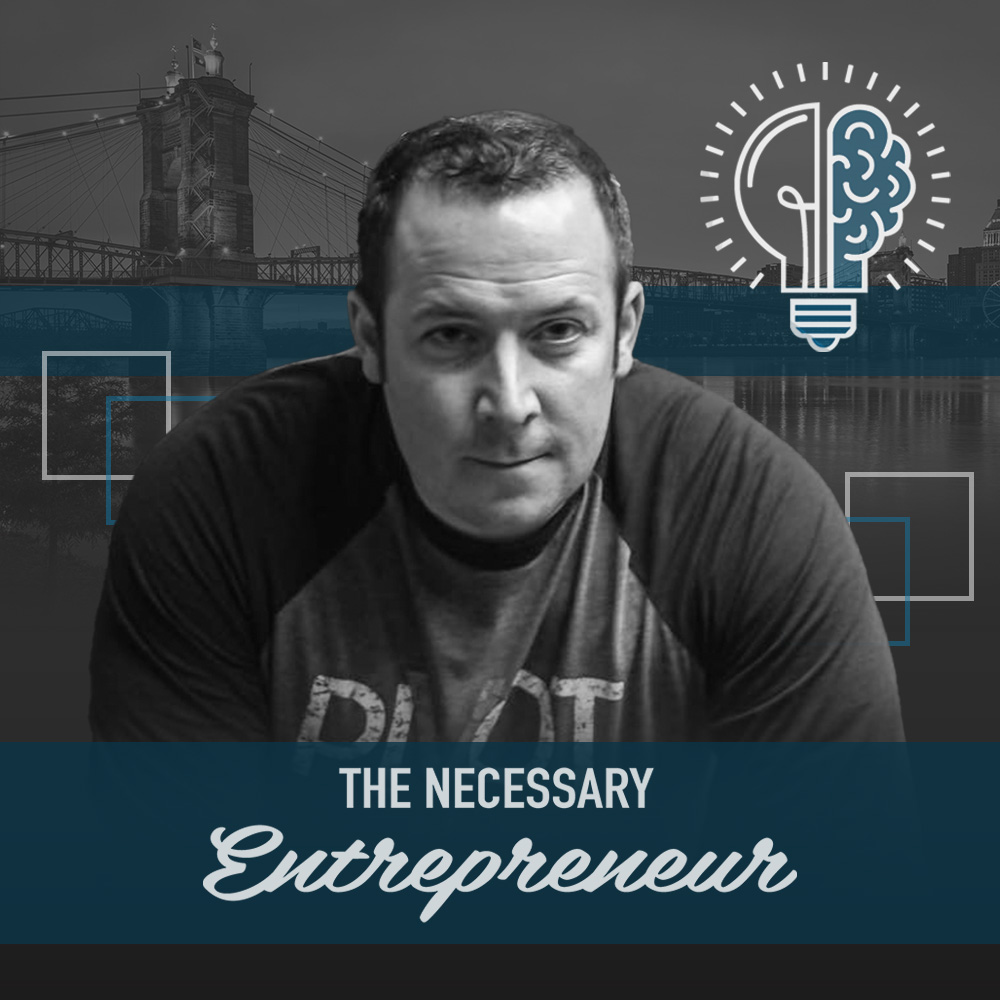
Dinakara Nagalla, technologist, Human-Centered AI Architect, and author of Becoming Human: Embracing Imperfection and Finding Purpose, joins Mark Perkins on The Necessary Entrepreneur for a thoughtful conversation about technology, humanity, and what gets lost when progress moves faster than understanding.
Dinakara breaks down what human-centered AI really means, and why intelligence without context, empathy, and responsibility often creates more problems than it solves. Drawing on ideas from Becoming Human, he and Mark explore how modern systems push people toward optimization and perfection, while ignoring imperfection as a source of meaning, growth, and purpose.
The conversation moves beyond AI hype to focus on systems thinking, human judgment, and the importance of keeping people meaningfully involved in decision-making. Dinakara shares why embracing imperfection is essential, not just in technology design, but in leadership, creativity, and personal development.
This episode offers a grounded perspective for entrepreneurs, technologists, and leaders who want to understand how AI shapes behavior, trust, and identity, and how staying human in the process matters more than chasing efficiency.
Topics include:
-
What human-centered AI actually looks like in practice
-
Insights from Becoming Human: Embracing Imperfection and Finding Purpose
-
Why imperfection plays a critical role in growth and meaning
-
Systems thinking and responsible technology design
-
Keeping human judgment in the loop as AI advances
🎧 A reflective, clarity-driven conversation for anyone thinking deeply about technology, purpose, and what it means to build systems that serve humans, not replace them.
📌 Connect With Us:
Website: https://www.thenecessaryentrepreneur.com/
YouTube: https://www.youtube.com/@thenecessaryentrepreneur
Instagram: https://www.instagram.com/thenecessaryentrepreneur/
Facebook: https://www.facebook.com/TheNecessaryEntrepreneurPod
X (Formerly Twitter): https://twitter.com/MPerkinsTNE
LinkedIn: https://www.linkedin.com/company/tnepod/
TikTok: https://www.tiktok.com/@tneclips
Spotify: https://open.spotify.com/show/6xhGUE1yzy2N0AemUOlJPx?si=d1c5c316af404f15
Apple Podcasts: https://podcasts.apple.com/no/podcast/the-necessary-entrepreneur/id1547181167
📌 Find Out More About Dinakara Nagalla:
https://dinakaranagalla.com/
https://www.linkedin.com/in/dinakaranagalla/
https://www.instagram.com/dlnagalla/
https://www.facebook.com/dlnagalla/
0:00 I'm not trying to solve a problem in a month or two months. I'm here for long game and I want to make sure I do this right and make it truly a game-changing tool. Today's guest, you know, beforehand, there's names that are a little more difficult for me to pronounce, he's got a cool one. I still try to get it right. it's Dinakara Nagalla Yes, there you go.
0:41 Yeah. uh He's a technologist, a human centered AI architect and author of Becoming Human. I'm pumped to talk about this book. Dittacar has spent decades building AI enabled systems, I said decades, that don't just scale. They remember, they trust and they serve people. His perspective challenges the tech world to design with soul and purpose, not just efficiency. And today we're talking about technology that supports human growth, not replaces it and what it really means to lead with integrity in an age of rapid change. So, boy, this world of rapid change, We are in the world of rapid change and it's very interesting to see how things are going to go.
1:26 What, what about your book? I love the title. It says becoming human. and I went, aren't we already. Well, uh know, most everyone kind of asked me the question that before reading the book, I thought we're all very humans. You're corrupt from a technical sense, we're all very humans, but there is always this group that, that is part of our journey, you know, from birth to death. So at some point in the process, I think we learn a lot and we we make a and we make a turn around.
2:07 A of people experience it, I believe. Before I say the next sentence, I'm gonna tell one thing. There are about 50 reviews personally I got from different people that read my book, from all walks of life, include young teens and adults to grownups. And one common theme I heard, uh from everyone is, man, when I read this, it's kind of reading my life, not my life, their life, no matter where they are in their journey. So they can relate so much to it, their childhood or their growth or the job, friends, family, or the issues they go through.
2:54 The reason why it was so important for me to hear that is, you know, the... The of the title, Becoming Humor, takes the journey of me when I start understanding what life is about to the point when my life got toppled, to the point I got up and started walking again. you know, all those things we all go through at certain stages of life when you are very young or somewhere along the way, right? So, you know, so my response to you is yes, we're all humans, but somewhere along the way, we truly understand what being human is.
3:43 That's the processes what becoming human is. It's good. goes in line. We'll get into your new adventure in your endeavor, um, about, know, AI to drive philanthropic adventures and building cultures and better communities. But when you said your life got toppled, what, what your book, you wrote the story of your life. There's this thing called the hero's journey. And it's what most movies track. It's all the superheroes, but it's usually what we consider in stamp people with the. biggest successes in life and business and media. They all had this hero's journey. They were torn down. They lost it all.
4:23 lost a lot of people around them and then they came back, but not everybody comes back and lives this hero's journey. So when you were knocked down, what was going on inside of you? What caused you to fight, to strive, to build back, to build the life you want? That's a great question. really like where we're going with this. know, the part of knockdown is it's your relative expectations of where you are in life. So if you think you are at a hundred feet and when you fall down, you're gonna fall a hundred feet. If think you are at 10 feet, when you fall down, you're gonna feel the 10 feet drop, right?
5:08 So in my case, I wore really hard to build my family, to build my uh career for as long as I did. The way I dreamt, the way I planned on my terms and I probably became arrogant along the way that nothing can beat me because it was going so well. So now you can imagine the gap is pretty significant. So when life hit me hard, Um, you know, I was probably two seconds away, uh, two seconds away from like running my Tesla right into a medium.
5:53 That's all. That's all upset. was, I would never do it, but you go through these motions in life, right? Um, so then the, two seconds give me the turnaround. need the moment I thought like that, that two seconds made me think like, shit, what the hell am I doing? We have much more purpose. These are all like, uh seeing feelings that will come and go. Right. Um, so, so the growth I had until then, whatever I accomplished or not until then just, I felt that meaningless. They don't have real meaning. So what that helped me is reshape my life in a different way.
6:35 My thinking, my life, the way I look at my kids. The way I look at my friends, family, it's strange that while I'm on the street, everything dramatically changed. So that was for me a change. A lot of people, like you said, some will come back, some will come back much stronger. Some may not come back. Some will come back better, so better that they'll go in a completely different direction. It has nothing to do with money. has nothing to with who you are in the strata of life, but it has everything to do with how you approach your mind. So I felt like my approach for life took a turn for the better with whatever I felt like.
7:16 did wrong to my wife. That made sense. Yeah, 100%. Um, the book themes, there's a few really big themes that stuck out, stuck out to me as I researched it and looked into it. That's going to lead to everything you're doing now, but it, um, that imperfection is actually a strength. Yes, yes. know, the one thing I struggle in the first 20 years of my life is every time I felt like something was wrong, used to make my life so hard and everyone around me, around me also so hard to fix it. It's all the way from how my kids are fed to what they're studying and what vacations they're going.
8:01 Everything I was so meticulous. You know, so then I realized, know, imperfect, we label things, good, bad, ugly, perfect, imperfect. When we, you know, there is one thing that always, when I grew up, I went to a school, I went to a missionary school. And one of the things I learned along the way is from the pastor, that is humans are born sinful. That was the biggest Bible lesson I took. And I took it in such a way that it came true to me that they're never perfect to begin with.
8:43 And we're going to spend our entire lives trying to turn around something that should never be turned around. So imperfection is something what we're labeling as is a personality trait that was supposed to be the way it is. If I comb my hair like this, it is imperfect. It's perfectly okay. Why do I need to come with such a way that needs to look perfect? Right? I mean, that's a very simple example, but that's my point, right? If you can embrace your imperfections and not get too stressed out about it, the magnitude and the lens you look at them will be so minimal that they won't even matter in life.
9:29 Yeah. Deep in the book too. Um, and then we're going to jump over to, to core themes about what you're building now. But you touch on this idea about, know, authenticity is like the word of the past 10 years, but you talk about authenticity over image. And I'm sure that also goes with the ego and all this. That's kind of the conversation we're having here worried about outside judgment. Success isn't about, um, projecting this polished persona, but owning your story. think that's the idea. Right. Yes. And I have a deeply philosophical ah conclusion on this in general. want to, for this, I'm going to start from the end.
10:13 The end is at some point we're going to stop breathing. When we stop breathing, know, over the next week, 10 days, people will gather around us. condolences messages to talking about what you accomplished. We turn into coffee top to political talk to some other discussion very soon within a month or less than that actually in days you'll be forgotten. And you don't even know as a dead person what's happening right after that. So what are you fighting for? You're not fighting for to build a legacy that you can't feel.
10:54 You can't fight for legacy. No one is going to care about. after your God. So what are you really fighting for? So now you tie that back to authentic living and stop claiming to build a legacy, stop claiming to build a fortress for something that you're never going to see, nobody's going to care for. I think when you kind of take all these things into perspective, the reality is, are you happy today? And where does happiness come from? And to me, all of these have one road that is being true to yourself. I think you can do whatever you want to do. You can buy material things. You can buy Lamborghinis.
11:35 can go have million dollar vacations. That's not the matter of the matter is whatever you do in the world you are, in the affordability you have, are you happy? Whether it is doing the staycation or whether being a, know, teller at a bank or doing a job at Walmart or being a CEO of a billion dollar company. Are you authentic to yourself, to the people around you? I think that's what gives you a sense of peace and happiness. And once you achieve that, then everything else doesn't matter. Yeah. Do you think happiness, shouldn't define it as a feeling, but almost a state that we're in because, feelings and emotions are going to come and go.
12:20 I just think about hard times and I just don't know anything great that we all do that every day it goes to plan. Most things don't. And if we're in the state and committed to this thing that you say that our true self or what we, what we're destined to do, what our purpose is. Right. That should combine with, if you know you're doing that and you're committed to it, the hard stuff shouldn't make you unhappy. You are absolutely right. It's the state of being. I mean, if you try and work for happiness, will never happen. Period, right? You work for stuff that keeps you at peace, which in turn creates a state.
13:02 You're going to go through all the motions in life, right? No matter how perfect human being you are, you're gonna go through all sorts of emotions in life. I don't care if you are a pastor at a church or a sub guru or a coach. You have to go through all your emotions in life, but that's not important. The important part is when you take at any moment in life, how many threads you are running in your brain that are pulling you down. And the reason behind them, if the reason behind them is because of your actions, that means your state of happiness will never be achieved. The reason is, okay, I want to make sure my son gets into a good college. You know, I want to make sure, you know, My dog is sick, I want to make sure it becomes better.
13:49 Those things are a part of life and we have to embrace them. But everything else is noise we create that should not exist. Yeah, it's whatever's happening out there only affects us if we allow it. Exactly. Yeah. But I think the go to right. No. Hey, listen, I'm sitting here at 46 and the things I'm talking about, I'm not a guru. It's just finally some of the lessons that I've learned that said, Hey, listen, if I want to live a more peaceful life plugged into this idea, I don't even know if it's habit, it's content for me. just know that I'm doing the things I need to be doing. And when it's hard, it's not going to get me down. The emotions aren't going to be bad, but yeah, I mean, there's different things happening on a daily basis, but, um, to be able to conquer one's own mind.
14:34 I think I'm in the process of that. Yeah, is a big deal. That awareness is important. The idea that you can observe yourself and say, has been my behavior, that itself is a change that will start making a difference in your life. Right on. Hey, so your next level of AI, you've been doing this for decades. know too, from a consumer standpoint, if it's not our career, it feels like it's new because there's chat GPT and there's, there's perplexity. There's a bunch of different ones that now we have access to. We pull either talk to it or we plug in text and it's thinking for us and it's creating spreadsheets and algorithms.
15:20 So it's really the first time that the programmer, the builder. has been using it in the past three, four years, but you, you, you've been working on it for decades. So this isn't new to you, but what you're working on now, if you can do somewhat of a deep dive, but it's unlike typical AI models, the way that consumers will understand it, what you're doing now that prioritize quick responses, but you advocate for a system, I believe that hold memory and narrative like contextually. And that's different, right? Because these systems that we're interacting with right now, It seems when I'm building a, I build a program or build a system or build a, I build it.
16:04 Once I'm done building that, the thinking and the thought and the learning doesn't carry over to the next one automatically. That's, that's absolutely right. That's absolutely right. Um, you know, so, you know, yeah, AI is a multi-dimensional monster right now. It's, it's, it has a very big benefit that people can get if they figure out how to use it in the day to the life. will shorten. It has a way to make you the dumbest person on the planet because you're not thinking anymore. You're letting it think all the time for you. And it's happening as we speak, right? And it has the, uh, another head that is trying to replace part portions of, you know, a lot of jobs and portions of your career, uh, differently shaping it differently.
16:54 And that's happening like, like that. are many facets too. Right. But the inevitable thing is change is going to come in. It's going to happen. You cannot, you cannot stop it. So if we are to throw out has a responsibility, right. One of the things is what are you going to use it for? How are you going to convert that to a useful tool for humanity? And I strongly believe there will be a section of people that are going to 100 % focus on making humans completely useless. is no need for them. That's their focus. And I can't stop that, you can't stop that, nobody can stop that.
17:37 And the section of people like me, that wants to figure out how to make it a tool to enhance my life at a balance. Right. So like that, are also, so in my sphere of life, context is important. Humanizing AI is important. Carrying the memory is important. And, you know, all of these, the net effect should be, it's not only, it gives me more time. for me to be a human and do things a human does. So I get more time in the day to do more things with my family, more things for me.
18:19 uh So that's what I'm focused on. How to make it a useful tool that it can overall reduce the burden on a human because everything got so complex with technology and stuff right now. Does that make sense? Can you do you think that so I have this question like, are you going to be able to monetize it? it a, is it a, is it a capitalist venture with also making a positive difference for, can you do that? Right. No, I mean, uh absolutely. Of course, it's happening every day. People are monetizing it differently. Right now, AI is the low-hanging fruit. is marketing, coding tools, for consumer-generated AI.
19:06 That's what people are monetizing and creating all sorts of agents around it. But the applied agentic AI are applied AI to solve the problem in the real world. We haven't seen that yet. Like, like for example, right. I'm a guy sitting there and planning the aircraft routing. How is AI going to help me to do my job better? That stuff hasn't happened yet. Everything is around coding. Everything that is around the place and people, constant operators, that kind of stuff. Right. So I think. I think to me, the pivot comes when you start putting technology into the hands of people that they can overall make everything better, safer, efficient and effective.
19:57 And that is what at least I'm working on in my sphere of. How do you do it? Is this done just in almost in a bubble that you just build this one thing or can you build an AI system that improves society in multiple areas and multiple facets? Does this have to be really central focused or can it be broad? It can be broad and I'll tell you my use case, how I'm doing it, right? And so right now I'm focused on digital twin technology. like, okay, what, what does that mean? Right? Like if I take an aircraft, I want to be see, I want to see that aircraft replica on my screen and it always mirrors the status of the aircraft.
20:41 That's the digital twin. Now I want to see the same technology for humans where a replica of me kind of helps me with other stuff. So, okay, I'll take the first use case. What the hell do you mean? Right. I'll take the first use case. the Metra is the app that we are slowly rolling down. It's around mental health and it's not a chat bar. There are so many chat parts out there that are completely useless. And I'm not trying to replace a therapist. I'm not trying to replace make therapy 100 % AI. What I'm trying to do is put a tool in there that gives therapists a way to be much more effective in their job and also expand their ideology in between sessions.
21:31 because their access and their availability is so minimal, right? And at the same time, take their ideology and m apply to general reflective based mindfulness. When you take your typical 10 people, six of them are craving for being able to just talk and get a good coaching response or just be listening here. You know, when you talk to Chad GPT today, it has no boundaries. You know, it agrees with you. It's not, and to me, it's not helpful in the right way. Yeah. It might, it might lie to us a little bit too, based on the history.
22:11 heard somebody recently say them and a friend, one friend said, who's the best soccer player in the world. And it came back and it said it's messy because, then his friend did it too. And chat came back and said, it's Ronaldo and it gave them the information based upon all the searching in their history. Right. And that's one danger. The second danger is the moment you say, why are you saying, Ronaldo Messi is the best? Oh, no, you know what? You are right. Messi is the best. So it's very agreeable to whatever you are talking to it. So it's not a true reflection. It's not a true mentor that you can work with.
22:53 So the AI I'm creating in mangled space is a 360 degree tool. where you can apply it in your family along with your therapists, uh or without them, you can take the same AI and companies can use it and schools can use it. Now, all the data is used by the way we build on algorithms on top of what OpenAI cloud and whatever it does. And instead of agreeing with you, it shows you patterns. Like for example, the example I used, right? When you're aware, that you're doing something wrong by giving you the power to observe what you're doing wrong, the chances of your change are significantly higher.
23:40 When you don't know what you're doing, you are an autopilot to disaster. So when you talk to Chad G.P. Key, he'll never come back and tell you, hey, in the last three hours you spoke to me, these are the four things you said that just don't make any sense. Can you go back and relook at what you were doing? Because you just told me you're mad at your son because he didn't do this. But you also told me you asked, this is how you're going to behave. Those two are uh polarities, right? My logic that we are putting in, outminish learning algorithm, the way I analyze stuff is I want to be a true help to you.
24:25 to be able to see your patterns over a period of time and give you tools on how to resolve them. Which sheds you pity, cloud or graph, they don't do that stuff. They're out there having fun with you. know, collecting data and having fun with you. So that's how I'm making a difference with MySpace by applying it to a very critical problem that is not only hitting general population, but when you at large look at low income neighborhoods who are struggling to get mental support. When you at large look at prison population, 80 % of them are there because of small misdemeanors and they don't have a way to deal with them. This becomes a very useful tool to solve the problem.
25:07 Is there any example of this yet? Like it's not, not even trying to have a got you question, but are you and the other people in the space, are you trying to build this under the belief of the purpose? Or if it's just like, is it just automated right now? Or is there something that AI has built trust in the way you're talking about it? Um, so, so we, you know, I've been working on this, uh, you know, for last several months and we had our first, uh, beta testing started on the, on our ability in, uh, late October, early November timeframe. And I have like, I mean, have 2,500 users signed up in the first week and several hundred of them are consistently using it.
25:54 So we get feedback from that. Well, one of the things I also want to make sure like very clearly tell is I don't use anybody's conversations to better my AI. It's completely out. All the conversations that you are doing are between you and my system are between you and your therapist who you give access to. So, so that's one thing I want to be clear. So, so what the feedback that I'm getting is Initially, it started where I don't know how it is any different from charging the T, why should I pay for it? You know, to the point where, man, this is very helpful.
26:35 Before I have people using it twice a week. Now I have people using twice a day. And the same individuals that started and stayed with the system for a week, I'm seeing they're doing like anywhere between eight to 15 sessions. They're all 10, 15 minute sessions. What they're telling me is they keep coming back because it's helping them. It's not a random chat with ChatGPT. What it is doing is it wore a pair of tie. It built a history for you. It started showing patterns and it starts seeing patterns. We're like, wow, this is being helpful to me. And the reviews I get back from these users are, pre-session was so useful.
27:20 I was able to figure out what's been going on with me. World Christmas. When I see the response back, it makes me so happy that I'm doing something right right now. mean, have long ways to go. Don't get me wrong. I'm not trying to solve a problem in a month or two months. I'm here for long game and I want to make sure I do this right and make it truly a game-changing tool. Did this occur to you from the moment you had, where you said in your life, you're like, man, this, you're building a system that would have helped you. that's, that's a good point.
28:01 Uh, the reason that I ended up picking mental health is, uh, you know, when I, when I was going through what I was going through with my family that played a significant role on the events that are unfolding with the people that I'm dealing with. and, and back then, you know, I didn't care about it much because the way they grew up in India. Mangalore Alp was never a point of discussion back in the day. We had enough support around us and that's one issue. Another issue is it's also kind of a taboo. So I never grew up thinking that I had to focus on it.
28:43 Never ever did. Never had a session with a counselor or a therapist in my life. So however, that event changed my thinking subconsciously. But when I actually solve the technology problem this year, I listed about 200 use cases I can do with it. But the first use case I keep coming back to is, where does all the mental health problem? And that's how I came to What, um, do you have any idea your quiet thoughts that you don't talk about that, or maybe if the book that you're like, where do you really think this is going?
29:25 There's all these big debates and theories and all this, but your intelligent brain, you'd have the mic you're in front of, let's just say the whole world's listening in. RUN! Where do you think AI is going in combination of what society will look like? Yes. Sorry, great question. And I don't have a perfect answer for it. I have my thoughts and they're very subjective. Yeah, I don't think any of us do. I think we're trying to figure out what's this going to be, right? But I want to hear what your thoughts are that are still evolving. Yes, yes. So I'm absolutely certain when you take the last 200 years of growth in technology or thinking or civilization or evolution, whatever you want to call it, this decade is going to be the most momentous decade in human history because we are going, our lives are going to change so fast.
30:27 You know and the technology may need us to solve so many problems But it is also going to create so much inequality That the suffering Can be Can be can be quite bitter that's the I mean, that's the dark side of the story Okay, why am I saying what am I saying, right? The problem with AI is it's being used on a large scale while simultaneously making people efficient.
31:14 On a large scale, it is used to automate so many things that a lot of current generation folks uh are dependent on the livelihood. Those jobs... will be wiped out. So when they go away, how are they going to be retooled? We took away, let's say if I take USA, the manufacturing is gone, arming is not there, uh or it's there in a different way than it used to be there before. We are replacing people in Walmart, we're replacing people in uh Walmart, Kroger, whatever, right?
31:55 In all these retail stores. We're placing the people in oh restaurants and fast food chains that we have in the lab. Like when you look around you, everything is about cutting the people, cutting the people, cutting the people. Then where are these people going to go and do the work? So what will end up happening is in order to keep the society safe, again, I don't care which government is there, who is running the countries, not just US, but across the globe. they'll end up giving money for people to just to survive so they can eat and stay there, right? So, and there will be this handful of people ah that is monetizing AI so fast, so quick, the gap between the middle class will no longer exist.
32:48 know, the people that are surviving on just getting food, that population will significantly go grow higher and higher and higher. See, that's the dark side of the story. So what is the positive side of AI? The biggest and effective way is AI can solve the problem, Cancer treatments, all the diseases that we deal with on a daily basis, that will come along, those get solved much faster, right? Everyday problems that we deal with as humans, they'll have fixed solutions. But end of the day, I feel like we'll see more suffering and pain, even though the wealth is going to grow disproportionately for a large swath of population.
33:40 That's, you know, I'm more aware of it, which drives me to do things differently, which is why I'm much more aware of it. And I want to more talk about it because the more awareness around that I call. will make other entrepreneurs think differently. That is one of the reasons I want to talk more about. So your platform, it grew from saying we're but Siam, S-A-A-Y-A-M, right? That you're building. How do you balance efficiency in you building this as we can wrap the conversation up, but how do you build that with emotional and ethical accountability built in? Cause that's what we're sitting here saying. Like, how do we make this just good for society?
34:22 Karoar, karoar. So ayam in Sanskrit directly translates to help in English. So the very idea there is, when you can simply go Google get a response or go into any of these AI tools and get a response, or when you can easily go to lots of websites and donate money, why can't you simply ask for help in the same way and get that help? That is the whole uh story behind SIA. So it's the only platform, I would say, currently in works and currently in expansion that's going to make help as easy as Googling.
35:05 So now, where are the checks and balances? How do you know that you're going to, you're helping the right cause, right? How do you know you are not fostering more laziness? You know one way right so we use love AI behind the scenes to make sure The the requests are credible, you know for me the goal is to eliminate as much fraud as possibly I can that can happen in the world of in this world and and make every request as that as Authentic it possibly could be so when someone goes and supports the telecast They know that they're truly making a difference.
35:51 That's what Qasim is built for. That's where it is heading right now. Awesome. Hey, great conversation. This was 40 minutes of awesomeness. You're not feeling great, but you showed up and it said, Hey, he's ready to sit here and party. Um, cause I love to see here the good side of AI and what you're doing. Um, I think it's fantastic. The book becoming human. Um, I think we all need to go out and figure out how we need to do this thing a little bit better, how we can live in the more, a more human way plugged in and be authentic. And, I appreciate you live in that man and come and spend us 40 minutes here with us. Hey Mark. Thank you so much. Uh, this podcast is so different for me of all the ones I did not focused on technology, but focused on more real world problems.
36:36 hope I got my message out properly. I cost you, um, to your listeners. I don't mean to be dark. I need to be more aware. sort of make sure. Anyways, let's go have a happy. Yeah, man. We'll tag the book and all the connections and all your socials. So thanks again, man, for jumping on.