

 RSS Feed

 Apple Podcasts

 Spotify

 YouTube
#171 - How Synchrony Is Redefining Social Connection for Neurodivergent Adults: Rebecca Matchett
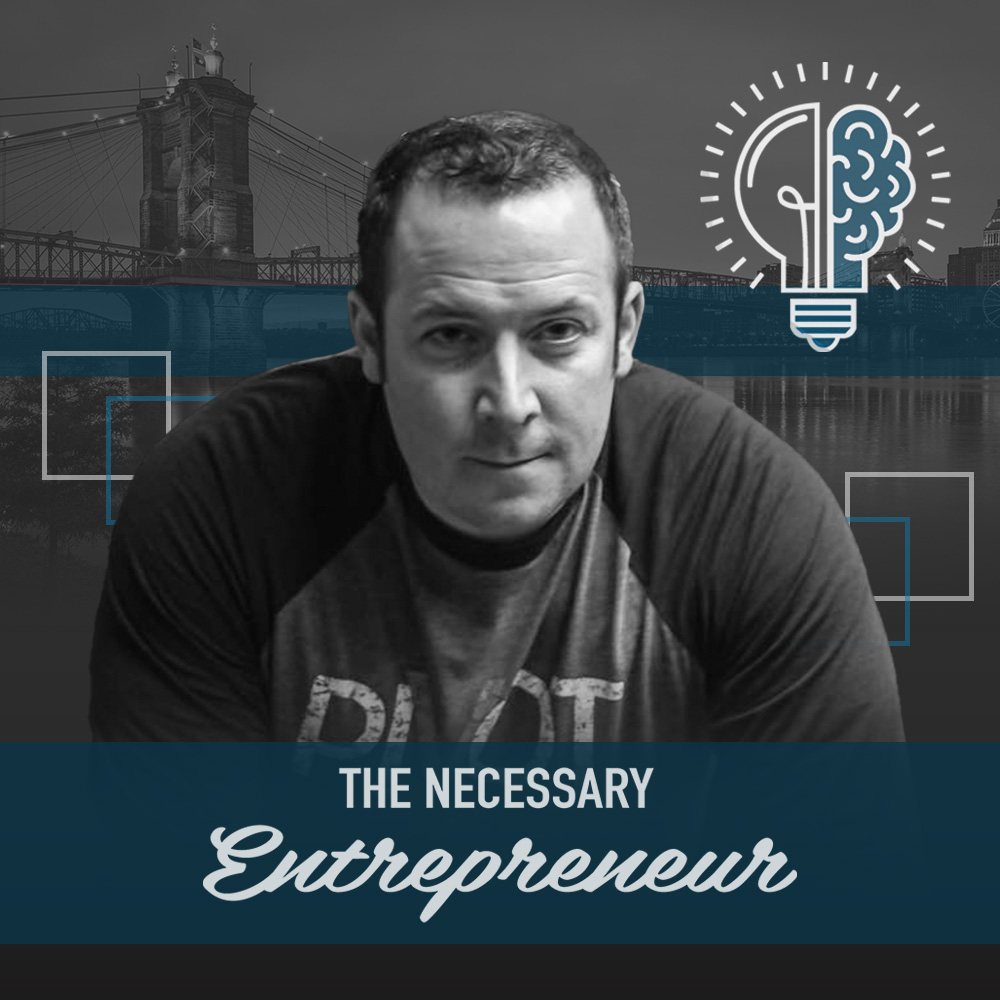
Rebecca Matchett, co-founder of the Synchrony App, joins Mark Perkins on The Necessary Entrepreneur for a real-world conversation about building a startup before you fully know what you’re getting into, and why that can actually work in your favor.
Rebecca shares what she learned launching her first company, the mistakes founders only recognize in hindsight, and the hard-earned lessons that now shape how she builds. They dig into early product decisions, marketing and branding at the startup stage, and what it really takes to turn an idea into a functioning, growing app.
This episode cuts through startup mythology and focuses on execution, awareness, and learning fast, making it a must-listen for founders, operators, and entrepreneurs navigating the early stages of building something real.
Topics include:
-
Building your first startup (and surviving the learning curve)
-
Co-founding and early product decisions
-
Marketing and branding at the startup stage
-
Scaling a new app and business from scratch
-
Real-world lessons from the founder journey
🎧 If you’re building, scaling, or thinking about your next move as an entrepreneur, this episode delivers the kind of perspective you only get from someone actively in the arena.
📌 Connect With Us:
Website: https://www.thenecessaryentrepreneur.com/
YouTube: https://www.youtube.com/@thenecessaryentrepreneur
Instagram: https://www.instagram.com/thenecessaryentrepreneur/
Facebook: https://www.facebook.com/TheNecessaryEntrepreneurPod
X (Formerly Twitter): https://twitter.com/MPerkinsTNE
LinkedIn: https://www.linkedin.com/company/tnepod/
TikTok: https://www.tiktok.com/@tneclips
Spotify: https://open.spotify.com/show/6xhGUE1yzy2N0AemUOlJPx?si=d1c5c316af404f15
Apple Podcasts: https://podcasts.apple.com/no/podcast/the-necessary-entrepreneur/id1547181167
📌 Find Out More About Rebecca Matchett & Synchrony:
https://joinsynchrony.com/
https://www.instagram.com/joinsynchrony/
https://www.facebook.com/joinsynchrony
https://www.linkedin.com/in/rebecca-winn-matchett-6356481/
0:00 your first startup, you know, having no idea what it's going to take, I think is important. I mean, I think you need to not understand what it takes in order to start your first company. All right, you all, I know you can already tell that today's guest is going to be an absolute killer. I cannot wait. So I got a laugh out of her. Um, I'm really excited about the conversation. It's going to go in a lot of different places, marketing, branding, building businesses, entrepreneurship, scaling a new business that she's starting.
0:42 So today's guest, I struggle with names, but I think I have this one down and if not, she'll correct me. Um, but today's guest is Rebecca. Match it. Wow. A serial entrepreneur. and original co-founder of Alice and Olivia. Rebecca brings firsthand experience building and scaling a global consumer brand in one of the most competitive industries there is. Beyond fashion, she has a deep understanding of founder dynamics, brand longevity, and what it really takes to turn a creative vision into a lasting business, which is essential for this podcast and conversation. I'm excited to have a thoughtful conversation about entrepreneurship, growth, and the lessons that only come from building something real.
1:25 Welcome. Thank you for having me. Yes. Let's talk about building things that are real with a couple of decades of experience here in the big city and impacting the world through your brands. Building something real in 2025 and 26 where everything we don't know if it's real or not. It's true. This is very much real though. And it's feeling filling a very real gap in the marketplace and gap for the neurodivergent adult community. So um there's nothing sort of more base and real than human connection. And that's exactly what we're building with Synchrony. So speak to this little bit. mean, where, where'd the idea come from?
2:05 Where did you see the void that showed up and said, yes, we're for-profit entities. We want to make money. We want to scale. need ROIs, but where was the void? Where was the opening and the opportunity that needed to be filled? you saw. Well, so that actually uh credit is due to my partner, Jamie, for the idea. Jamie is the mom with the autistic son and the firsthand experience with the world of trying to find connection and friendship for her son. Her son is uh named Jesse and he's now 21. And so as all of these supports, it sort of fell away to the wayside as Jesse grew from adolescence into adulthood.
2:47 All those social supports went by the wayside and they were left with a lot of uh opportunity in housing or in employment, but not really that social piece. So Jamie had the idea. She had this concept that she wanted to be able to leave Jesse with a platform that would be sustainable for him to create new friendships, make connections and hone his social skills. um And so we were friends, we are friends. And she approached me with this idea, knowing that I've had and started several companies and I might have an idea of what I'm doing with at least how to get things off the ground, ran it by me.
3:28 And, you know, it's something that not only do I see as a very big uh opportunity in the business sector, but also socially. I mean, this is just fills my heart and is specifically, especially this time in my life, what motivates me. So that sort of, you know, financial success and building a company has always been motivating, but this has that extra layer of doing something that the world needs and that will make it a better place. How many people are affected by autism in this country? Not even, not the families in the world, but how many people are directly affected ah by having autism in this country? And is there a worldwide number that we're tracking at all?
4:11 Yeah, I mean, this is where it's a little bit of a gray area. know, the numbers sort of range in the US. Three million, five million can go all the way up if you include neurodivergent adults, which is a very broad spectrum and also includes a lot of self-diagnosis. You know, that number can be 15 million. I mean, it really, it's not a number we can track down, um but there is a very distinct population that struggles with making human connection and being able to navigate their social lives. You know, how to decode a conversation, how to know how often it's appropriate to reach out to somebody, how to get out of a situation you might be uncomfortable with.
4:57 So there's a no matter your diagnosis, if it's a formal diagnosis or a self diagnosis, if you fall within that population, that that's who we're trying to help. What's the platform look like if it were engaged with? What iteration are you on? Does feel like this the final version that really is great for the market to go all in with? So we are not launched yet. We've gone through alpha testing. We're about to start beta testing. uh what it looks like is uh kind of multi-layered. And what really differentiates for us from what's out there is in part the onboarding process.
5:39 So in order to keep our community authentic, so there are not evildoers out there. There are not people trying to log on with uh malintent. We have uh our members go through a referral system. So if you're an interested adult, neurodivergent adult, you go to a parent or advisor or a therapist or a teacher or an employer and say, you know, I'd really like to check out Synchrony. um Could you please verify that I am appropriate for this community? And so they get referred. They take a photograph of themselves to verify they are in fact the person that was referred.
6:20 um And then they start building their profile. And their profile is pretty in depth because we want to not only connect based on, you looking for friendship? Are you looking for romance? Are you interested in same sex, um you know, connection or the opposite sex? We're looking to connect based on interests. So there's a pretty in-depth survey on where do your interests fall? Are you into baseball, the arts, gaming, crafting? um And then where are you geographically? And who are you? What type of person are you interested in meeting? And so once you create that profile, you'll be matched with like-minded members, and you can get chatting.
7:01 And chatting, it's a uh structure that everyone's comfortable with, just sort of like texting. um And if you need help, this is where a big differentiator comes in, which is our AI chat assist tool named Jesse and named after Jamie's son. And Jesse is on demand social coach for if you need help with that decoding, if you don't know what to say next, if you're stuck in a conversation or think you're misinterpreting something or someone said something that made you uncomfortable, how do you respond to that? em And so Jesse's there to help make sure those conversations proceed smoothly.
7:42 um and that you feel really confident um in your communication. uh What do you think with all your experience that, um, you know, your business partner came to you and said, Hey, I have this idea and I'd like to implement it and really scale it up. Why do you think she chose you? Um, I'd like to say it because she thought I was super capable, but I think she was just sort of spitballing with me at the time. And, um, you know, and then when I showed interest and I said, you know what? Let me just send you some ideas I have. And at this point, I didn't even, she wasn't actually pitching me. She was running the idea by me and I, and I could not stop thinking about it.
8:26 And I could see different ways that the app could grow. and different segments they could go into with employment opportunities, with off app meetups, and sort of how do and white labeling it for other organizations for an internal communication system. You know, there just many different ways I could see the business going. And as I sort of laid things out to her, she then said, oh, well, actually, would you be interested in a more official, you know, more official involvement? from there. Yeah. So what about her also makes you sign up for this commitment? I know it's a passion project and you can buy into it, but there's a lot of people that have good ideas.
9:12 There are. She is an absolute bulldog. mean, she knows anyone and everyone, and if she doesn't, she has absolutely no problem standing outside your door or calling you seven times. It's a remarkable skill, one that's not my strong suit. So I really appreciated that because getting the word out. This is a flop if no one's on the platform, right? I mean, we need members. We need people to sign up. We need the legitimacy of partners to sign on with us so people trust us. And she is wonderful at that. And I knew through, um you know, just her past, how she would react.
9:56 She also, we also have a third uh partner who is an autism specialist. So. I feel that we've covered sort of all of these bases um where we then are able also to bring in Britt, um who has that expertise in the autism space. Hmm. Um, when do you see this launching and what do you think the scale of this looks like? You know, it's wild to me that we're now in a world. I forget the exact number, but back when Google launched and then Facebook launched an Instagram, they have these numbers of people that signed up in what timeframe when open AI launched a few years ago. They had, I forget what the million signup was.
10:37 They broke all the records for new users within a day or two. Um, this is the new environment we're out. What we're able to do. through relationships, through sponsorships, through just engagement. What do you think this can be and do? Because you're probably, when you get that awareness, you have to do it quick, right? Well, yes. We are hoping to capitalize on numbers just like any other social app or dating app. We are not a dating app. However, we're sort of structuring our pricing model and things based on those other existing apps. um And if we can capture 10 % of the market, dare I say 20 % of the market, I think that that is our initial goal.
11:22 We want to penetrate a similar percentage of these dating apps do dating apps are different, of course, because the goal is to get off them. You know, you get on it, you get off it. That is not our desire, of course. um But, you know, our initial engagement. So we have two, two prongs of how we are trying to, to grow our membership. And right now it's just a wait list. But one is sort of the one off, right? End user, one by one sign up. Grassroots. grassroots. But the other and an approach that is really fascinating to me is what I touched on before, which is this working with other larger partners, whether it's a nonprofit or a university or an employment agency, and that specifically targets and works with this adult community.
12:17 You know, I see that as a wonderful way to grow our membership pretty quickly and through a trusted pathway. So if we can and we will be partnering with let's say a university who not only wants to provide this as an internal closed loop communication system, but also offer the broader public synchrony platform to their members, you know, I see us growing that way at a uh faster rate. Hmm. Um, what do you do with, there's this idea about, um, you read a book a long time ago, everything's figure outable Marie for Leo. Great book. Um, there's some people that say, Hey, I think with her, I'm never failing.
12:58 I'm always learning and people say fail fast and fall in love with losing. It's a part of business and entrepreneurship. So no doubt you're facing some of this in the early stages of the app and of trying to white label, but what's been your all's approach, um, for your team. about when you hit some roadblocks and it might feel like failure is not going your way. What's your approach to still operating and moving forward and succeeding in these moments? Yeah, and I think it's a matter of prioritizing and being really clear about what is most important. And there's certainly, we have certainly run into roadblocks with our app development. And to me, this has been the scariest part because I'm not tech savvy.
13:39 I am never built an app before. I don't know how to build an app. I can't get into the back end of that. So trusting our third party app developer was a huge leap of faith. And I think for all three of us partners, And I think that was the first hurdle we had to get over, which is we are so clear on what we want our vision to be, and we think that we can put it into words and black and white on a document that we can continue to refer back to and educate these third party developers on. And so we felt confident that at least they would understand what the mission is, and they had their marching orders. And then when things came up, like, you know what, this is actually take this one aspect is taking a really long time or Even for App Store approval, we might run into a roadblock with App Store approval, so we might want to sideline this uh feature for now.
14:32 As long as we felt like we were able to deliver our base product very well, we were able to pivot and sort of push things aside and the noise aside to get to the end goal of a very easy to use, functional, intuitive platform for messaging. And so when we broke it down to that base level, you know, we're able to accomplish that. How'd you decide on who the partner was going to be to help you build that? How do you know? Well, you never know until you're in it, but we did interview a couple of developers and app designers. And oh the amazing thing about our team, our PR company, our marketing company, our app developer, our app designer, all of these different teams, everyone is touched by someone on the spectrum by one degree of separation.
15:27 I mean, it has been an unbelievable experience because I've worked with plenty of PR agencies. They care as much as the next paycheck. It shows, right? It's plug and play, and you either fit their mold or you don't. For this, it has been very personal. Everyone is touched. Everyone is asking probing questions, and good is not good enough. It has to be excellent. It's been an incredible experience because we all... are in this to make a profit, but um that human connection has been unprecedented for me personally.
16:09 So you spoke on this PR, there are a lot of people in the PR business. That's been so essential to this process as well. But you spoke to them passionately. If everyone's been affected directly through knowing someone on the spectrum, does, what does that, all the past business experience you've had and being in an entrepreneurial world, what's that say about needing passion? Is there a debate? Like, do you need to show up with passion? Do you need to find it? Do you have to ensure you're moving forward with it every day? Because this is a passion project and a profit profit project. But what if? What if we didn't have that? I don't think that this higher order altruistic goal is necessary.
16:54 Being financially successful is very motivating. That is really all some people need. And by the way, it was all I needed for a very long time. It was later in life when I've had other companies and I'm where I am personally with my family and everything like that, where that just wasn't enough for me anymore. um I could do a good job, but it was not something I would be jumping out of bed or thinking to do in the morning or thinking about in the shower. I needed this to motivate me to go into to start another company because it takes everything.
17:35 And that financial bit of it is always motivating, but it wouldn't have lit the same fire that this has in me. Can you look back on the person that you've become now capable of doing this and not even capable of then deciding I'm going to cause you know what's ahead. You knew it when you were signing up. There was probably these moments and conversations with you and even with your family. Like, Hey, do we want to do this? Cause it's not just a me when I'm going to have to give. mean, y'all in this too. Right. oh And it's funny because my daughter, my youngest daughter actually, this was a year, two years ago, because I've been doing this for almost two years. She said, mom, are you, are you going to work again? Cause I had, it had been, you know, a year or two with nothing.
18:16 And that hit me. I mean, that was right in my gut. My daughter now thinks I'm someone who doesn't work. That's not my self image. You know, it's, I've been, feel like I've been grinding for 20 years, but But so, yeah, I mean, it was sort of a family decision, but really it was a me saying, I need to do this for many reasons, including my daughter. yeah, you know, the ignorance, you sort of touched on this of uh first, your first startup, you know, having no idea what it's going to take, I think is important. I mean, I think you need to not understand what it takes in order to start your first company. because if we knew we wouldn't do it.
18:56 Sort of, yeah. Because you're never prepared, right? So it's not just the time, but it's the, my gosh, I didn't think about that. Wait, I need to file that paperwork? I mean, it's everything from that to understanding how important the marketing is or the timing or the scalability. All of it is vitally important. And there's no way you can know all of that and have experience with all of that beforehand. I, but I also, you know, I'm a really true believer in, I think it's important, or at least for me has been helpful to not be an expert when you're going into something.
19:38 I mean, because I, my first company, Alison Olivia, I had no idea what I was doing. I was also a child. I was in my twenties. but it allowed me to do things that were. unprecedented. Like you don't use upholstery materials to make pants, which is what I did. And had I known better, I wouldn't have done that and I wouldn't have started the company. It wouldn't have been a success. So ignorance to me is bliss in many ways um as an entrepreneur. And it sounds a little crazy, um but to me, it's given me that sort of additional drive and determination to make sure I'm doing it right, to educate myself.
20:21 and to not just rest on my laurels that I know what's happening or I know what to expect, because really you never know what to expect. Yeah. What rooms have impacted you the most? What room? Could be a room that you were in doing it yourself. It could have been a room filled with people that influenced you. And it's not even a gotcha question because I think the challenge for most people is if you just said to, not be the expert or our egos have to learn that. Right. Because we're so we're in our twenties, like we're just, we're, want to tell the world. Right. We, know we have this figured out and it's right.
21:02 Well, we have a lot to learn. Yeah what environments and rooms have impacted you the most? So one comes to mind, and I don't want to really name names, but when I started Alison Olivia, we had a mentor, later investor, who was very influential, both on the positive and the negative. And I think what I observed from him was this high level of orchestrating and understanding the business from a very high level that provides a freedom that you don't get involved or tied down by the weeds.
21:44 You don't get caught up in the weeds. You're allowing yourself to see in the future past the roadblocks or past the bumps in the road. And how he interacted with his staff, both positively and negatively, um impacted me a lot. The other thing I would say is really around my dinner table growing up, my father was started a real estate company, which is a family business now my brother runs. every night at dinner, it was a conversation about business. It was a conversation about the different aspects of what the struggles were, how the political climate was impacting things, how it impacted our lives.
22:27 And degrading business and that type of entrepreneurship just into daily conversation and into daily life. Um, made it less scary, uh, and, and also made me understand sort of the impact that you have at many levels. And it's first in so many, how you can impact so many lives. Real estate, of course, is different because you literally are providing housing for people. You know, just, just the idea that, that entrepreneurship or starting something is a leap of faith that's, that's worth taking. What is being in? We were just, me and my team were just in New York city. talked a little bit about it and, I thought about, know, we called the big city and been to a ton of the cities in the U S and a lot around the world.
23:12 What benefits have you received from being in a big city like New York city? Well, I mean, everyone talks about the energy of this city and, you know, I have to completely agree. I think that even people who say, you know, they don't work, there's always some sort of side hustle or there's something going on. And I think it's incredibly motivating. You know, for, I referenced a year or two that I wasn't working and I felt like, what the hell am I doing? You know, like this is crazy. I'm wasting, time is ticking. I'm wasting my life. And You know, not that that's necessarily good. think everyone could use as emotional, a mental everything break once in a while. But I don't know that I would have been as motivated to jump back on the horse had I not lived in this city if I weren't currently here and I weren't seeing people go by in 100 miles an hour every day of the week.
24:02 You know, and of course, it's access to so many smart people and just the conversations are not superficial, you know. level, bunch of small talk, all that. It's not. you know, and it's, keeps your brain going and your interest in just the intrigue is always high. And there's always someone else to meet and people are, you know, I just had a friend of a friend moved to the city and she's curating a dinner party because she wants to get, you know, a bunch of thought leaders in a room together. And I just, it's so easy to do. And she said, you know, anyone that can join. And instantly there were two people that said these people have to join. So You know, the access to that type of um energy, it's unparalleled and I think it really has influenced me.
24:51 m Do you have those illusions of living in a more calm environment at times though? Well, yes. You probably get away and have some of that, but I mean, actually living and breathing there more than here. You probably did that for a year or two. Maybe you had your little break. mean, COVID was that break for me. That was a while ago now, I guess. um And it was nice. It really was. But I always wondered, was it so nice because I knew I was going to come back here after six months or four months or however long that was. But sure, I'm not an adrenaline junkie.
25:32 I don't need to be around this craziness all the time. um But it also doesn't wear me down. I never feel like, my God, I need to get the hell out of here. This is too much, which I understand for some people it does. I completely get that. I don't know, I'm kind of a chameleon. Like it doesn't really matter where I am. Yeah, that's good. What approach do you think that, um, you take to this? Cause you're, can tell you're highly capable. You just come around people and you just get it, you know, and I don't need to see the resume of success. Um, it's there. I have, there's no doubt in my mind. What approach do you take to performance though?
26:13 And not being overly critical and put too much pressure on yourself because you're so capable. And you have high expectations of your performance. can feel that and see that. How do you have this relationship and this with yourself on to drive high performance, to hold yourself accountable for delivering, delivering something in the elite level, but sometimes it doesn't go well. Yeah, I can be pretty rough on myself. um I definitely feel like I, even at my old age, I have imposter syndrome. know, like I, there are things that might not make any sense, but you know, it's the internal dialogue you have.
26:53 I think that at least with this, there's a higher order. mean, there's something that's more important than my insecurities, you know what I mean? Or like me beating myself uh up. And I think just... keeping things in perspective, no matter what goes wrong, it's not the end of the world. I guess I feel like I'm able to take things seriously enough, but not blow them out of proportion. And I think that age and experience gives you that perspective. And you get beat down in your personal life too, or with health, or with family members. And it doesn't serve anybody to be incapacitated with with guilt or with, you know, blaming yourself.
27:37 Is that the advice that you go back? I don't like reflecting to all these lessons, but honestly, if, if you could go back and give yourself to go back and give Rebecca advice, which I actually say, what can we do with that now? How can we mentor the other folks? Would it be like, Hey, like don't slow down, keep going, but it's all going to work out. Right, exactly. And I do think there is a lot to be said that you can't succeed to the extent you want without these failures. you know, it's so trite, but it's true. mean, I do think that failure is critical and it doesn't need to look like devastation, but I think it needs to build resilience.
28:21 And I think you In order to be a successful entrepreneur, you have to be resilient and you just have to roll with it. You have to be able to pivot. You have to be able to take the criticism or understand that you made a misstep and you just move on. Yeah. Like, that your approach to when it doesn't go well? think you just, the challenges is getting over this idea of being surprised that it didn't go well. Right, and I think that one of the important things is to be able to acknowledge when something failed, right? Like don't keep doubling down and don't blame external factors, just say it doesn't matter. The point is this didn't work and this is a measurable uh proof that this didn't work and it didn't work in this specific way.
29:02 So let's address it. And maybe the solution isn't correct either, ah but what you know for sure is that whatever it is that failed, failed. So it's time to move on for it. Being able to not tie our identity to us being the outcome of the project, like to go find the other solution to not just because it's not working out the way you thought. Well, go find someone who can help you work through this process. That can help you find the solution. Yeah, absolutely. I also, you know, and there are many people whose companies define who they are. That's never been some someone who I am. I, know, I have a lot of other things going on in, you know, my life and I this is something that is unbelievably critically important to me.
29:45 But if it goes down, I'm not, you know, I'm not my life's not over. do balance that? think that's an awesome perspective, but how do you balance that and still make sure you do everything you can to have it succeed? Because that is a balance and there's not a lot of things in life that balance. I've learned that they don't. Well, you have to make the balance. I just think that I've become very efficient with what I have to do. And my two partners are incredible with this. we're all at different points in our lives and have different things going on. But we all understand that when something needs to be done, we will get it done. We are not into like FaceTime for the sake of FaceTime.
30:26 We are operating for a result and for a very specific purpose. If someone doesn't need to be on a call or a FaceTime, they're not on it. So I think that we're really honed what we need to accomplish and what success looks like. So it kind of puts all that noise to the side and allows us to live the other aspects of our lives in the way that we want to. Yeah. So what's your approach in this sales environment that I come from so often, anything's just people, but it's about what are our business development tactics? What's marketing look like? But I try to break it down for everybody. It's like, Hey, let's just look at the daily test today. We've reverse engineered it.
31:07 We've inverted it all the way to this is the daily task. What you're smiling that must've hit on something. No, no, no, I was, we were just, I was just on a call about the different, our different approaches to marketing and things. That's why I was, I was smiling. That was good. You could have been on the call. Yeah. what, um, what do you, what do you all need to do on a daily basis? So for example, on this Thursday, what are the tactical things on Thursday and then on Friday that you all need to be doing consistently to make sure this starts to stack and grow in scale? Like what needs to happen from today? Who do you need to reach? What needs to happen? Right, so uh today, so right before this, I actually, we had a uh call with our marketing and PR companies and we're talking about um onboarding a brand ambassador.
31:54 What does that look like? We would like someone from the ND community to be able to be a spokesperson for us. You we're talking about our launch event and how are we going to structure that launch event? What's our budget for the launch event? Oh, and then, And then there are calls with the lawyer, know, trademark situations, ah you know, how does the mark look in Europe versus in the US for us right now? are our odds and what's the pathway to secure that? ah You know, and then we're in testing on our phones. So, you know, we have this testing app where we have the, we have synchrony on our phones um and we're just trying to break it, you know, we're trying to mess around with it and see what it does.
32:39 And we're in Slack, which, you know, all these sort of text situations, which I had no idea what was going on. And now my computer dings all day long with different, different types of chimes. that's Slack. no, that, you know, that's from this Gmail account. Well, that's from the other Gmail account. So, uh yeah, you know, that the app testing right now is huge, of course, you know, we're, within a month or two of launch and we're really trying to, we're trying to break it. We're trying to see where the holes are. What do we do to, uh, not get too distracted? Cause this is the new world. have slack going off. You had the problem is once you're in a slam, you just get hit with everything. It's like, man, 90 % of that is not relevant to me now, but something in our brain still looks at, you want to tap your Apple watch.
33:21 It's like, can I shut this down? Do you have an approach to focus and even how you lead and how you share that with people not to get distracted? It's hard. It's really hard. Like I'm just honest about these things. It's really dang hard now. It's hard. It's hard and there's noise all day long. em And while I don't feel responsible for every single aspect of the business as the lead on it, still, I I need to be, I have to have my finger on all of it, of course. That's what it is to be a founder. um so I do, more information, the better for me, but I...
34:02 don't need it in real time, I will process it when I can. And I am someone who likes to lock into a specific task for a period of time. So I'm not really great at going from a spreadsheet to a marketing presentation to testing on the app. I want a certain set amount of time to really to lock in on one thing before I move on to the next. That's all I sitting here wondering is what's your decision making like? Um, yeah, I mean, I think the decision making is pretty swift with our partners. We are all so completely on the same page about everything.
34:44 Um, you know, one of my partners and I are the financial investors in it. So we have sort of potentially side conversations sometimes depending on, on, you know, if we're talking about a big investment in a certain area, but, but really it's a very quick process. We are just shooting each other texts on the side or emails and just saying, hey, this is what I think. And everyone gives a thumbs up. Yeah. Do you have, um, are you a three to five to 10 year plan person? Um, not on paper, but in my mind, I just, you know, over the years of spreadsheets and projections and all this stuff, I just, it's important to have something on paper, but it's not something I spend hours and hours honing and tweaking the numbers.
35:35 I want to see what's happening. know, it always changes and you know, folk, just think my time is better spent. trying uh to make the numbers that I've come up with, the first set of numbers work. I don't need to see, what if I distract myself with, you know, what ifs. Yeah, just be honest and transparent with the moment. Right. Which is hard enough as it is. Yeah. Yeah. What, um, what do you hope? Do you hope that? Cause hope, I don't love that word. I don't, I don't, I don't care what people say because hope is like, it's out of my control, but, but do you see this being so successful that this is the last entrepreneurial venture?
36:28 Does it have, does it have those legs? Is that the hope and the desire? It is, it absolutely is for me. This sort of checks all the boxes of what I would want to do for the rest of my life. However long that is, if it's 10 or 20 or 30 years, I don't know, but it's, this really checks those boxes. It is, I absolutely love filling a market gap. I think it is so exciting and it's market that exists. Right? It's, and I, I have reinvented the wheel and tweaked things now, you know, on the margins in business.
37:10 This is something that I feel incredibly excited about because not only have we identified a gap, but it's a gap that just shouldn't exist because of the lack of support and services for this population. I mean, it is very upsetting to understand that there's an entire higher aspect of these people's lives that is not supported. mean, there's so much about mental, emotional well-being um that we hear about constantly every day. are articles and news broadcasts about it um for us.
37:51 And then there's this community that needs far more support, I would argue, than we do, and um it doesn't exist. To talk about hope, mean, my hope really is that we can effectively address this gap because it is there and someone's going to do it and someone should do it and I hope it's us. So good, good on the waiting list. So is this just for people that have been touched by autism? Do they need or neurodivergent? Do they need assistance? Do they need help? Is there somebody in their life? Is the app set up for that or is it just engaging with the end user? It's the end user. a big, one of our big goals is to create social independence.
38:35 And so, you know, we do impact families because right now the families are the ones who are supporting this social side of their loved ones. And that is incredibly time consuming. I mean, to make a plan for July 4th is probably going to start, you know, in March. It is like, working out all the questions, what if it's raining, what if the car breaks down, what if my friend gets sick, and there are all these uncertainties and it's just all engaging and encompassing for this population that it frees not only them as the end user, but the family member or whatever the support system is around them to say, you know what, they are able to create this experience for themselves and feel really proud about that and therefore it's and it's sustainable.
39:29 Because if they understand that they can make this plan or make this connection on their own, then not only does it free me up, but you know, it's incredibly fulfilling and sustainable for the end user. yeah, I mean, there are the end user to us is of course the member who's chatting, but it really does impact everyone in their life. Yeah. So how do people go get in line if we don't have the app right now, but you have to sign up and wait. Um, cause there's gonna be a lot of people. think that from my personal experience, almost everyone, I think all of us are touched by someone, a direct, a direct connection, all of us. So this is going to reach some people for sure. Yeah, I hope so.
40:10 Right now, uh you can find us at joinsynchrony.com or um through joinsynchrony uh on Instagram and Facebook and TikTok. um So Synchrony app is on the socials. Awesome. it available yet or it's still in development? Right. Can you download it? Can you access it? You can't, it's the waiting list right now, but we have a bunch of really fun marketing, engaging experiences coming up, leading up to the month. Fun is a good thing. Yes. Well, Rebecca, thank you for joining us. I think this is awesome. It's an awesome message to get out. I love talking about businesses that are going to make a profit and going to build something substantial with revenue.
40:51 But at the same time that really are going to impact people's lives, not just these things that we think our business is going to not in the space where it's already being done. I love that you guys have found an opportunity to fill a gap here and it has a chance to change a lot of lives. So kudos. Yes. Thanks for joining us.