

 RSS Feed

 Apple Podcasts

 Spotify

 YouTube
#162 - James Orsini on Leadership, Innovation, VaynerX, vYve & the Future of Entrepreneurship
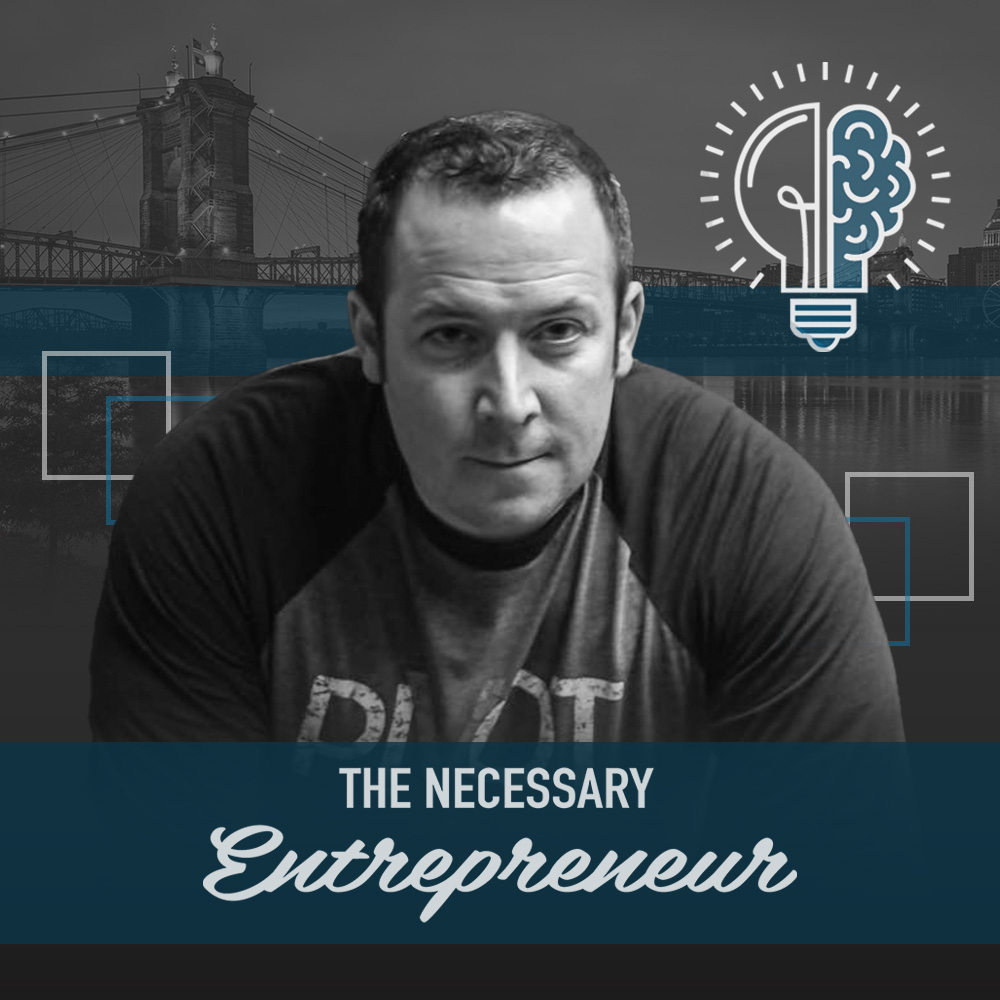
On this episode of The Necessary Entrepreneur, host Mark Perkins sits down with James Orsini, President of Startup Operations at VaynerX, longtime partner to Gary Vaynerchuk, former public company CEO, and one of the most respected operators in modern marketing, leadership, and business growth.
With over 40 years in corporate America and more than a decade inside the high-speed entrepreneurial engine of Vayner, James shares hard-earned insights most founders never hear. From helping scale VaynerX from 400 to 2,000+ employees to launching vYve, a transformational program for Fortune 500 executives and entrepreneurs, James breaks down what it truly takes to build profitable, enduring companies today.
In this deep, wide-ranging conversation, Mark and James unpack:
-
Why “perfection is the death of creativity” and how it cripples entrepreneurs
-
The difference between an entrepreneur and an intrapreneur
-
How Vayner scales rapidly while staying grounded in fundamentals
-
The real state of AI in business and why growth planning is being ignored
-
Why so many companies stall at $5M–$10M and how to break through
-
What leaders misunderstand about brand, marketing, and company culture
-
The unexpected power of humor, animation, and mascots in modern advertising
-
How to attract top-tier executive talent, even as a small business
-
The mindset shift founders need to avoid burnout and lead sustainably
-
Why AI-driven workforce disruption will create more entrepreneurs
-
What James means when he says: “Right is right. Doing the right thing is always the right thing.”
James also offers rare behind-the-scenes insight into the Vayner ecosystem, today’s fast-changing business landscape, and how leaders can innovate without abandoning core fundamentals.
Whether you're a solo founder, a growing CEO, or navigating the crossroads between corporate and entrepreneurial life, this episode is packed with real-world wisdom you can use immediately.
🎙️ The Necessary Entrepreneur, hosted by Mark Perkins, features real conversations with founders and leaders who’ve built businesses worth studying.
📌 Connect With Us:
Website: https://www.thenecessaryentrepreneur.com/
YouTube: https://www.youtube.com/@thenecessaryentrepreneur
Instagram: https://www.instagram.com/thenecessaryentrepreneur/
Facebook: https://www.facebook.com/TheNecessaryEntrepreneurPod
X (Formerly Twitter): https://twitter.com/MPerkinsTNE
LinkedIn: https://www.linkedin.com/company/tnepod/
TikTok: https://www.tiktok.com/@tneclips
Spotify: https://open.spotify.com/show/6xhGUE1yzy2N0AemUOlJPx?si=d1c5c316af404f15
Apple Podcasts: https://podcasts.apple.com/no/podcast/the-necessary-entrepreneur/id1547181167
📌 More About James Orsini, VaynerX & vYve:
https://www.linkedin.com/in/james-orsini-4b1aaa7/
https://www.instagram.com/jamesorsini/
https://www.tiktok.com/@jimmythepencil
https://x.com/JimmyThePencil
https://www.threads.com/@jamesorsini
https://vaynerx.com/
https://vyve.vaynerx.com/
https://www.linkedin.com/company/vyvebyvayner/
0:00 Perfection is the death of creativity. Fail fast, fix fast, learn fast. My personal anchor statement is right is right. And it comes from doing the right thing is always the right thing. Thanks for joining us for another, what I know is gonna be an awesome episode of The Necessary Entrepreneur. We have an awesome guest today, James Orsini, but we were speaking to some folks here at IHEART and NYC and I said, man, now it's a bad time to reevaluate the name of the podcast because you have to explain how to spell The Necessary Entrepreneur, but I'm pumped to have a great conversation.
0:51 We've hung out for about an hour today and James Orsini, everybody knows of Vayner and VaynerX fame and you've been doing this for over a decade with those folks over there. Yeah, it's been 11 years in January I've been with them. It does. Unbelievable. Like blink of an eye kind of thing. So you've been in many different roles. And even before that previous 11 years, you spent almost 40 in corporate America. um The past 11 to be in a truly high speed entrepreneurial environment, maybe we can talk about the crossroads of that today. Also with the 40 hours of what you bring from the Madison Avenue and marketing and being in C-suite. Because I think it's very confusing today.
1:31 How do these entrepreneurs, um how do we put a little professionalism, a dose of professionalism onto our business? and surround ourselves with the right people. Yeah, well, I'll tell you, I've learned more in the 11 years than the three decades prior, being in the hallways here. I'm watching this company go from a little under 400 people when I started to 2,000 plus now. But if you didn't have those 30 years of experience, could you have grown as fast as you did with the 11 on top of it? I think it would have been different, a different growth. You know, this was a mature, slow, uh, absorbed growth. You know, there were times where I was fast and furious. I remember going from KPMG to Goldman Sachs and, know, I was used to working on a ledger paper and they put me in a room and had a computer.
2:16 And they said, I said, what's that? And they said, it's your computer. said, no, I don't know how to work on a computer because you figured out. And, uh, they gave me an assignment that should have taken an hour and 12 hours later, puddles of of sweat under my arms, I completed the assignment. So a little different learning. uh Absolutely. You I mean, you got to be comfortable with a world of change. If you're uncomfortable with change, uh you can't innovate. So you talked about ledger paper and computers. seems like neither of them have even produced anymore, right? We had a device in our hand. What's that speak to? I think maybe we went from ledger paper to a computer maybe in a decade.
2:57 But now it seems like these things are changing in 12 to 24 months. Yeah, the speed that things are moving, keeping your finger on the pulse uh of new initiatives, but not necessarily running at 100 miles an hour at the most shiny object. That's kind of what I've been working hard to keep entrepreneurs on track with. And when I joined Gary, we met in front of eh the company and I said, I'm here to help keep the train on the tracks. And Gary's like, hold on, hold on, stop. You're here to help me hover above the tracks like the trains in Japan so I can move faster. And that set the tone for 11 years.
3:39 So what is the next piece? Some UFO stuff? What are we going to do here? We're above the high speed trains. Yeah, I mean it's kind of wild how, you know, I do say though you gotta embrace the fundamentals to achieve success. So you can't leave the basics behind. You know, I'm worried about people using AI and they can't spell and they can't add. It's an issue. So you better have the basics down before you move to hyper speed. Do you have basics saved in your head, these fundamental basics across cross-pollination of all businesses? Are there basics and fundamentals that there's tie downs to, do you need to go into the industry and find out what the fundamentals are in that industry?
4:20 I could tell you that's having a CPA background, profits rule, right? I mean, I think anybody can run a company that doesn't make any money. Anybody. It's really hard to run a company that's profitable. Because you got a purpose for profits. You can't look in the rear view mirror and say, how did I do? You know, too many doing that. It feels like we worked really hard. How did we do? Oh, we didn't make any money at all? It's kind of wild. I mean, you know, you really need to purpose to profit. Because that's what's going to feed the rest of the vision But in entrepreneurship, seems like we do have seasons where it's a struggle to obtain some profits. Seasonality is fine. You're balancing a portfolio.
5:01 Think of it like stock. Every one of them doesn't have to produce a 15 % return. Some will do 30, some might lose. But as long as the portfolio performs profitably, you're happy. That's how an entrepreneur's gotta look at their business. So this new one of the new ventures inside of you being the president of startup operations is Vive. It's the V Y V E. Of course you got put that Y and everything and the V and all you guys, know, just branding. um But you said that when Gary had you stand up in front of people and you're like, my job is to try to keep it on the track. Say, Hey, hold on. Do you look at Vive trying to have entrepreneurs try to keep it on the tracks? Well, we we birth Vive mostly because the Fortune 500 executives and the entrepreneurs that Gary was meeting, Gary felt were what he called low in the tank.
5:51 They, they were spent, they were tired. They were not on the cutting edge of business or marketing. And they really needed to be refreshed across multiple fronts. So in Vive, we looked. to better the overall wellness of the leader, make them smarter about their business, make them more in tune with what's happening in the marketing for the now, and bringing wellness in front of them, nutritional wellness, sleep wellness, uh mental wellness. We feel that that's what brings and makes better leaders, as demonstrated by Gary, and better leaders run better companies.
6:33 And that is a measurable ROI of less turnover. Right? We have a 17 % turnover rate in industry that averages 35. So, you know, people want to stay. And we attribute that to good leadership. So why did Vive fit into a pillar inside the businesses that he and you guys want to build? Well, it was interesting at the time, Gary, we had an executive, uh Andrea Sullivan, who's now the CEO of Vive, who during COVID was really just looking for some reasons to escape, right? And to gather some uh senior executive females, did one trip to Bali, did one trip to Costa Rica.
7:17 And it was Gary who peered into that and said, look, I think there's a commercial business model in what she's doing. Get with her and see if you can figure that out. And so we wrote a business plan for it in January. We programmed it in February and March. We sold into it March and April. And we launched the first class in May of 2024. So you're into, as business and entrepreneurship goes, you start out with a plan, but it seems to change. Right. Right? I think you started out with these cohort group plans of every three or four months you're going to start a new one. You found an evolution that's necessary as a part of that. Yeah, originally started out as a 16-week program where we had our research showed about 8 to 12 was the right size for each class.
8:01 It kicked off with a meetup here in New York for an immersion day. And then 15, 16 weeks of online programming where we brought in experts, some more famed than others, Damon John, Bobby Brown, Deepak Chopra. those meetings which still run today were more of a Q &A fireside chat, not necessarily talking head for an hour, but rather you as the vivor get to interact with those folks. And then it typically culminated in another gathering or a retreat in a particular location.
8:45 The first two were actually in... Modern Elder Academy in Santa Fe run by Chip Connolly. Last one that we have was in Amsterdam, we have one in New York. So, um you know, full immersion. Now what happens is you jump in when you're ready to jump in on a monthly basis. And then when we have 10 or 12 new people together, then we bring together the in real life element. Who have you all found that, you know, when we're starting companies and inside companies are starting new brands, we have an ideal client, right? This is the person that seems we're trying to sell to who this product is for. Did it start out with an idea on here's who we believe is the typical customer for this?
9:28 What was that and has that evolved? Yeah, it was Fortune 500 marketers who had an entrepreneurial spirit and wanted to do more entrepreneurial work inside of their big corporate structure. Intrapreneur, if you will, rather than entrepreneur. And cross pollinating, that's where we really felt the secret sauce was, know, if you know anything about Gary, he's left brain entrepreneur, right brain marketer. So, and in the hallways of intermediate, it's not unusual for. the CMO of Pepsi to walk past the founder of an organic blueberry company in New Jersey. um That happens every day. But in the outside world, it doesn't.
10:09 So we were cross-pollinating. And the entrepreneurs were learning from the marketers about scaling and delegation and leaning into culture for their next initiative. And the marketers were learning from the entrepreneurs about speed and not being afraid to fail and learning more from your failures than your mistakes. That was a, that's the real secret sauce and what we're bringing to it. this idea of failure, you're around that conversation a lot, lean into it, accept it, buy into the idea. Where do you think we're at culturally? know wherever, you'll know the finger of where you're at inside your companies. Where do you think we're at culturally with this idea of where are at with failure that it's necessary for significant growth?
10:52 So that's interesting because I have uh strong opinions about that. think we're almost too accepting of failure, meaning um they don't really have a plan and we'll back it and let's see, maybe it'll work and maybe it won't. You know, it reminded me in the early days of the dot com, I couldn't imagine why I was reading Perspectus. And it was saying that we cannot make profits if we do make profits, we will not sustain profits. mean, you know, strange things like not in accordance with the textbook. Let's put it that way. And the company would go public for eleven dollars and close at one hundred twenty one.
11:33 And I remember meeting with some folks from Maryland at the time. I'm like, why? Why are you guys allowing this? And he said, well, you know, we're we're investing in the white space as long as they're taking up the white space where we're rewarding them. And we saw how that story went with the dot com implosion. Um, I can't help but feel a little of that with AI at this moment. I don't see any plan for growth from AI. I hear a lot about cost cuts. I hear a lot about savings, which is good. You know, I'm proponent of that, but I don't see anybody talking about, and this is the incremental growth that will come from AI.
12:14 This is the new. And we were talking in the hallway before and what I fear most is that some folks are now using it almost like whitewash. Right? Like we laid off 4,000 AI. And you're getting a false pat on the back. Like people think, wow, they must be really innovating over there that they figured out AI and they could let go of 4,000 people. I'm not sure that's real. think we jumped the AI. Do you think AI is really moving the metrics for companies yet unless you're an AI company? No, I don't. I think it's a powerful tool. I think it's a great aid. um I'm curious, I'm playing with it.
12:56 I don't know enough about it to be dangerous, to be quite honest. m But I think it's out in front of his skis right now. Are you in the predictive business? It doesn't seem like you're so practical when you approach to things, right? I got the same textbooks on my shelf that I used in past, but I could tell you, there's often, not the new one to the sun, basic block and tackling. Think of all the social media that came out. There was no new model. They had to revert to 150 year old advertising model to make money. All those platforms, they couldn't figure it out. That's what kind of has me cautious. um Optimistic, but cautious. So if that's somewhat your default to be the cautious entrepreneur inside an entrepreneur environment, give me a little laugh there.
13:42 um That from my perspective of being around so many entrepreneurs and people trying to scale and achieve big things and growth and metrics, but um that it's important to have somebody like you right next to an entrepreneur that has huge hopes and dreams. um It's rare that an entrepreneur could attract somebody with your experience, with your talent, and that you would want to coming from 30 or 40 years of a completely different environment. I'm sure you could sit around and we could have dinner and drink wine and you could tell us for hours why you did it.
14:27 What does an entrepreneur need to know about how to attract someone like you to help them grow their business, to balance them in all the ways that they're not practical, that they're not cautious enough? Because we throw it to the wind and say, well, of course we can. We waste a lot of money. And a lot of times too, because, you know, the entrepreneurs that I work with, feel that nobody knows their company better than them and they can do everything in the company better than anybody else in the company or who would come into the company. And that may or may not be true. don't know. Uh, but I do know there are, there are only certain things that just the founder and entrepreneur can do.
15:11 And there are other things that others can do. And I encourage the entrepreneurs that I work with to hire to your weakness. You know, like, I don't cut my own lawn. I got a landscaper. I don't want to cut my own lawn. Do I know how? Could I? The answer is yes to both. But I got other things that I want to do. So when we had that meeting here in New York, some people were like, yeah, you know, just not good at finance. I'm just not good at marketing. I'm like, so why are you doing it? Why are you doing it? mean, deer in a headlight, you know. So how do we attract someone like you? So go back 11 years ago. What do we need to do to attract someone that with the skills and the knowledge and the ability as you.
15:56 Well, it starts with knowing what it is that you're looking for. You have no hope of attracting me if you don't know what you're looking for. So, you know, if you're looking for somebody as Gary described to help him avoid the potholes, to move faster, to quickly learn from 25 years of mistakes that I made that he didn't want to make, he kind of knew what he was looking for. And then even when he offered me the job, I didn't say yes because I didn't know him. And I went to other people in my network. In fact, Andrea was one of the people I went to in my network. And she's like, don't you know who he is? And I said, no. She said, he's like a Steve Jobs, Mike Zuckerberg kind of guy. Like he needs somebody like you.
16:37 You you should, you should go back and do that. And I did. I walked across the street from what was Interbrand on 18th and 5th at the time. And he was on 23rd and Park. And I said, yes. So find the guy that'll say yes. Find the guy to say yes because you know exactly what you're looking for. Like when he asked me, you do this? I'm like, yeah, I really can. know, hey, I wanna build a $500 million integrated independent international communications company. Can you help me do that? I'm like, yeah, I actually can. And then that's when I went back to my wife. said, look, I think I'm gonna step out on the cloud and say yes to this thing. She was like, you sure? You know, the first time I did it was funny.
17:17 I became the CEO of a small publicly traded mobile media company. And there was an article, I left Saatchi to do it. And there was an article and the headline was, what makes James Orsini leave his comfortable perch at Saatchi and Saatchi to go to Cedar Mobile? It was pretty funny. And I looked at it I was like, yeah, it was a comfortable perch. ah Because I wanted to be number one. I was everybody's number two for a long uh time. And I had a lot of people telling me that I should have been number one. And it was a hard and lonely job. And who knows, if I had number two like me, maybe I would have been even more successful.
17:58 I didn't. ah And then after that job, I read a book called Consigliere, Leading from the Shadows and about being a great number two. And I was like, shit, this is who I am. This is what I'm supposed to be. And I just got, you know, continued to be comfortable in that role. Do you think it was important for you though to have some moments in the number one seat? yeah, yeah, especially in the early days with Gary because, you know, lot more, a lot of people more smarter than me and, and, you know, more cutting edge, but very few CEOs and even fewer publicly traded company CEOs.
18:39 So early on, you know, I could provide even a little text like, man, I know how hard that decision was, you know, that tough I've been there. So, yeah, it made me a lot, made me a lot better. I learned from every one of the jobs that I had. I left every one of them. Like think about it, I'm still friends with every boss I've ever had and I had to quit every one of them. But I took each one as a learning and stepping stone to the next one. Sitting here in the entrepreneur seat, whether it's somebody that's running a company of one or a company of three or four or even 300, to your point, it's lonely. And to have someone with your perspective and your experience, you probably had empathy for him in moments when no one else had the perspective or the knowledge to be able to.
19:28 I certainly did and it was a big, big investment for he and his brother AJ at the time to hire somebody like me. um part of that was I didn't want to let them down. I knew how much of an investment it was. I mean, they own the company, it's private. um So I was determined to make sure that they felt good about the money that they were spending because that wasn't going to take less. that sense of responsibility? talked about it earlier. It's like, James, I'm going to ask you who you were at 10 years old, but where's that sense of responsibility that you brought at what, 51 or 52 years old eh that you felt responsible? Where does that come from? think it comes from the fact that I grew up in a family that was much older than me.
20:10 My brother was 10 when I was born. I had a sister 14 and another sister 16. So by the time I was seven, everybody was around the table talking politics and whatnot. And I'm there, I'm listening. So I went to wear a Fidero hat in eighth grade. I think it was a little weird, but that's all I saw in my house. ah So certainly I was a little more mature than my age. So you mentioned uh a few minutes ago that to hire for our weaknesses. Yeah. Or to compliment, you know what I mean? You don't necessarily have to be weak. This is not to insinuate that Gary was weak in anything.
20:51 I'm actually I'm actually looking internally for me. Right? That's my deep breath. I'm like, gosh, what are you telling me? yeah, yeah. Now it's, are only certain things that you can do, you know, uh, and I remember when we had a meeting one time, uh, with Gary and it got a little heated. It was me and the CFO and, he was doing some stuff. I said, look, congratulations. You could do our job. Here's the bad news. We can't do yours. So now let us do this that you hired us for that we know how to do. And, and you continue to make the rain because we can't make the rain. step out here and say this though, that's actually refreshing as an entrepreneur to have a leader that's beside you to step up and do that. eh It is because it, cause almost at times when that's happened in my life, it's like finally, like full ownership and not for ownership.
21:36 You're telling me, got this. Yeah. Right. You know, what I said about, cause I've written a ton about the Vayner world over the last 10 or 11 years. It's all in medium by the way. but one thing that I noticed was, uh The advertising industry is an industry of fear. Is this the day the client fires us? Whenever you walk in. But VaynerMedia is a fearless company. They don't believe there's anything that they can't do. And that's, it's the mindset. That's the difference. So, know, it empowers its people.
22:17 And you feel that. You know, in other places, like everybody's hoarding their business, they're worried about somebody looking over their shoulder, worried about somebody taking their idea. And this is nothing but a collaborative, open laboratory that everybody works in. It's wild to me. know, it seems like when you quote someone's name these days, people want to, you know, it's all viral, but you know, let's go back 10 years ago. We even take company like Tesla. I remember hearing the first time, this was a moment for me as an entrepreneur, when I heard that he released his patents. He opened it up completely about what it was to develop and build. said, you all can take it, take the battery technology and do it. And still he has not been.
22:59 hampered from continuing to be the most wealthy person in the world. That's crazy. And I heard that. went, how's this going to go? eh That, mean, that's at the highest level. Yeah, those are people that want to leave a legacy, right? Those are people that want others writing about them. know, Gary's that way too. He gives away all the secrets. Like, hey, I just figured this out now. Everybody, you guys should all do this. I think he's stunned at how many people don't. His last book is completely that. That is the blueprint for how we do it. I, when I started flipping through the pages, I just laughed and I just went, there should be no one that isn't taking action on wanting to build a brand and do marketing on social media. It's like a recipe book. It's it, right?
23:39 It's a recipe book. However, if you leave some stuff out, it doesn't taste like it's supposed to taste. You know, it'll still be okay. Is that the hard part to catch lightning in a bottle that there are so many details to really build a significant company? I mean, there's a lot, right? It's hard to build a big and profitable company. It's really hard. Really hard. You know, mean, I've been around some great companies and I've been around some companies just aren't there anymore. You know, they've fallen from grace. You know, this is uh this advertising industry, I think is under siege. You know, we just see nothing but mergers and consolidations.
24:20 I'm just reading about the Omni-com interpublic and and losing DDB as a brand, that was a billion dollar company when I was there. Billion, would it be? It's gone. Why do you think that happens? I don't know what the exact stat is, but it's something like if you go back a hundred years and look at the S and P. Yeah, why does it happen? Because they stop innovating. They get fat. They swell instead of grow. Everybody gets happy where they are. They get content. And then what's at the top doesn't want to rock the boat because it's still real good. Right. So, you know, let's leave that for the next guy. We're not going to do too much AI right now. OK, I got I got two more years until I retire.
25:01 The next guy is going to worry about the AI. I don't need to do anything right now. I think there's a little of that going on. So what's the approach if nobody's businesses right now are being drastically financially impacted in the positive from AI yet, right? And there's a big debate on what it's gonna be. How much time do you invest there to be on the true point of the spear? I think you increasingly invest more. Okay, this is what didn't happen in the industry. When clients, well, let's talk about the whole social media world, right? The advertising industry had the ability to own the Facebooks and Instagrams of this world, right?
25:44 Instead, they invested in it and they made a couple, they sold out, made a couple bucks and then they shelved it. and put it on the side and paid no attention to it and said, you know, we're making too much money on television and radio, print, right? We don't need that. That was a mistake. That was a mistake. you know, dedicating uh a small portion of your time, energy, money to innovation, whatever that innovation is, it's AI grade, you know, but earmarking, hey, 10 % of what we do is gonna be innovating. Yeah. This has happened to all the companies. There's examples. There's, you know, you look back at Blockbuster had an opportunity to buy Netflix for $50 million.
26:25 eh Those guys had a meeting and they pretty much laughed them out of the room. And if you even go back, I think a story from Gary, talks about, he got laughed out of room, the yellow books, the yellow pages guy, right? He's like, what are you talking about? these are really successful people inside these businesses. We just can't see outside the bubble. So 10%. Yeah, I mean, I would start there, you know, I mean, but the notion is you have to embrace change to innovate. Which means you got to change up what you're doing. You almost keep re-inhaling. Or you will be stale. You know, it'll just end for you. You know, let's talk about the Cadillac brand. I love what they've innovated. I now have two Cadillacs.
27:06 They enter it, not yet, not yet, because I'm not a hundred percent there. If they had a hybrid, however, I would have had it. But I was a 25 year Mercedes guy. felt the car was stale. Somebody told me, go look at the Cadillac. I'm like, really? My father used to drive a Cadillac. It was so good, I bought two. I think they're doing, so some companies are leaning in, trying hard to innovate on a particular brand, and finding their lane, and then riding that lane hard until Harley, think, is one that hasn't innovated. That's a problem. great brand just kind of rested in its laurels because this is what we've been for 30 years.
27:48 And, you know, I just feel like they didn't do it. responsibility on the leader to integrate that thinking. Look, if it's not the leader, it better be somebody in the leadership team who pushes the leader to see it that way. I mean, you know, you don't know what you don't know, but you are accountable for what you do know and don't act on. And, you know, that's, this is certainly over the last 20, 30 years, this is part of what I tried to bring to the table. Like just make you aware of how it's done. You know, not to repeat it, not to replicate it, but to share what I've seen with it.
28:33 I remember the first time I went on a television commercial for Sachi and they looked at me like I had three heads. I'm like, why is everybody looking at me like that? said, well, we've never had a finance or op guy on a television shoot before. I said, really? Like, isn't this like $400,000 that we're spending on this production shoot? Like, yeah, yeah. I said, well, how do you observe it? How do you know if we're doing it the right way? I mean, really, I'm the first guy ever? That's kind of silly, I think. So, you know, first television commercial we did here at VaynerMedia, I was there. I was on set. Where's it, where's it happen? Really, you want to show up?
29:13 said, yeah, I'm gonna show up. You know, half a million dollars? Yeah, I'll be there. So just, you know, observing, seeing, taking some notes. So since the rise of social media, um it brings the world that we previously weren't exposed to, it brings it closer and it makes it feel available and possible for all of us now. To the detriment sometimes in this world of entrepreneurship, to making everybody think that they want to or can. Those are two different conversations, because I believe most people can. They can do more than they probably even believe. is within the capability of their wheelhouse.
29:55 But, and there's such a high failure rate of businesses. Have you seen, coming from the C-suite and so much experience in corporate America, and then spending so much time over here in the entrepreneurial space, along with Vive, spending time with a cross-section of Fortune 500 and entrepreneurs, have you seen some essential skills or mindsets or perspectives where you can go from an entry-level position to being a successful entrepreneur. Yeah, I think uh what we're finding now is, I think the last time I looked over 270 colleges and universities in the US have entrepreneurial studies as a major.
30:38 Okay. I also believe that um this wake of AI and the layoffs that follow, they're going to be even more entrepreneurs. Because if what you were doing is not there anymore because they had now does it, you got to find something else to do. I think it's going to birth a ton more of entrepreneurs. So I'm all for the small business entrepreneur. I've seen more, more things, you know, making money that I'm like, really? There was a business model there and they found that. Holy shit. How'd they do that? You know, so, um, I applaud that. Uh, and your observation about social media has leveled the playing field.
31:19 So now you can be that small guy in Cincinnati who developed a little soap and compete with Procter & Gamble. You know, because it's a piece of viral content, right? We saw that one guy with the ocean spray, all right? Cranberry juice, right? On a skateboard with some music in the background. The music went to number one after 30 years that it had been released by Fleetwood Mac. The product sold out from the shelf. When was the last time Colgate had a product sell out on the shelves? You would know better than me. Never. Okay. It's just, it doesn't happen. Right. But a piece of viral content can make that happen. Aren't we in this place though that we're working so hard to be perfect so it becomes a piece of viral?
32:04 That is, you're on a sore subject right there. Okay, you're scratching the scab. Perfection is the death of creativity. When I was in big advertising, we were trying to create art. We were trying to win awards. In VaynerMedia, we're trying to sell stuff. We're trying to move stuff off the shelf. We're trying to sell services. We are not passionate about the... beautification of art of the creative. We're passionate about whether this creative on this platform with that algorithm, with this cultural initiative is reaching that audience.
32:47 And if not, change it up again. All right, lean into the stuff that's working, walk away from the stuff that's not. So it is a different world. I have a few clients now that I'm advising and they're just, they're like stuck in the mud on there. on their brand, like, man, it's so important, but that's off brand. said, yeah, but you're not selling any product. the fact that it's off brand. You're not moving any product. You have to change it up. gotta do, uh big proponents of humor. We're big proponents of uh animation and comedy and uh mascots. Anything that helps you move the product off the shelf is important.
33:28 You gotta lean in. oh Seems like we haven't been able to eliminate this default human behavior of striving for perfection, because we were doing that even outside of marketing, we're still doing it. Right? Yeah, I think it's unhealthy for our society. I see it in kids. see it, you know, we were just talking to somebody who's, you know, talking about the kid being nine years old and sending them to training as a soccer player. I'm like, he's nine. Like, he may not even want to kick a ball by the time he's 12. Well, at least wait until he's 12, 13 before you lean in. It's a ton of money, by the way. And I know I had a son who played baseball right through college, you know, through his senior year and everything. So. It's a ton of money with your kids with sports, um you know, striving for it.
34:13 Not everybody's going to play for the Yankees. I mean, you know, we faced that reality when we did it. We knew that we were going to leverage baseball to get the best college experience that we could. And that's what we did. I'm thinking about that on experiences and if you spend all your time in one lane, you're not going to have a breadth of experiences. I'm a product personally after 46 years of life of doing a lot of things, doing a lot of things and trying a lot of things. And I use the word try. I just made sure when I tried, I really tried to do it really well. Yeah. The best I could. And I always learned something to take on to the next one for the human that I became. I think it's important because there is, you can take that with you.
34:55 Take the learnings with you and the failures and the mistakes and everything. I did a podcast once when all I wanted to hear about was tell us some mistakes that you made. You know what I mean? Take us through, we know you had a lot of successes, but let's talk about some of the balls that you fumbled. And it's like, yeah, I bought these three public relations companies in London and I merged them together and one plus one plus one equals one and half when I was done. You know, because I didn't pay any attention to culture and they were all different. And then they want to say, what'd you learn from it? You're like, don't do the same thing. Yeah, don't do the same thing. You know, you don't need to be in 31 offices in 26 countries to service the world. learned that. They're still trying to close stuff that I opened up in the eighties.
35:38 So, uh, you know, there's a lot of stuff that I learned from it and, uh, and bringing it in, uh, you know, that, that has value and, um, and it doesn't have to be exactly, this is what I laugh at with, uh, I'm looking at board positions now, right? It would be 63 in January. board positions. And you know, you're an electrical company in the Midwest and you're looking for board members that have electrical experience. Like, well, you got a whole freaking company's got electrical experience. You want somebody who doesn't have electrical experience, right? Don't you want a very fresh perspective in there? I mean, seriously, that's what it's supposed to be about. That's what the board is. The board is outside, fresh thinking.
36:20 You know, it's it's a problem and why I stopped getting you know, some subscriptions in this industry, because we talk to ourselves as an industry, you know, instead of getting real outside perspective. So, but we do that as humans. So here's the question, if we're not supposed to read the comments, because I actually believe personally, I want the honest transparent feedback, but there's these big, huge, successful people read the comments, which is someone's just opinion or perspective, but. Can I challenge you on that? Okay, it's not about reading the comments. It's about don't engage with the comments that you don't want to engage in.
37:01 Haters gonna hate. You're never gonna not have their opinion. But we've come to find that your next creative brief is in the comments, right? So you should be paying attention with and engaging proactively with positive comments. Okay, leave the negative behind. um But also realize if your customers are saying something in there, your next product development or enhancement might be in the comment section, hey, this is a great product, too bad it doesn't do this. Right? That was kind of like, you know, I remember having a, what car did I have? Anyway, I had one car and I was like, you know, it's too bad they really, they don't have a backup camera option in this thing.
37:46 And mid-year, now it wasn't just my comment, but. Others must have said the same thing. By mid-year there was like a fix like, hey, come in and we can install this, you know, this backup cameras at a time when most people had it, like almost standard. you know, I'm spending a lot of money on a car and they didn't have it. So, you know. Yeah. Imagine if your favorite restaurant, if you had a bad experience and you gave them a one-star review and you gave them honest feedback, but they just cast it aside. That's a free opportunity for them to listen to a valuable client. Yeah. Right. Yeah. So I think what's, what's tough in society now though, is maybe this lack of resilience where it hasn't been developed and maybe that negative comment.
38:29 It's tough to know which one's true and honest. Yeah, this is a, you gotta look for patterns and not one-offs, you know? That's part of what I do in businesses that I evaluate too. I'm looking for patterns, I'm looking for trends, and then I go in and try to figure. I would be overwhelmed if I tried to fix every negative issue or thought that came across my desk. But I recognize, hmm, you know what? I saw that now in three different places. I think there's something there. I'm gonna have to address that. Too coincidental to happen that many times. There's a question in two areas here. talked about seeking out board seats. I'm assuming for companies that you're like, that would be fun to be a part of that.
39:13 What's going to be exciting now at 63, because you invoked your age. didn't bring it up. At 63, what's going to be exciting about that part of your life? Oh, I think just, you know, helping businesses find their next level. You know, there's a lot of businesses that can reach five million to get stuck or 10 million and they're stuck. You know, I know I have friends who've had a $10 million business for 12 years. Well, that's an issue because something that's not growing is really dying. Right. Human plant life. Right. You got to keep the growth. You may not have to grow at 30, 40 % per year. But you should be growing and moving forward.
39:55 So just helping, helping now. I'm working with a small company out in California, a apparel company. But this is one that is stuck on the brand, right? It's brand perfection. And I think there's other things that he could do. So I just introduced him to somebody who specializes in animation and mascots. And my hope is that they'll engage with that person in 2026 and help move the needle. Is it important to try things? Yeah, fail fast, fix fast, learn fast. That's kind of what we do in VaynerMedia. It's what I did at Satchi when we were there as well. You have to try some stuff and give it enough time to root, not just kind of one and done.
40:42 But if you fail, then fix it and learn from it. Is there a James Orsini book on the horizon? You know, mean, had a lot of people ask me about that. Now, who knows, maybe with AI and the fact I've been on 70 podcasts and written 30 articles, maybe I'll just dump all that stuff into AI and a book will come out. I'd write one in about seven minutes. So I hear. Might have to work on that. Okay. I'm sure you know the publishers in the business, right? Going forward, let's say you've got another good 10 years in here of fast pace. You might say 20. There's deep breaths there. Is that a good metric is 10 years a good metric?
41:22 Look, uh there's something to be said for uh the way Derek Jeter walked off of his career, right? uh He had a walk off and said, okay, that's my last that bad. Well, you got one more game in Boston. Nah, I'm not gonna go. I just had a walk off, everybody's screaming, they're hugging me. mean, why do it? So I'm looking for the Jeter moment. What happens if it doesn't come for 10 years? Yeah, there's a lot of people who stay way past the Jeter moment. Instead of rose petals, they start throwing rocks. What do you think the some of the best advice? I'm not just interested in this, these cliche answers, but what do you think you really have to offer to the people coming up now running these businesses?
42:02 If they don't have access to you, if you're not on their board, if they don't have an opportunity to sit down and talk, what's a, cause we go back to it, to a Jim Rohn, all the things that guy was brilliant, but there's something when I, when there's people that have huge brands that have accomplished stuff, when they make a definitive statement, I pay attention to that. And I believe it's a paraphrase, but I believe he said that, The only thing that matters is your personal philosophy. I think it's somewhere around that. That's good advice because if somebody really wants to grow, somebody that intelligent and smart, take that, like, what's that mean? It's like, your personal philosophy affects every decision you make. So is there something that you're seeing over the past 30, 40, 50 years that you're like, man, if they just do this.
42:47 Yeah, my personal anchor statement is right is right. And it comes from doing the right thing is always the right thing. um know, family, business is doing the right thing when nobody's And that's the, know, I hope business gets a little more back to that. I saw a scary side of things on Wall Street when I was the CEO of public traded company. And it bothered me a lot, you know. um And uh I just purpose to walk the straight and narrow. uh Family, friends, work, uh church, seat hall, right?
43:27 We talked about that. So I actually served on the Board of Regents there for seven years too. um So I would say for me, if it's a philosophy, it's right is right. So one final one here, even though we didn't have to, had a good conversation, not a bunch of questions. Do you think that leaders are they trained or are found? You know, I became a leader mostly because people chose to follow. I didn't have to always say, hey, I'm the CEO, you need to listen to me or I'm the, you know, before I knew it, was, you know, captain of a team because people got behind what I was doing or, or heading up the ushers ministry in my church because I don't know, I wasn't appointed.
44:10 It just kind of happened. So, um, So that means that you were discovered and found. Yeah, I think you know leaders have it in them, know, they're they're not gonna sit in the back of the class They're probably gonna sit in the front They're not gonna be the last to raise their hand. There might be the first that's kind of always the person that I was And it's worked out good for me You think you can take those ideas even with vibe and stuff and maybe people that didn't have those natural instincts. That's kind of the question like can they be taught and learned? I know we can learn a lot, but can you really flip the switch on the trajectory of those types of Yeah, we're helping people discover themselves. Like it's in them already. We just kind of help them discover it and find it.
44:52 You know, a lot of people come into Vive thinking they want one thing. We had a guy come into Vive, okay, here's what I'm going to do three more years. I'm going to flip my company, sell my company. And then by the end of Vive, he's like, I realized I hate, I hate what I'm doing in my company. I like the whole &A approach of buying this company and everything. I want to do &A. I'm gonna sell my company right now. I'm not waiting three years and I'm gonna just do M &A and other stuff. We just helped him discover that. But he walked in thinking he was gonna have this kind of plan. So, you know, people come into Vibe when they're transitioning out of a role into another, or when they feel, uh you know, they got a passion project that they think could be a profession somewhere down the road.
45:39 It's a side hustle now, but you know. I'm not here because of the job that I hold. I'm here because of the side hustle I'm thinking about. Can you help me flush that out? know, vibes have been pretty cool that way. How do people engage with that? If this has triggered somebody's brain, like, is that? How can I be a part of it? and just go on socials on Vibe, V-Y-V-E. know, we're on LinkedIn, we're on Instagram, we're on TikTok as well, you know, and engagement or email me at jorsiniatvaynermedia.com. You know, certainly all my, I'm James Orsini on LinkedIn and Instagram, at jimmythepencil on X.
46:22 I don't talk about it, but man Background at Jimmy the pencil that sounds like you hung out with some with some guys doing some things Yeah, you need another 45 minutes. Yeah, that's it, ah Wight, thanks for joining us. It's been a pleasure. I hope your audience gets something from it. If they don't, I don't know what to I them. I blame them. All right. Have a good holiday season. Thank you.