

 RSS Feed

 Apple Podcasts

 Spotify

 YouTube
#158 – How to Turn Your Expertise into an Eight-Figure Online Business w/ Justin Allan Montgomery
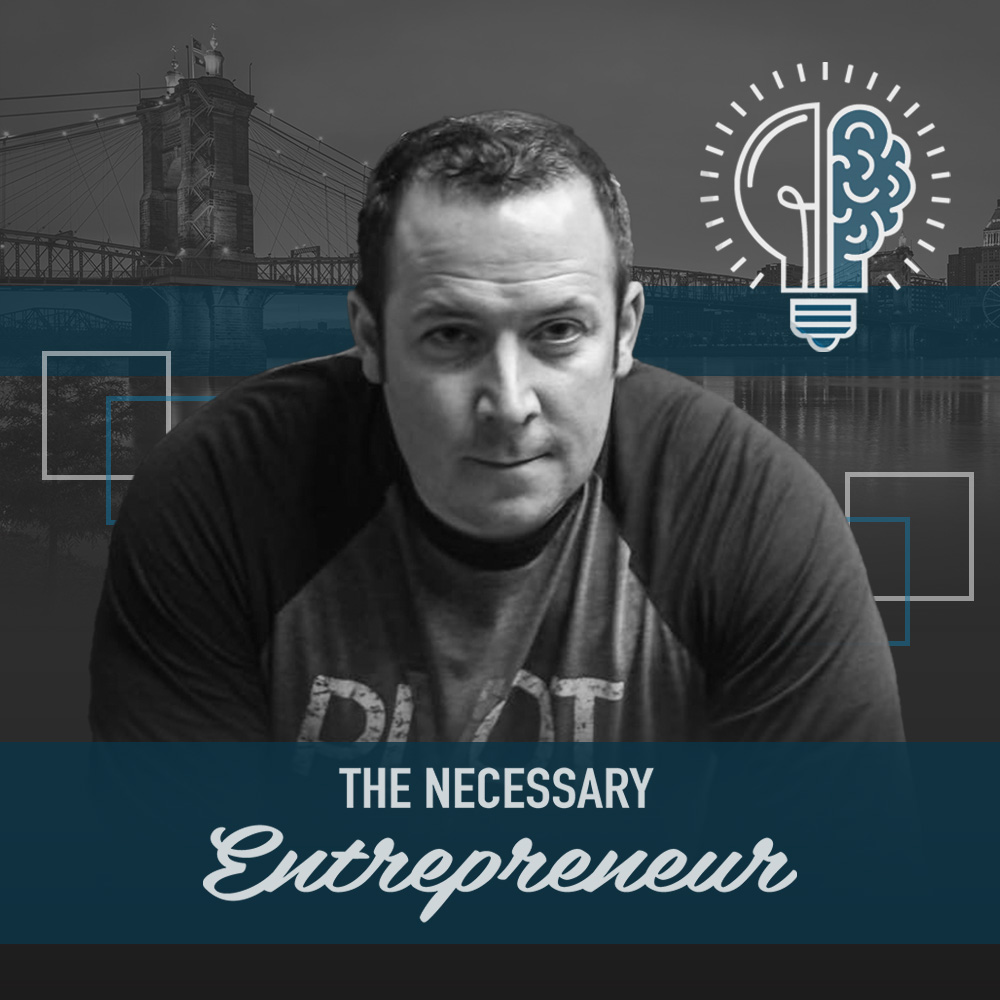
Want to turn your expertise into a business that earns while you sleep? Former ER nurse Justin Allan Montgomery left a capped-income career to build an eight-figure online education empire, and now he’s helping professionals transform their knowledge into profitable continuing-education businesses.
In this episode of The Necessary Entrepreneur, host Mark Perkins sits down with Justin to explore how he escaped the traditional career trap, replaced his income within 12 months, and built multiple multi-million-dollar businesses from tiny market shares. Justin shares why fear stops so many smart professionals from taking action, how to identify saturated versus high-opportunity markets, and the exact steps to create scalable online education revenue.
If you’re a nurse, doctor, attorney, engineer, therapist, or any credentialed professional ready to stop trading time for money, this episode is your roadmap.
Topics covered:
• Escaping capped-income careers
• Overcoming fear and analysis paralysis
• Building an eight-figure online education business
• Turning professional expertise into continuing-education revenue
• Identifying saturated and overlooked markets
• Creating passive, scalable income
• The psychology of people who actually follow through
• Building a business from launch → scale → exit
• Why only 2% of professionals take action
• Finding passion beyond financial success
Perfect for listeners interested in entrepreneurship, online education, business building, productivity, and creating financial freedom.
🎙️ The Necessary Entrepreneur, hosted by Mark Perkins, features authentic conversations with founders and leaders who’ve built businesses worth studying.
📌 Connect With Us:
Website: https://www.thenecessaryentrepreneur.com/
YouTube: https://www.youtube.com/@thenecessaryentrepreneur
Instagram: https://www.instagram.com/thenecessaryentrepreneur/
Facebook: https://www.facebook.com/TheNecessaryEntrepreneurPod
X (Formerly Twitter): https://twitter.com/MPerkinsTNE
LinkedIn: https://www.linkedin.com/company/tnepod/
TikTok: https://www.tiktok.com/@tneclips
Spotify: https://open.spotify.com/show/6xhGUE1yzy2N0AemUOlJPx?si=d1c5c316af404f15
Apple Podcasts: https://podcasts.apple.com/no/podcast/the-necessary-entrepreneur/id1547181167
🚀 Learn More About ProCourseStart
Turn your knowledge into a scalable online course business:
https://procoursestart.com/
https://www.facebook.com/people/Pro-Course-Start/61574146510784/
https://www.instagram.com/procoursestart25/
https://www.tiktok.com/@procoursestart
https://www.youtube.com/@ProCourseStart
0:00 Every single person has some kind of knowledge, experience, skills that other people are going to find valuable. What you need to do is you need to just sit down one day and just list out the 10 things that you think you're good at, the 10 things that you know like the back of your hand and figure out, can I use that knowledge and monetize it and turn it into a business? We're trying to the eye the future. Trying to catch the eye of Trying to catch the eye of future. Trying to catch the eye Trying to catch the Trying to catch the All right, you all welcome back.
0:44 today on the necessary entrepreneur, we're talking with Justin Allen Montgomery. He sounds like a country music star. Um, he's a former nurse practitioner who reimagined his career by building an eight figure online education business. Now he's helping other professionals, doctors, lawyers, engineers, and therapists turn their expertise into scalable online course businesses. Justin, welcome to the show. Appreciate it, em you got to live up to that intro. I I will. The, uh, so you spent 10 years, uh, it was a fun conversation for 10 minutes before we started, but you spent 10 years, um, in the ER as a nurse practitioner, we just talked about you climbing mountains and climbing Mount Rainier and looking over and looking down.
1:27 have I done to myself? most outdoorsy thing I've ever done is drive to the top of Pike's peak out in your area. Right. You laugh. You're like, man, how about you do some hiking and climbing, but you've done, um, you've been in a lot of States, a lot of traveling, a lot of experiences. lived in New Mexico. Um, You obviously were successful professionally as a nurse practitioner. Um, when you look back, we're going to talk about your business and helping other people start this online education platforms for themselves. Um, when you look back on when you jumped all in to this world of entrepreneurship and starting this business. Would you do it again?
2:08 And don't think about just yes. But when I say, would you do it again? Think about contextually the reason why you would. And then would you do it again? Would you have done it sooner? And was the wife experience that led you up to that point was extremely beneficial that prepared you for that moment. And so if you said, if you say no to it, then we eliminate all the other questioning. No, I mean, I absolutely would have done it. mean, I would have done it a lot sooner, to be honest with you. mean, ah you know, I remember there was, you know, I had a light bulb moment, an epiphany one day in the ER, I was working and I was looking around and I saw like, you know, these 55 year old doctors and nurses and these older people in the ER and they just like, they just look so miserable.
2:50 And I would have been like 30, I don't know, mid thirties at the time. And I remember just looking around me like, I don't want to end up like these people. And I've, you know, I've been a nurse practitioner now for five years, whatever it was. And I've already hit the ceiling in my career, basically. Like, this is it for me. Like, there's nothing else. Like, this is basically it. Sure, I make, you know, hundred fifty thousand dollars a year or whatever it was. But like, there's not really a whole lot more room for growth here unless I continue to work, unless I pick up extra shifts and that kind of a thing. So, you know, I wish I would have done it much earlier. I think I would have been able to be a lot more successful than I am currently. And I think I would have probably ended up being a happier person because, you know, working just made me miserable.
3:31 So, so yeah. So why didn't you do it sooner? fear, man. was just scared. You know, I didn't, I didn't know what to do. I didn't know what to expect. Like I didn't, I didn't feel confident enough in my abilities to start a business. You know, I thought, you know, I put this business on a pedestal, you know, and I thought it was just this unattainable thing for someone like myself. And it was just fear. It just it was was fear was doing something unknown. And, you know, looking back on it, it's just I wish I could go back to younger Justin slap him across the face and like, dude, what are you scared of? There's nothing to be scared of here. There's not, right? mean, there's moments of this that are scary, but there's nothing that you should be scared of that's gonna stop you from taking action and leaving.
4:17 100 % yeah, I mean, of course, there's always gonna be some fears, right? I mean, you know, God, what if the business fails or you know, what if I do something illegal or you know, stuff like that? But but yeah, but overall, what are you scared of? mean, the worst case scenario is the business fails. And you know, if you follow my, you know, my philosophy with business, you should only be out 10 or $20,000. It's not the end of the world. So then what finally caused you to change and make the jump? What was so painful? Because people only change when there's so much pain. What became so painful that you say, going, I'm starting this thing. I'm becoming an entrepreneur. I'm starting the business. Two things, think number one was that the place that I was working at capped my production bonus.
5:02 So they kept my production bonus. Like I couldn't make more than this cap that they placed on it. So halfway through the year, I've already hit the cap and I'm like, I'm working for free basically at this point. Like this is, this is nonsense. And so that was really what sparked it underneath me. Like I got to figure out a way to make my own money. And then number two was I got divorced and I was like, You know, half my income just disappeared now. I we both were making the same amount of money. There was no alimony or, you know, I didn't have to pay or anything. It was just a mutual decision sort of thing. But I, know, hundred fifty thousand dollars a year just went out the window. And so now I'm stuck making one hundred fifty thousand dollars a year myself. And I was like, I need to make up this make up that deficit because I like the lifestyle that we had.
5:46 And it was that was kicking the ass that I needed. So how long did it take you from that happening in those moments to when you built back up to equal that lifestyle again, from the moment I'm going to start the business to being able Yeah. Yeah, I would estimate probably. Hmm, year, year and a half didn't take that long. Yeah, yeah. I provided a service that people needed and that people were scared to provide my first business was a medical cannabis clinic like I issued out cannabis cards to people like that was kind of like my really my you know, my first business and it was just pure profit basically like.
6:27 You know, it was a 90 percent margin or something, you know, ridiculous like that. So I was able to make it up fairly quickly. And then I use that money um to invest back into other businesses. I I didn't pay myself much money out of my medical cannabis clinic. I just basically rolled that money over into other businesses. And so then I started a men's health clinic. And then within about a year of opening that up, I was probably generating about ten thousand dollars a month. you know, profit after, you know, about the first year or so. like I said, it me about a year between one to two years to kind of get that money back. So then why start this business to allow other people to? So you can say, you know, some people are hesitant to say, well, I just want to be massively wealthy and be rich.
7:12 When I hear people say it, I'm like, yeah, you're going to realize there's more purposes of life, but I love people to admit that sometimes, right? Cause most people are like, that's not the right thing to say. But then others will say, because I found purpose, because I want to help change other people's lives. I'm just making sure that if you do make it a lot of like making a lot of money, that you don't not say that. because you're not a guy who's scared to say the wrong thing. No, I was 100 % money motivated, dude. I'm not gonna lie. I mean, was issuing medical cannabis cards something that I was passionate about? Not really. You know what I mean? I mean, it was, it's bottom of the barrel kind of medicine. So I just, purely did it for making money.
7:54 But what happened was, was that when I eventually started the business that made me a millionaire, I did do it for a selfish reason for money, but after about six months of being in that, I did become passionate about it. So I grew into that. So where's that passion out? Where's it at now? What did it grow into? What sort of passion? Yeah, so it made me discover that I've always been a teacher at heart, always have. You know, I can even remember being back in elementary school and helping other kids, you know, and being in high school and college and tutoring people and helping motivate people to do better and that sort of stuff.
8:35 So I've always been a motivational teacher, you so to speak. And me starting a business called the Elite Nurse Practitioner where I taught people how to start medical practices. It brought that back. was something that was missing in my life. didn't, you know, for 10 years as a nurse practitioner, I barely did any of that. I mean, I would mentor students and stuff like, you know, stuff like that and teach nurses and doctors various things that I'm, know, I might've known that they didn't know, but I wasn't, that wasn't really my, my big, my big job essentially. And so when I started the elite nurse practitioner, it brought that back, you know, that passion that I used to have and it, it, it re I like mentoring and teaching people the things that I know to help improve their lives.
9:28 That's what I'm passionate about now. It's kind of my purpose in life. Have you seen this stuff from you being a nurse practitioner in the medical field? Does the same way to build those businesses you've built, does it transfer to these other professional types of businesses? Well, absolutely. mean, I think the process is generally the same, right? I mean, you deliver a, you know, you deliver a solution or a service or a product that solves a problem, essentially. I mean, that's really what it comes down to, you know, with the business is you have to solve a specific problem for people. And I think that a lot of people forget about that when they try to start a business, they're not really solving any kind of problem at all. And they wonder why their business fails. And so I think that it totally translates and, building the foundation of the business is all the same thing and LLC and website and bank accounts, bookkeeping software, blah, blah, blah, you know, all that kind of stuff.
10:15 but I think the overall the overarching theme here is you need to develop a solid value proposition. doesn't matter what kind of business you start. So what's yours with this platform that you built now? What's the value proposition? Yeah, so with Procore Start, I teach professionals how to start a continuing education course business. So the value proposition essentially is stop exchanging your time for dollars and build a business that actually works for you. Like you have knowledge in your head. So instead of your knowledge working through you, let it work for you instead. What do you think if this platform would have been built when you were early in your careers as nurse practitioner and you would have heard and seen this Justin guy built this and he's breathing into you.
11:07 Don't exchange your time for money. Build wealth. reason why I asked this, yeah, what would you have thought? I think I would have probably listened to him. mean, I remember looking up. I mean, I remember looking for help, you know, when I was probably 30, I'd say maybe about a year or two before I started my businesses. I looked for help online to start a business and I couldn't find it. I couldn't find help on starting a medical cannabis clinic or a men's health clinic. I couldn't even find help on starting a continued education course business. So like if I would have been able to find that earlier, I would have started earlier. me no Is it in your mind if there's 350 million people in this country, I don't know the breakdown of how many are over 18 and can start a business and all this stuff.
11:54 How many, we'll just take it, 100 % of the workers from 18 to 65 years old, how many of them do you think have this idea and desire in their mind that Justin was toiling with about? I think the active workforce is about 180 million out of that. think I think it's the latest number I remember. So mean, out of 180 million, mean, I hate to say it, dude, but I think in I think general human nature is for people to generally just follow and be a sheep. mean, I hate to say that. And I think it's not the nicest thing to say, but it's just reality. I don't think most people are meant to be a leader or a business owner.
12:35 So I mean, out of that 180 million people, I would say probably 10%. That's a lot of people, so that's 18 million people. That's your market people. That's who you're trying to reach, No, no, no, no, no, no, no, no. I'm even narrowing it down even further than that. So with the elite nurse practitioner, the continued education course business that made me a multimillionaire, my target demographic was 300,000 people. There's 300,000 nurse practitioners in this country. At the time I started, I think it's more now, like 350 or 380 or something. There was about 300,000 people, all right, that were nurse practitioners. I only targeted nurse practitioners. I only targeted nurse practitioners who want to start their practice.
13:17 So out of three hundred thousand people, how many of them are actually interested in starting their own their own practice? I estimated probably about 10 percent. And then out of those, how many people actually became students? I built a multimillion dollar business with having about seven thousand students total. So, I mean, I had something like two percent market share. That's it. And so with Procore Start, I'm targeting professionals. So, you know, there's two million RNs, there's, you know, a million decisions, there's a hundred thousand chiropractors. So I mean, the target market is a lot bigger than three hundred thousand. It's probably five million people.
13:58 But out of that, percent, you know, not even 10 percent of students started a course business. I'd say maybe two percent of those people still enough to build a million dollar business. Yeah. What's it look like? So someone has the idea and they're like, Hey, listen, Justin says if he would have seen it, he would have gone all in with this. So they're like, maybe that's me. So what's it look like for them to then have this coursework? What's it look like in their profession to build it on your platform? What's that look like for somebody to go from this ideation? You're the guy back in the day. There wasn't any help for you. couldn't find it. You're the help now, right? Right. Yeah, it's basically. Yeah. So I literally I mean, I will literally I guide people step by step on how to start a continuing education course business all the way to the process of an exit event.
14:50 So like I literally go from birth to death essentially of the business. You know what mean? Like you you start it and then you sell it and it's gone and someone else is now so. I literally go over every single step. mean, the course I built is 15 hours long. It's literally every single possible thing I could think of starting a continue education course business. So it's I mean, and I do mentorship as well. I, you know, where I strategize with people to help them come up with their idea, ensuring that the value proposition is strong and then guide them through the entire process. So it's a lot easier than people think. And it's it's a business that's very scalable and it doesn't require a lot of resources to get started. You can start a in education course business for ten thousand dollars.
15:31 I mean, that's you literally can. It's it's it's it's an easy business to start. It's completely automated. Your product sells twenty four seven after the course is built and the business is built. It requires ten hours a week of input on your part like that's it. It's it truly is a passive business. Yeah. So then what's it look like for you? Are you paid a fee? Do you get equity in the business? Is there an advisement that comes in? What aspect? How involved are you? What are you selling? What's the platform look like? So what's that exchange? Yeah, I mean, I've basically two options. You can either just buy the course and it's literally just it's an evergreen pre-recorded course.
16:11 It's 15 hours long that guide you through the entire process. You take it and I'm not involved whatsoever. You can email me with questions anytime you want. You know, I'm happy to hop on a 15 minute phone call or whatever to, you know, give you my thoughts. So there's that. And then the other one is a more of an advanced mastermind or a high ticket mastermind mentorship sort of a thing where uh You know, we have a 12 week challenge where you go from not having a continued education course business to having a C business after 12 weeks. And then I'm right there with you answering your questions, Q &A calls, things like that. But I take no equity. take I'm here to provide you the information. What you do with it is totally up to you. I'm not interested in taking equity from people or partnering with people unless they want me.
16:55 They want a partner. I mean, I'm open to discuss it, but. I'm simply just providing you the information and the knowledge and the motivation to do it. So you're doing the same thing that you're building the platform that others can build their business on. Exactly, man. I'm providing I'm providing the people the template to do it like I had no interest you pay me the thousand dollars or whatever it is for the course and that's that's it like you literally just got a blueprint to build a seven to eight figure business I could charge five thousand dollars ten thousand dollars for that, but I I've made my money I'm not into this to make to make money Hey for the advertising pay for my expenses and I make a few bucks. That's that's my motivation now. That's that's it What, what, feels good now because you made this money, right?
17:37 You actually have a really good life. Yeah, mean, I do. Whenever I want. Yeah, right. Where's the motivation to spend this time, you know, to help others? Where does that come from? Like, what are you truly getting from it? I get an immense sense of pride and just fulfillment by doing it. When I get an email from someone and they say, Justin, your course helped me build this business that's generating $100,000 a month, you've completely changed my family's legacy, basically. What? mean, if that doesn't make you feel good, you're a psychopath. There might be a little psychopath in all of us.
18:20 Have you gone deep on all the people that you've helped build these businesses? Have you gone deep and thought about who ends up fulfilling the commitment they made to themselves to see the business work versus not? Have you thought about that at all? Yeah, I mean, I thought about, you know, having more of like, setting up some sort of accountability or something, you know, to maybe help motivate people. And that's kind of where our that's where the mastermind kind of comes in instead, you know, so like, can't motivate you if you just take the course and do nothing with it. That's you know, that's on you. But if you're my if you're my mastermind, I'm going to I'm going to make sure you're at where you're supposed to be at by week five or whatever it is. And if you're not, it's just like, dude, why?
19:01 What are you doing? Like you? You join. Why are you not, you know, why are you not motivated to do this? And uh yeah, but I mean, hopefully at the end of the day, it just comes down to, I mean, if you're not motivated to do it, I'm sorry. I don't know what else to do for you. Yeah, why buy the course, right? Right. It blows my mind like what the elite nurse practitioner, we help people start practices. That's what the courses were for. We help you start a men's health clinic, women's health clinic, weight loss practice, ID infusion clinic, whatever it was. And the completion rate of the courses was maybe 50 percent. It's like why do you just drop eight hundred dollars on a course and not even finish it? Like it blows my mind. Yeah.
19:41 Yeah. Did you, did you have interaction with them on the front end? Did you start predicting just to yourself, who you thought would fulfill it and who didn't? Because it's so mind numbing. You couldn't comprehend. Like this is not normal thinking. You would think you're going to spend the 800 bucks. You're going to finish the coursework. think I think the reason why they don't finish it is I think it's just impulsivity. I think that people just like, that sounds like a great idea. Okay, cool. I'm to buy it. And then they just then they just never follow through with just more of an impulsive decision. You know, I think that's kind of the underlying reason. And then I think people just get scared. You know, I think that when they when they see all the steps and they see the work necessary to go into it. They get fearful, they get overwhelmed.
20:23 Analysis paralysis hits them. Overload paralysis hits them and they just they just freeze. And that's when I'm happy to like, you know, they'll email me or whatever. like, let's hop on a quick 10, 15 minute phone call. And it's just like, listen, get out of your head, pull your head out of the sand here. Like you're you're your own worst enemy here. You're letting your thoughts. Get to you here, you know, I know your awareness, your presence, your consciousness wants to do this. Your brain's playing tricks on you right now. Get over it. Have you seen, instead of asking the question, what businesses have you seen the platform serve the best? What industries? Is it better to say, have you seen or identified an industry or two or a segment that it doesn't work in?
21:06 Have you seen that on building these courses? I'm building a course business. I think that there isn't a segment that I know that it doesn't work in, but there are segments where it's saturated. And so you have an uphill battle already to get started. So like, you know, for example, nursing education is extremely saturated. So if you wanted to start a course business where you're teaching nurses how to do something, it's it's pretty saturated. So you already have an uphill battle and there's a few other markets that are fairly saturated as well. So I think that That's really going to be the determining factor if if it just doesn't work or not. But if you can develop a value proposition, it's a little bit different.
21:47 You should be able to still fit in there. But but I don't know of an industry where it doesn't work. No. Yeah. Do you have any idea where your continued path of being an entrepreneur would continue beyond this? Do you have ideas of the next things you're going to do as well? I mean, you know, I think every entrepreneur always gets squirrel syndrome, right? I mean, we're always looking for, oh, crap, there's a squirrel there. It's, run towards it. I mean, you always you know, there's always these ideas across your mind. And it's just I think I'm at a point in my life. I mean, I'm only 41. So it's not like I'm old, but, know, I'm at a point in my life where I have enough. I don't need any more money. So it's more or less I'm going to start a business that's actually going to make me happy and bring me some passion.
22:31 And so the next business that I'm thinking about opening up would be a uh sports performance center like a thing about like a Sports Performance Institute of Colorado, where we basically do DEXA scan stress testing on people, know, the O2 training, human growth hormone, you know, sports performance enhancement, essentially sports testing. would be something that would be, you know, that would bring me into my people, because I mean, I work out a lot, too. And so. I would do it mostly for networking and just enjoying people's company. I wouldn't really care if it made money or not. it paid for itself, I'd be happy with it. Sure you're about to do that?
23:12 I am I'm toying with it. You wouldn't be talking about it if not. The problem is with you, I'd say, Justin, be careful because once that mind gets going, you make it happen. You're that type of guy. Yeah, it's a it's a curse and a blessing, right? Yeah, yeah. What's the cursed part about it? I think the curse part of it is that once it consumes your head, you just become obsessed with it, you know, and it can like really it really starts affecting other parts of your life. mean, you start giving up some of your family time, your personal time, you start giving up hobbies, you start, you you sacrifice a lot for that.
23:53 had a mentor tell me years ago, he's like, you you can have two or three things, pick two. a business family and friends pick two you can have all three and in a way that's very true. Have you consistently been trying to dispel that? Or have you seen no matter how hard you fight against it just happens? I think that when you're in the hustle phase, the real hustle phase of starting a business and you're wanting to see it scale and grow, think that that's very true. Now, if you just start a little side hustle or something and you keep it a side hustle, then yeah, think all three are definitely a possibility. In my life right now, with money not being the objective and my businesses being more of a part-time passion instead of a full-time hustle.
24:39 then all three is, you know, it's definitely possible. But when you're in scale mode, I don't think all three is possible. just I just don't not not if you want your business to succeed. it's tough to even have two, then. Honestly, right? mean, that's why a lot of business owners get divorced. Yeah. ah What would the 20, 22, 23 year old Justin, what would he be proud of the 41 year old Justin? that he got out of poverty and he made something of himself like I didn't come from nothing, dude. I grew up in a single white trailer in East Tennessee. Dad was a drunk, so he was never around. So basically a single mom who worked at Lowe's like, you know, there was times where we didn't have running water because she couldn't afford the water bill.
25:26 So I had to go to my dad to drive my grandparents house in high school to take a shower before school. And so I think that young, you know, 20 something year old Justin would just be like, damn, he he made it. He changed his complete, he changed his family's trajectory in life. The cycle's over now. He broke the cycle finally. That's just been the cycle of my family for, I don't know, 100, 200 years. I have no idea, and I finally broke it. How'd you do it? working my ass off, man, going to school, learning a trade that was in demand, becoming a nurse practitioner. I've acquired a master's degree. I mean, I have two bachelor's degrees and a master's degree.
26:07 I went to school for eight years, essentially, and I picked something that was in demand that paid well. And then I think that I started a business because I knew that was the path to wealth. Yeah. The, when you, go back about 20 minutes in the conversation when you said you capped out midway through the year on the number, the income that you could make in the rest of year, you're working for free. I'm assuming that's because you consistently work in these 12 and 16 hour shifts and taking every opportunity that came your way to work and make money. 100 % man, I mean, was basically, you know, it's production. So in medicine, ah it's how many patients you see, right? And so, you know, I was in hustle mode, and I would just grab every chart I could, and I would just go in the patient's room, see every single patient I possibly could do as many procedures as I possibly could to increase those billings.
26:57 And so yeah, I I hustled, you know, I hustled really hard to do that. But then halfway through the year when I don't when I'm not making a production bonus anymore, I just stopped giving a shit. And I remember the administrators coming up to me saying, Justin, your numbers have really decreased. I'm like, yeah, I don't know. You know, if you didn't cap my bonus, maybe it wouldn't have. Um, I think, so what can everyone who finds himself being an employee who wants more, is it as simple as what you did about the sheer tenacity and hard work? Yeah, I think that if you're truly sick and tired of working for someone else, I think that you just need to realize that no one's going to hand this to you.
27:38 Not a single person is going to give this to you. No one's going to give you more time. No one's going to give you more money. You have to earn it yourself. And so the best way to do it is just to start a business. So you just need to get off your ass and get out there and figure out a problem that you can solve using your skill set and your knowledge and just do it. Realize that no one else is going to do it for you. Being scared of it is, there's nothing to be scared of. You just gotta do it. You gotta take action. I mean, I'm sure people on this podcast say that all the time. You can have all the knowledge in the world, but if you don't take action over it, it doesn't mean anything. And I think that's so true. I remember the day I started my very first business, I was working at an urgent care. I remember sitting in front of my computer screen on legal Zoom, getting ready to spend $800 on the LLC or whatever.
28:24 mean, now I know legal Zoom's a total ripoff. You know what I mean? I'll show it Right. Exactly. Yeah. Yeah. Yeah. Exactly. You do it for free now. So like, but I didn't know any better. Right. So I remember sitting there, I put the name in and I remember just putting my credit card information in and then just being like, thinking about that submit button, you know what I mean? I was just like, all the thoughts crossed my mind, dude, you shouldn't be doing this. You just pick up extra shifts. My brain's trying to play tricks on me. And I was just like, F it. I just clicked it. And then that was basically the action that I had to take. to do it and then the second action was signing that lease for that for that medical office that was that was the big one right and so I think you have to put yourself in the situations where you're forced to make a decision you you know you have to put yourself in a situation where you're forced to make an action either yes or no check or no check you know you never put yourself in those in those situations then you never have the opportunity so you have to at least put yourself in that situation.
29:27 If it's as simple as getting on a website to form an LLC, that's better than nothing. Yeah, signing the lease is a little bit more of a commitment though. That's a different day. That's a different day. Yeah. I remember it was like a thousand dollars a month or $700 a month or whatever it was. And it was like 12 months. I'm like, I'm on the hook for $8,000 here. If this doesn't work. And I was like, well, what's the worst going to happen? Yeah, worse is gonna happen, you you don't put enough in, you don't force it to happen, you don't have the mindset that I'm not gonna fail and then you just pay it for 12 months. You weren't gonna go broke. I wasn't gonna go broke. I just picked up an extra ER shift to pay the rent. You know what mean? It wasn't it wasn't it wasn't a big deal Yeah. Um, since you talked about it, when you think about those East Tennessee days, there's still a ton of poverty in that area.
30:13 Um, it's East Tennessee, it's Southeastern Kentucky. It's that part of West Virginia, North Carolina. That's one of the, the poverty stricken, places in this country. Still, there's just not a lot of, there's not a lot of business happening, right? Not a lot of jobs, not a lot of education. What do you think about all the people that are still there? You probably have some family members, people that you grew up with. What do you think about? that I think about where I came from. What do you think? think they're stuck in a bubble that they think this is the world, know, this is life and they don't know anything is better out there and it comes to everything in their life.
30:53 Like, don't get me wrong, I miss Tennessee. I love living in Tennessee, Western North Carolina. I I grew up in, you know, I lived in Asheville, North Carolina for a while and Knoxville and all that area and, you know, in some smaller towns in the mountains and those people are in such a bubble. when it comes to everything, religion, politics, business, finances, like they are just in a bubble and they refuse to get out of that bubble. I don't know what it is. It's a, if it's a comfort thing or, know, I honestly, I don't know what it is, but many people in that area just are too scared to look outside of that area.
31:35 mean, I remember, I remember people in high school who never even left the county. blows my mind, you know, so it's a very isolated place. A lot of places in this country are, but uh that area specifically is very, very isolated. What do you think could happen? Not that it's on you or your responsibility. There's tons of people that come from there and step out and do what you're doing. But so they, haven't put themselves in a position where they're to click the mouse, right? Or the credit card, you know, where they're going to click the mouse. What could happen where they understand that that's a possibility and an opportunity for them. What, needs to happen? What could happen? What, you know, is a national thing? Is it a local thing? Is it individual leaders?
32:16 Yeah, I think it's a local thing for sure. I don't know if it's their pastor or if it's the mayor or whoever, you know. I think that these people need to be shown that there is more to life than, you know, this little small county in East Tennessee, West North Carolina. Like, they just need to be shown that and they need to be shown that their way of thinking isn't necessarily the right way of thinking. And, you know, how do you do that? I don't I don't know, man. When it comes to human nature, how do you change human nature? think that there's a reason why most of this world is still stuck in second, third world thinking.
32:57 I just think it's just human nature. think that just there's a subset of people who were meant to be the nobles and most people were just meant to be the serfs. I think that's just how we evolved. But you broke out of it and the folks that do, what was the catalyst? I think that a lot of it, you know, I thought about that. I thought about did God just give me this ambition? Like, where did this come from? You know, because no one else in my family has this. Nobody does. Like, where, where, why am I different? And I think that a lot of it probably just comes down to what were you exposed to as a child? And I remember watching shows on like Nickelodeon.
33:40 And for some reason, I was just attracted to like the business owner in the cartoon or something, you know, like so. Yeah, I don't. I don't think the question. But yeah, because I guess to try to figure it out is to say that that can be the catalyst for helping. Yeah. If we, it could be identified that this was the structure, this was the experience, not even just reflective on us, like, okay, there's the unlock. Then can we show that unlock to others? Okay, so I think you a nail on the head then. think that at a very young age, people in these areas in like elementary school or whatever need to be shown that there is more to life than just this little tiny town.
34:21 And I think that that you just do that through, I mean, it just be something as simple as videos of other places, people telling their stories, and maybe it just, it's the spark that's needed for maybe just a couple people. I think there's some people that just have that natural leadership, that natural nomad inside of them. And it just requires some kind of trigger to get that out of them. And I think that a lot of them are never exposed to that trigger. And those are the people that live their life as you know, why how everyone tells them they should. And those are probably those people that were just always unhappy, not content. And they just and they don't know why.
35:04 Maybe it's a compilation of guys like you that actually came from there telling your story and showing it. Yeah, I thought about that and uh it's interesting. mean, you through the elite nurse practitioner, I, you know, I tell my story a lot and there's people from East Tennessee and stuff that mess to me all the time. Like, dude, I saw that you did it and I did it, you know, so there's something there. Yeah. So we've talked about a lot here, man. But what do you, what do you, what's the message you want to send all these folks who talked about entrepreneurship, where we've come from, ideology, what happens when you leave that job and you start the business, you shouldn't be scared and you shouldn't be fearful. But you know, what's your message from you being the entrepreneur running your business and platform? What's the message to your customers, your future customers, and even your little, the marketing pitch that Justin has for us?
35:49 I don't really like marketing pitches, but basically I think that every single person has some kind of knowledge, experience, skills that other people are going to find valuable. And I think that what you need to do is you need to just sit down one day and just list out the 10 things that you think you're good at, the 10 things that you know, like the back of your hand and figure out, can I use that knowledge and monetize it and turn it into a business? Because Most people never monetize their knowledge outside of just using it, not letting their actual knowledge work for them. And by that, I mean putting your knowledge on PowerPoint slides, on paper, on a video, and actually selling the knowledge versus using that knowledge to do what it is that you're teaching.
36:40 So for example, you know, using your knowledge to program something, if you're a programmer or something. So instead of using your knowledge to program an app, why don't you actually just Now teach that knowledge just instead of teach teach the programming language instead. And I think that there's a lot of money in that and a lot of people are moving away from universities and colleges and they're looking for actual actionable real world knowledge. And it's it's applicable to really anything. I mean, there's some there's someone there's an electrician that took my course who started a course business teaching electricians about whatever he teaches, you know, so you could be a blue collar worker, or it can be all the way to a neurosurgeon, like there's going to be people who want your knowledge and who will pay for it.
37:25 So just keep that mind as a business idea, because it's, it's a viable business idea. I know people who make a lot of money in course businesses. So good, man. We'll tag the Procore stuff and all your socials and everything. What's the one place you want them to come see everything about you? Is it a website? Is it a social media platform? Is it LinkedIn? Where's the one place they go? oh yeah, just procorstart.com. I'll make a little podcast page for this. We'll call it procorstart.com slash podcast slash necessary. Yeah, they can just land on that. Put a little coupon code on there if they're interested in it. And you just email me. Honestly, the best way to contact me is just to email me just justin at procorstart.com like justin at procorstart.com.
38:07 can send me a message or through Instagram, but just shoot me an email. I think there's still there's a lot more personal. I can actually respond to it a little bit better. So I don't have LinkedIn, man. Those people just keep trying to make me verify my ID and I've just given up. You're like, don't to be part of it. I want to be hidden. Thanks for sharing the story, man, and the transparency about where you came from, this journey, all through finding success as an entrepreneur, as first an employee, and then having the guts to go out here and start the business and change your life. No, you're welcome, man. I appreciate having you on here.