

 RSS Feed

 Apple Podcasts

 Spotify

 YouTube
#155 - Finding Your Internal Edge: Mandy Morris on Mental Wellness, Stress, and Leadership 💡
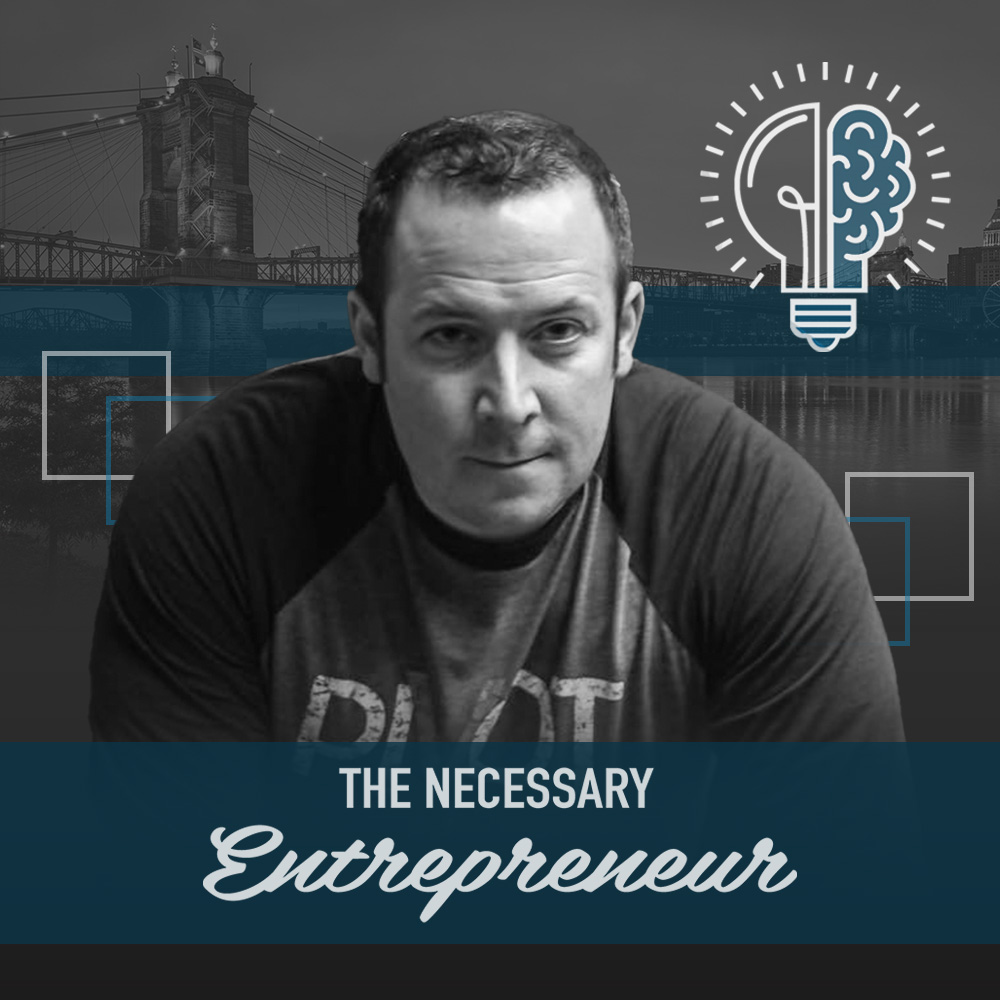
Feeling stressed, stuck, or burned out as a high-achieving leader or entrepreneur? 💡 In this episode of The Necessary Entrepreneur, host Mark Perkins sits down with Mandy Morris, LPC, co-founder of Sofree, to explore how high performers can reclaim mental clarity, confidence, and emotional balance.
Mandy shares her journey from athletic trainer to licensed therapist and entrepreneur, blending psychology, neuroscience, and practical tools to make mental wellness accessible, actionable, and part of everyday life, not just something you turn to in crisis. She dives into how stress, high expectations, and subconscious patterns impact leaders and business owners, and how to regain your “internal edge.”
In this conversation, you’ll discover:
🔥 What the “internal edge” is and why it matters for high achievers
💡 How subconscious patterns and stress affect decision-making, focus, and performance
🚀 Techniques to regulate your nervous system quickly, even under pressure
🧠 How EMDR and neuroscience-based strategies break old mental patterns
⚙️ Tools, exercises, and the Sofree app to reset, refocus, and thrive
Whether you’re an entrepreneur, executive, or high-achieving professional, Mandy’s insights provide actionable strategies to manage stress, improve emotional resilience, and lead with clarity and confidence.
🎙️ The Necessary Entrepreneur, hosted by Mark Perkins, features authentic conversations with founders and leaders who’ve built businesses worth studying.
📌 Connect With Us:
Website: https://www.thenecessaryentrepreneur.com/
YouTube: https://www.youtube.com/@thenecessaryentrepreneur
Instagram: https://www.instagram.com/thenecessaryentrepreneur/
Facebook: https://www.facebook.com/TheNecessaryEntrepreneurPod
X (Formerly Twitter): https://twitter.com/MPerkinsTNE
LinkedIn: https://www.linkedin.com/company/tnepod/
TikTok: https://www.tiktok.com/@tneclips
Spotify: https://open.spotify.com/show/6xhGUE1yzy2N0AemUOlJPx?si=d1c5c316af404f15
Apple Podcasts: https://podcasts.apple.com/no/podcast/the-necessary-entrepreneur/id1547181167
📌 Find Out More About Mandy Morris & SoFree
https://mandyemorris.com/
https://www.getsofree.com/
https://www.linkedin.com/in/mandymorris/
https://www.instagram.com/therapist_Mandy
0:00 And the thing that people have to realize is stress is our silent killer. It is one of our number one killers. And it is like in a meeting, it's the thing that makes you snap. Welcome back to the necessary entrepreneur. Today I'm pumped to be joined by Mandy Morris. She's a co-founder of mental health sciences at Sofree. That's a company that's rethinking how we approach mental wellness in the modern world.
0:44 Mandy's work focuses on blending psychology, neuroscience, and practical tools to help people live with more clarity, confidence, and emotional balance. She's passionate about making mental health accessible, actionable, and part of everyday life. not just something you turn to in crisis. So Mandy, it's great to have you on The Necessary Entrepreneur. Thanks Mark, I appreciate you. It's great to be here. Yeah, 100%. Um so I could we had a great 10 minute conversation at least. think it was great. Then some technical difficulties but um that's how life goes but I um I could start out and ask questions about the intro I just gave you but since we're only gonna spend 20 to 22 minutes today and and hopefully down the road um our audience is like hey bring her back and let's get an hour or two but I thought about this.
1:33 You started working on this long before COVID, the crisis and how that compounded mental health, it's a different world now. So it seems to me, the reason why you started, that's probably had to evolve because of the evolving environment that we're in now. So what's that journey looked like, the purpose on why you started, and then what's this turned into based upon current human beings and human nature and what we're going through. For sure, yeah. Yeah, it's definitely been an evolution. mean, the nutshell version of my story is I went to school to be an athletic trainer. That's what I was passionate about was sports. I was told I should do that. I mean, I've always had a heart for people. um And I, in high school, my senior superlative was most caring.
2:16 And I was like, that's such a stupid superlative everybody's caring. And that never changed, but my direction definitely changed. And I was really passionate about that. brain and human behavior and really got into psychology, which led me into the therapy route. And I became a licensed therapist. And in 2014, at the age of 28, so no one do the math, is when I started my practice. And at the time I was in my own crisis. So I was coming out of a situation where I had met some other colleagues and we did not really believe and agree in how the place was running their therapy practice and how they treated their clients.
3:06 And we wanted to live within our own integrity and create something great that we felt would be good for our community. So Create Mosaic Counseling Group, while at the same time, my marriage was falling apart. And in the midst of all of that, I... And coming out on the other side of that, I realized that I needed to do some of my own trauma work and had heard about EMDR. And EMDR, that's the acronym for a really long name, eye movement desensitization and reprocessing, has great success rate, short period of time. It's a neurological treatment. And I decided to get that treatment for myself as well as get certified in it. And I was one of the first 50 in Georgia at the time, back in 2016, to get certified.
3:51 So. That translated into growing my career on the therapy end. Now, I am a creative and an entrepreneur at heart. So I would go on my runs and have all these ideas about how I wanna help people write them down in my little notebook and then do nothing with it. And my friend gave me a quick swift uh kick in the butt that I needed to start doing something with these ideas to help more people. And so right before the pandemic is when I... started putting my content online and trying to reach more people. And as that developed and grew, and as the nature of our world got worse and worse, all of these opportunities started popping up because people were hurting so bad and in so much pain.
4:38 And the uncertainty in our world, I mean, it was really bad at the pandemic. I don't know that it's much better right now, but it just keeps continuing to grow and grow. mental health rates and domestic violence and addiction and all of that, you know, within the first year went up by like 500 % of the pandemic happening. I mean, it was insane. so throughout my, throughout 2020, I started working with other industries, other groups of people. And I found that my heart is really for the business owner, entrepreneur, leader who is having to hold it all together for everybody else, look super successful on the outside.
5:20 People tell them, you're crushing it, you're killing it, look at all you're doing, and silently struggling on the inside, barely holding it all together. I can think of so many of my clients who have a lot of success and fame and no one knows that they had panic attacks at home where they're dealing with all these other sort of issues. so um with that, I came up with the idea of SoFree. which I'll tell you more about, but then also this uh cohort that I've started, which is the internal edge, which helps people learn how to get their internal edge back, which is the very thing that's gotten lost in the midst of all the struggles of life.
6:01 So as you continue, but what is that? What's the mental edge? The internal edge. So the into the internal edge is this six week cohort. It's a group of six to 10 people where I give you the tools necessary needed to get that breakthrough so that you can have the reset needed to make your inner world feel more like it should on your outer world. So we want that congruency. We want you to feel I want you to feel leaving confident, clear. more grounded, not so much internal distress and chaos, leading and living out your mission from a place of real clarity, because you know who you are, and you feel grounded in what your next steps are not all the noise that goes that comes from all the stuff that we are dealing with on a subconscious level.
7:01 we can deal with, we can deal with stuff a lot of it's band-aids. what's and I and I don't just go to it. Unfortunately, it's good that my brain goes here but a lot of times maybe it causes dysfunction for other people on the outside but I want to go straight to the like what's the problem we're trying to solve and so I think about this and I'm like what has happened if we've lost this internal wedge? What has happened and it maybe and even if you don't think that's the right question like I want to know but it's not you can redirect it as a therapist but you know. No. So the thing that keeps us stuck and we can, we can interchange losing your internal edge to being stuck. that comes from what makes up 95 % of our brain and what makes up 95 % of our brain is the unconscious.
7:46 It's the subconscious, you know, neuro pathways that have been there for forever. That is the driver of our behavior. So A lot of times people will get coaching or will get therapy because they can't focus or they're not motivated or whatever it may be. And so they'll get some mental strategies or some different ways of time management or organization. But in reality, the reason why that person's stuck is because they have a fear of rejection. That's why they're procrastinating or because they have, you know, this this subconscious fear of being a failure. So they keep self sabotaging. And so if we don't look at what's going on underneath the hood, so to speak, of decades of old neurological junk or head trash, then you're going to keep staying stuck in the same patterns.
8:33 So do you need to visit that? Is it important with that? So with my um very novel mind when it comes to this approach in your professional field here, it feels like to me, you gotta go there and you gotta dig in and deal with it. Yeah, so and but you don't have to stay there. Correct. Correct. And so but so the idea is in self awareness, you know, part of the first step in healing is admitting that you have a problem, right? But the only way to do that is to bring what's subconscious conscious. And so you have to have the right person or the right people to ask the right questions to pull the things out necessary when you're feeling like why can't I just get past this thing?
9:17 whatever that thing is, could be a relationship thing, it could be something in your business, it could be anything, because all of it is going to bleed into everything else, whatever it is, whatever that stuck thing is. And so... um I'm thinking with this too, and as you can get back to like what you're building and leaders and CEOs, because I interrupted that and redirected, but I'm almost thinking the moments that I've been there with people I've really cared about, because I think we all fulfill this role, maybe not in a PhD, professional, master level, but we do it for people we really care about. If someone's struggling and it's revealed, if you care and you're a good leader, you sit next to them and say, like, I'm here, like, what's going on? But I found that they only reveal it if they don't feel judged.
10:02 Sure, for sure. Yep, yep, yeah, for sure. you know, my, that is very true. And which is why I enjoy using a lot of neuroscience in how I explain things. Because there is no judgment. Our brain gets conditioned, gets wired. We are the way we are for very good reasons. And you would respond the way someone else's response was if you had gone through their life experience, seen things through their lens and had their own conditioning. And so the more we understand the brain and neuroplasticity and how human behavior works and all of that, the less judgment there really is because our mind is always trying to protect us.
10:51 It is always trying to help us. The bad thing is, is that what used to serve us well as kids and young adults usually doesn't serve us well. in our more adult life now. And we just get caught up in the same patterns. Let me ask if that senior superlative that you had that was most caring, did that, I've, I've often seen some of the most kind and caring and nice and peaceful people in the world. I'll come across them sometime in my companies and I meet them and I'm like, this world's just too mean for a man. I'm wondering if that caring person slammed up against the world. And maybe that caused part of this journey that then caused you to go down this path.
11:35 and fix your inner self. Yeah, absolutely. mean, there's been so much that's happened in my life that I could write a book on. And I think that, you one of the things that I try to convey even in my content is that good therapists have therapists, good coaches have coaches. I am not someone who claims to have it all together, but I am someone who claims to continue to do the work and to show up for myself and to do what I expect my clients to do. how dare I preach something at you or try to talk to you about what you should be doing and I don't do it myself. That's not gonna last very long. So maybe being that caring Mandy that you were the most caring, you're like, that's not something cool, but I bet now it's actually showing up to be a significant benefit.
12:22 You combine that with significant capability. You can really go change the world then. For sure, for sure. Well, and I think for everybody, it's finding how you're uniquely wired and putting that care into that in some way. Because I could say the same thing for you, Mark. I mean, I know we just met, but you wouldn't be doing this podcast if you weren't a caring person. You wouldn't be doing some of the things you were doing. But there's no other Mark Perkins, and you would make a lousy someone else and vice versa. a wowsie this sometimes you kidding yeah, I could never be you. I would make a lousy you, you know?
13:02 And so we have to find our, use our empathy with how we're uniquely gifted and wired to then serve whatever purpose and direction that we're trying to go in with that. But it is the reason and part of the reason why Sofri even got created to begin with. Yeah, so go so go down this path. I mean, it's it's what you're doing right now. It's what you're putting in a significant amount of your time into it. So it's about engaging with these people who have accomplished from the outside huge and big and enormous things, but they probably feel inside that they still haven't. There's something going on. I hate that term imposter syndrome, but I've I've engaged with some people that significantly haven't. They really feel it and I'm like, listen, you earned it.
13:42 You earned it. You belong here. Yeah, they don't they don't feel it. Yeah, for sure. And that's the disconnect between the logical brain and the nervous system. You can know something logically is true, but it doesn't feel true. And that's the separation of feelings aren't facts, right? Because we live in a society where we don't even know we're stressed. We are so used to being stressed out all the time. We don't even know we are until we hit some big breaking point when really that stress should have been caught weeks ago. And so... One of the techniques that I use in EMDR, that's used in EMDR is something called bilateral stimulation. It's a technique that's been around in the therapy world and neuroscience for decades.
14:26 It is nothing new. But what it does is it makes the left and right hemisphere of the brain talk to each other and pull you out of a stress response. Walking is bilateral. There is neuroscience behind walking it off. Parents who sway their kids left to right just naturally, That's your brain intuitively trying to ease and calm down. So in EMDR, we use this to help process trauma because it helps calm the person down in and of itself. It just helps reset your nervous system. So on a run one day, I was like, why haven't we combined this with our technology? And so I went to my brother and I said, hey, you know, let's create this wellness app.
15:09 I can... If we can get this into the tech, guarantee you, because I do it every day with clients, we can help reset people's nervous system in under two minutes. Alright, so reset my nervous system in under two minutes. Can we do this on a podcast? I don't care what it looks like. I'm here. I'm the guinea pig. Okay, so I'll show you what we do, but then I'll explain how it actually happens in the tech, what I'm gonna show you how to do, you won't actually have to do because the app will do it for you. Okay? So it's super simple. ah There's multiple ways to go about it, but the easiest way is just to cross your hands like this. This is super simple, Mark.
15:51 And you're just gonna tap left or right, just alternately. And as you do it, just focus on your breathing. Imagine that you're on a walk. This is what your legs are doing for you, but now you're just doing it with your arms like this. And this bilateral movement you will find as you do it will start to calm your heart rate down. And then you take a deep breath. and let it go, and can pause, kind of check in, and then you can start it again if you feel like you need to. And so what we do in the app is we administer bilateral stimulation for you through your headphones by binaural beats, audio tones, through eye movement.
16:38 Let's say you don't have your headphones or you don't like your headphones. There's a ball that you can track with your eyes that goes left to right. This is the original form. a bilateral stimulation. It's how they even found that this makes you come out of a stress response. And then there's vibration. So what we were just doing, if you have a wearable in your phone, it will vibrate from your watch to your phone, left to right. So you can be in a meeting, you can be talking to someone else and be regulating, and they won't even know that you're doing it. You can do all three at once if you want. uh It does three rounds of 25 seconds. And then you can literally... watch your heart rate come down. So part of the patent pending on the tech is that it measures your biometrics. So you can see your HRV, your heart rate, your respiratory rate, all of that improve as you do your sessions.
17:21 Cause it would be good. So it worked everyone. It brought me down even before you were saying, a deep breath. My body was already wanting to take a deep breath. Yeah. Right. And so, and as you were telling about, start walking. I became so calm. actually had to think about visually walking then. Yeah. What I'm thinking about in a meeting when I want to get elevated and it's not going the way I want to, I hate meetings, but somebody says something in their mindset and they're taking the meeting in a different place. I'm like, how can I do this? it where I'm not sitting here looking like a crazy person? Right, right, for sure, I'm sure there's some things that I'm sure there's some tactical mental thing without doing that if you become well versed at it that you could do.
18:04 For sure. I mean, you can be sitting down and alternate your heels left and right on the ground. Uh, you can do pretty discreetly and the app helps with that. But the, it, you know, if you go to the doctor's office and they go to check your blood pressure, if your arms or legs are crossed over your midline, they make you uncross it. Cause it shows a drop in your heart rate. Just bad for an accurate heart rate. It's great for stress. And the thing that people have to realize is stress is our silent killer. It is the, is our, one of our number one killers and it is. Like in a meeting, it's the thing that makes you snap. It's the thing that makes you also shut down, goes into a freeze response. It's the thing that makes you project what you're feeling onto your partner when you get home. I mean, we are run by our nervous system and don't know how to regulate it.
18:50 So what is stress? What feelings are causing this? So here's my shortened version of it. Too many demands and not enough resources. That creates a shock to the nervous system. And that pressure makes this part of the brain, which is where the frontal lobe for those who can't see me, uh go offline. And that's what we do over our rational thinking and decision-making. So we literally get a little stupider when we are feeling our stress, because we don't have access to that part of our brain. And so when there's too many demands and not enough resources, we feel that pressure. And our mind is designed to look for threats.
19:33 And so what used to be the saber tooth tiger is now all the unread emails that we have. And so now we are high alert and not our best. thinking about this in my own personal experiences, it's almost this isn't the fix, but if I'm able to do this, it does seem like I could eliminate. It's like if I can just stay in the moment. That's what I'm about. Like if I can just put the thing out, that's nothing else. Yeah. Yeah, so so free won't fix your problems. It will change your relationship to stress and Interesting fact, I think you'll like this mark. So studies have found that when studies have been done where there was Research on a group of people who reported the same amount of stress as another group of people Those who believe stress was bad for them Died earlier than those who did not believe stress was bad for them It's the belief connected to stress.
20:32 It's your relationship that you have with what's happening and what you have with your own body and your own nervous system that's going to dictate whether this has a negative impact on you or not. It's so good. We could go deep forever, but um. I mean it's so who's your you're probably going to say that everyone come and engage you, but your business so free. Who is the target customer you named like four categories, but go there again for the people listening if they fit into this category. I'm sure you would say everybody can look at it, but if you're really honest about the business you're building, who's the target that you think that this is best for and that you can help with the elite high level? Yeah, for the internal edge especially, those are for the purpose-driven high achievers, the leaders, the entrepreneurs who have these big goals and big dreams.
21:21 And with that big responsibility comes all of the demons and internal struggles that go along with it. And so people who are moving forward but feel stuck even silently or silently suffering, Those are my people. That's who I feel really passionate about helping that I know without a shadow doubt I can help get you unstuck and elevated to the level that you actually are, that it'll actually like feel like you are. You don't have to keep convincing yourself that you're there. And the app, Sofree, is an added benefit onto the internal edge. That really, I mean, my hope is to reach the masses with that.
22:03 That is for everybody, but my own personal work and services is for the mission-driven, purpose-led high achiever. So tell us where we have to go engage you so we can get unstuck. That's right. So easiest spot is to go to MandyEMorris.com. That has my social media on it. I'm on LinkedIn, Instagram, Facebook. You also go to GetSoFree.com to check out the app. That link is also on my website as well though. So you can check me out at any of those places. Mandy Morris, I think you're pretty awesome. 25 minutes here. I'm like, she's special and I think whatever you chose to put your mind to, you would have done it really well and I identify with hanging out a lot of the people that I hang out with.
22:45 um I don't know how much help they need if there was a scale but this could benefit all of us. Yeah. All the people I hang out with, this could benefit us. I appreciate you and I appreciate you um doing what you do to help other people in the way that you do it. trying to do it a positive way, trying to make positive impacts and not retraction. So awesome. Hey, have an awesome rest of your week and you guys go check her out Mandy E Morris.com and she's so professional. She's on LinkedIn. You find me on all the crazy social media because I'm nuts but you find the elite people spending their time on LinkedIn all the time. So go check her out.