

 RSS Feed

 Apple Podcasts

 Spotify

 YouTube
#154 - Building Twice: Jesse Lipson on Scaling ShareFile, Selling for $93M, and Starting Levitate
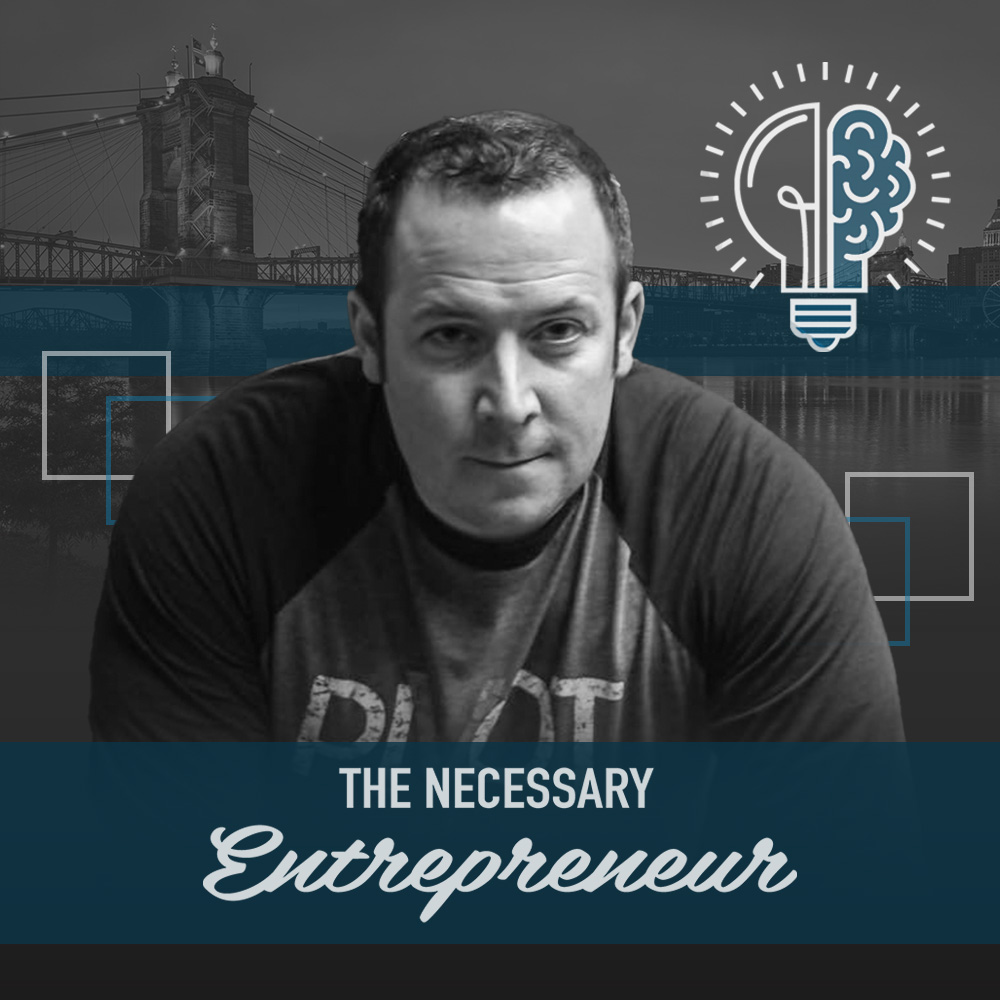
What makes a successful founder dive back in after a major exit? 💡
In this episode of The Necessary Entrepreneur, host Mark Perkins sits down with Jesse Lipson, founder and CEO of Levitate, a fast-growing SaaS platform helping service businesses build authentic client relationships at scale. Before Levitate, Jesse founded and sold ShareFile to Citrix, where he later served as a public-company executive before leaving to start all over again.
Mark and Jesse dive deep into the psychology of entrepreneurship, the pressure of building a second company after a big win, and how to keep relationships real in a digital world. Jesse shares powerful lessons on:
-
Scaling relationship-based businesses with software
-
Finding product-market fit and applying first-principles thinking
-
Why entrepreneurship never gets easier, no matter how many times you do it
-
The rise of AI tools and what it means for small-business growth
-
Building and leading teams through constant change
Whether you’re a first-time founder or a seasoned entrepreneur exploring your next move, this episode will inspire you to rethink creativity, risk, and leadership.
🎙️ The Necessary Entrepreneur, hosted by Mark Perkins, features authentic conversations with founders and leaders who’ve built businesses worth studying.
📌 Connect With Us:
Website: https://www.thenecessaryentrepreneur.com/
YouTube: https://www.youtube.com/@thenecessaryentrepreneur
Instagram: https://www.instagram.com/thenecessaryentrepreneur/
Facebook: https://www.facebook.com/TheNecessaryEntrepreneurPod
X (Formerly Twitter): https://twitter.com/MPerkinsTNE
LinkedIn: https://www.linkedin.com/company/tnepod/
TikTok: https://www.tiktok.com/@tneclips
Spotify: https://open.spotify.com/show/6xhGUE1yzy2N0AemUOlJPx?si=d1c5c316af404f15
Apple Podcasts: https://podcasts.apple.com/no/podcast/the-necessary-entrepreneur/id1547181167
📌 Find Out More About Jesse Lipson & Levitate:
https://www.linkedin.com/in/jesse-lipson-625195/
https://x.com/jesselipson
https://www.levitate.ai
https://www.linkedin.com/company/real-magic/
0:00 There's no formula for being an entrepreneur. there was, if there was a playbook, like it would be a lot easier than it is. We're training Welcome back to another moment session episode of the necessary entrepreneur. We have a brilliant mind with us today. We just talked for 10 or 15 minutes off camera about where he came from and born and Duke university and building companies and selling companies.
0:43 So I don't know how much we'll dig into that, but we're going to dig into entrepreneurship, helping entrepreneurs scale their businesses. But let's get to tell you who's going to be on today. So Jesse Lipson, he's the founder and CEO of levitate. which is operating now. It's a fast growing platform that helps service businesses stay top of mind with clients through authentic relationships. We'll touch about the authentic piece here as it goes on. But Jesse founded and built Sharefile, which he sold to Citrix and has since launched Levitate, scaling it from zero into a high growth software company serving thousands of businesses. In this conversation, I hope to dig in how you scale a service business with software, Sass. how to keep relationships genuine at scale and what founder lessons apply when you've already exed and starting fresh.
1:28 And what'll come from that is why the heck are you doing it again? there's the laugh. So, Hey, welcome Jesse. Thanks for coming on, So why the heck do you want to do this again, man? You hit some home runs and things are good and life is good and you got the curls and the glasses and you know, you can wear the t-shirt to work. Why do you want to do this again? I don't know if you've heard of the concept in movies where you need the temporary suspension of disbelief. You know, kind of have to in order to get in and watch a movie. I feel like one of the aspects of being an entrepreneur is you have to this weird mix of taking a crazy risk and jumping into something that you probably shouldn't. And then on the flip side, having enough skills to be able to manage that risk.
2:10 And so I think about like somebody like a people that do um like climbing mountains or whatever, know, the climb is like steep cliffs. People that do those like death defying things. You need to be crazy enough to jump in and do it, but then you need to be careful enough once you do it to like not die. And, and I think that's one of the aspects of being an entrepreneur. And so like when I jumped into levitate, mean, the main reason was I felt like I was 39 years old. I felt like I was too young to retire. I was a, executive at a public company at Citrix. I was reporting to the CEO.
2:51 I decided I didn't want to do that anymore after traveling 75 % of the time, being in kind of another cheap hotel in South Florida. Like, hey, I don't need to do this. I sold my company. I'm not, you know, it's not really what I want to do with my life. And so I felt like, well, I can't retire. So I'm probably too young to retire. Don't want to be a public company exec. So what do I want to do? I don't want to be a VC. I'd like being an entrepreneur last time the share file. So like kind of process of elimination. Let me do another company. And then, of course, once I got into it, probably for the first couple of years, I was like, why on earth did I get back into starting another company?
3:34 Like. It's it's so hard, it's so hard and actually doesn't really get any easier the second time. And I think the other thing about being an entrepreneur is, or at least for me, I always find a way to make the stakes really high for what I'm doing. So it's like, yeah, even though I had a good exit before, I didn't really need the money. I was like, man, if I fail, do this levitate and it fails, then everyone's just going to think I was lucky with ShareFile. I got all these former employees that believed in me to join. So, you know, basically convinced myself that Um, like I was super dumb decision to start this now that I'm in it.
4:19 If I fail, I'll like ruin my reputation and like, that's kinda, I don't know. That's the bizarre psychology. I think sometimes it makes entrepreneurs successful is you gotta, you gotta convince yourself like why you should be doing it. If you're just like, Hey, I'm, you know, I'm rich. I'm doing it for a second time. It's probably just gonna, it's just gonna fail. going to fail. Yeah. You're going to spend too much time on the beach or flying somewhere private or, you know, sipping, sipping, whatever you want to sip at noon. So, um, you said it never gets easier. Entrepreneurship. Why? Yeah, I think, I mean, first of all, I really do think being an entrepreneur, there's a reason that a lot of the highest net worth um people are entrepreneurs, because I think it's one of the hardest jobs.
5:08 It's kind of like the Navy seal of business. Getting something off the ground and working is just so hard. And I think the early stage of building a company, there's kind of like the They call it product market fit. Like you start with an idea and then getting something that like customers want to buy. They love it. They come back and work with you again. Or if you're a software company, they stay with you. don't, they don't churn and cancel. It's so unique. Like that, that kind of zero to one is, um, it's hard to replicate that.
5:49 It's not like a formula. If it was a formula, It would be, you wouldn't get rewarded so much financially for building a business and making it successful. It's like the product of the exact market that you're in, the time in the world that you're in, how everything else has changed. so like I started ShareFile at the end of 2005, early 2006 and going through the financial crisis, working with a very different employment market, a very different software market where Google AdWords was just completely new. And I could, I could acquire customers through AdWords and recover the costs before my credit card bill was even due. And then moving into, you know, starting, I would say in 2017, working with Gen Z employees, going through COVID, the software world is completely different.
6:38 It's very saturated. Everything is different. And so, um, it's like, doing it again is there's some aspects of it that are easier. That beginning phase actually isn't easier. Some of the scaling, like I have done some things before and so I've learned and gotten older and whatever. But on the other side, the expectations are higher, you know, the second time around. if you just like, you know, if I did share file and I built it to 10 people and sold it for 10 million bucks, I would have been really thrilled. I'm gonna tell you, everyone's like, well, you built share file and it got to the size. You need to go that much bigger in order for it to be considered a success.
7:19 Yeah, if it's not some billion dollar valuation now in the marketplace, right? How we're being judged is like, are you even doing? Yeah, exactly. Yeah. Do you feel that pressure of that? I mean, I'm not saying we should because the challenge is, is we're not trying to, what do they say that, comparisons, the thief of joy, whether it's true or not, but it's like, Hey, make it a billion dollar valuation if you can, if the product market fit matches, but do you feel the pressure of that obligation sense of responsibility, the outside judgment? do. Yeah. You know, I mean, I want our employees to feel like betting on the company was a good move and I want our this time. So share file, we're bootstrapped.
8:01 um But levitate, we've raised venture capital. And so I want them to feel like they're happy that they bet on on our company and they're happy they bet on me and they got it was a great investment for them. And I felt the same way when Citrix acquired us. I was like, I want them to feel like this is a good acquisition. I don't want to, you know, some people may like, hey, like I got this really great deal and then the company went to zero. Well, the acquire that's kind of on them. I guess my nature is just like, always want whoever does business with me to feel like really happy that it was a good decision. And so, you know, I do feel, feel that pressure.
8:45 Where'd that come from, that sense of obligation? I really don't know. It's a good question. I guess like, you know, we talked about a little bit before the show, but my background is not in business. I was, I thought I was going to be a physics professor and I, you know, I got a degree in philosophy and I thought I was going to be a professor. And so, um, I think that I'm like, for me, um, entrepreneurship is more, it's more about kind of a creative outlet and the joy of building things.
9:27 And so I think that I probably think about business a little bit differently maybe than somebody who went to business school. Most of what I had done in business is self-taught. I mean, I coded ShareFile, but I'm a self-taught software developer. I just learned on Google. And everything I learned on business is just doing it. And a lot of times, Being a philosophy major, I guess I kind of looked at a lot of things through first principles of rather than, this is how you should do things. just thought about this is kind of what makes sense to me. Um, a lot of times I eventually learned why people say that you should do things a certain way. Cause most of the time when I would, you know, I came up with all these ideas and like, and my, our first, my first company was a web development company and we decided to move the whole company to, uh, um, the beach in Florida for a month and you know, it was.
10:25 And so I was like, okay, well, guess that's why companies don't like move everybody to the, we're like, Hey, well, good. you know, it's cool. Like we can work from there for the, for a month and then like it will cost that much. And then like, okay, that's why like companies don't do that. A lot of the times I eventually learn, you know, there's lessons, but I think, um, I really probably tend to try it. I mean, and now I'm laundering my career and I've, I've, I've got a lot of hard, hard won lessons, but. I think I always thought about stuff from first principles and more so than, you know, from what I learned in business school, which I didn't go to business schools. Are you still having as much fun now or less than when you first started teaching yourself coding?
11:13 I would say I'm having more fun than ever now and I'm back to coding again. So with AI, I've been playing around with AI coding assistance and stuff for the last year and actually having a lot of uh fun with that. um So I like building things and um so to me coding is fun, but also if we test something on the marketing side or on the sales side, we try to be really creative. um and with what we test. uh so like anytime I'm doing creative problem solving is where I'm enjoying myself the most. You talked about first principles and a product market fit and those kind of those in my mind, those tie together because you got to have them both.
12:00 Yeah. So I'm thinking when you started levitate, were you inspired to start this company for a reason or did you look at the market and say, I'm going to start another company. Let me go into the market and see what, what would work, what type of business, what type of product market fit, not necessarily something I'm passionate about. What company would roll and scale and do great. Now, is that how you decided? settled on Levitate. It was a combination of both. And I'll tell you a little bit about kind of how it all went down. So I've always been an entrepreneur who had a lot of ideas. So I've never had a shortage. And when I was at Citrix, I was like, I would just have a notebook and come up with a business idea, write it down, you know, um and know that I wasn't going to, I wasn't going to do anything at that point.
12:46 So when I finally kind of started to start my own company again, I had a bunch of ideas. For Levitate, one of the things, there were a couple things swirling around in my mind. One was at ShareFile, one of the most successful things we did was we had this Microsoft Outlook plugin. What we realized is we were, we realized that if we made it super easy for people to exchange files, we, and there's a paperclip in Microsoft Outlook where you attach files. We created like a secure paper clip. You just click this green paper clip instead of the other one and we'll take care of all the security.
13:27 And we are out the plugin. Like was better than Dropbox and Box. And even up until a few years ago, if you Google Outlook plugin, ShareFile would come up like above even Salesforce. So one of the lessons to me is like people love to live in their email and calendar. And if you can figure out how to tie into the core, you know, email and calendar that that's important. And so actually back in 2017, I was thinking about AI and like, how do you use AI tie into people's email and calendar to kind of really do some magical things? And we were called levitate.ai back then in 2017 when I started the business.
14:09 And the other piece was my wife had a marketing agency kind of consulting firm and she had about 40 or 50 people. And I noticed that um how she was doing business, would, she would pay a lot of money, a few thousand dollars a month for Salesforce and email marketing automation. But most of the new business she generated came completely outside of those systems. She just would do a really good job keeping in touch with people in her network. And she kept an Evernote notebook and be like, Mark, you know, I know Mark and he told me, you know, uh whatever he lived in uh Cedar Rapids or Coralville, Iowa for a while.
14:53 he, you know, lives in Cincinnati and, know, she would keep key facts about people. And then when she's going to Cincinnati, she'd be like, Hey, who's my Cincinnati people? Let me like call Mark and did a really good job of just cultivating those relationships. And a lot of her new business came from keeping in touch in just a personal, authentic way with her network, which is really hard. like I think a lot it resonates with a lot of people. A lot of us are in this business like law firms, accounting firms, real estate, uh you your real estate where it's word of mouth referral. It's about keeping in touch. And all of the software that I saw out there was about kind of just like either spamming people with automated drip stuff that doesn't deepen the relationship or uh CRM systems that are about like moving people through a sales pipeline.
15:44 which in a lot of relationship based businesses is not how you think about the world. You just think like, hey, if I keep in touch with good people and they know I'm here and I, you know, add value, then like good things happen. But how do you kind of scale that personal authentic outreach? And so um that was what ultimately caused me to um land on Levitate. But what I decided to do is, I did some interviews with small businesses and I decided not to tell them what my idea was. Instead, I said I would go to lunch with them or something and just say, tell me what your top three pain points are, like that you think would be most helpful for your business.
16:29 And then I wanted to see whether what I was talking about made their list without me prompting them. And it was kind of interesting. I heard a couple of things multiple times and I was like, that might be a good business idea. Like one of them I heard a lot was, uh, from service businesses was like collecting invoices, you know, it seemed to be a pain point that a lot of people had. Cause I was maybe I should do that. But I still, uh, I heard from, uh from multiple people, this, this whole challenge of like, want to, I do need to do a better job keeping in touch with my clients, my business network, you know, that kind of thing. So, yeah, so I felt like, yeah, I heard the pain point.
17:11 without prompting them. think one of the tough things as an entrepreneur is when you have a new idea is you're like, I've got this idea. It's like, you know, you know, recyclable, whatever pens. I'm just, staring at a dry erase marker. And then the person who hears your idea, like socially, they don't really, they're, have a lot of incentives against saying like, you know what, Mark, I really don't think that's a good idea. So most people will be like, yeah, that's cool. Like recyclable dry erase markers. like the environment is really big and that sounds good. And so um that's one of the tough things when you're in the idea phase is actually getting honest feedback and it's not until you start to ask for money and sell that you start to get true market feedback.
17:59 So I try to stay away from that by not telling my idea and actually just asking them what their pain points were and see if Levitate made the list. m And it's, was that 2017? You're probably doing that in 16 and 17 and. Yeah, 2017 was basically when I was. So this is the past eight years, um everything changes. Like you said, we were COVID and different types of employees and different work methods. Has the business had to change and evolve? Is it different than what it started as in 2017? It is. And then in some ways it's starting to come back to some of the original principles.
18:40 I'll kind of talk a little bit about that. But, you know, back in 2017, I was like, you know, talk about that. Hey, can I use AI to help people keep in touch more authentically by like going through their email, reminding them of the people that they have met with in the past, but they have lapsed, you know, or they've maybe emailed in the past, they've lapsed, making it easy to kind of tag people with like a tag. you with like Cincinnati or if it's a sports team you like or golf or something like that. And then I can have a really easy way to record some key facts. That way can say, Hey, you said you wanted to you tag Mark as entrepreneur. You said that you wanted to keep in touch with all your entrepreneur people at least every six months.
19:21 Here's Mark and like five other people that you haven't kept in touch with and, you know, reach out or um like, uh let's say you're a Bengals fan or whatever. And I tagged you with bangles and then bangles win a game. I can like, who are all my bangles people? Let me grab those and send out a note to those 20 people. And I can maybe spend a minute and customize each each one. So that was the idea. And my hope was that AI could could help with it. Unfortunately, back then, AI was not as far along as as where it is today. And so really, we weren't able to use AI much at all. So what I found is that we The value proposition really resonated.
20:03 If I talked to like an insurance agent, they're like, you're right. It's all about keeping in touch, authentic outreach. I know I don't do as good of a job of that as I should. And I know that like, that's the most important thing in my business. So they would buy our product, but then they would cancel after a few months. So we'd be like, Hey, you know what happened? And they'd be like, I still totally believe in what you're saying. It's just, I'm too busy. And so I realized at the time that our product was kind of like the workout plan for your business where it's like something that you know you should be doing. It's good for you in the long term, but like that's why, you know, gyms have a good business model is a lot of people buy the membership and don't and don't go do it.
20:48 And so what we realized is we actually need to help them write the content and be like a ghostwriter for them. Yep. The challenge for our salespeople, even in this sales game we're in, sales is just human interaction. Sales is showing people your value. Like that's sales 101. And too many people want to turn into a salesman. No, just provide value. But the challenge is in the beginning, it's all business development, new salesperson, new business. So that's all you're doing. And then you start doing the business though. And then you don't have enough time to do more business development. That's what we're talking about. And so how can you help the professionals in business? continue to run that in the background so we can keep scaling. Exactly.
21:29 The, it is the challenge. And what happens is we find in newer businesses that I'm around and been a part of. And when you start integrating salespeople, they'll, it'll, it'll do this because they'll have this huge ramp up in business. They'll stop business development. Their pipeline gets empty and they have to do it again. So if your system just helps us do this nonstop or we can do the business. Exactly, exactly. then, sorry, the reason that it's coming back around is that with AI capabilities, some of the original things that I envision are getting easier. So some of the things that we're starting to roll out are now you can actually have a conversation with your system and I can say, like, Hey, like, can you find me my, we're going to be raising around a funding.
22:23 Can you go look through my contacts or venture capitalists and tell me if it's this check size, who are the ones that I should be reaching out to and why? And then the system is able to go find that also do searching on the web and come back and be like, you should talk to Alison because you know, met with her back in 2020 and to and she said this and you should talk to this person and that person. And then same idea is like. I can just dump some notes. I talk, I met with Mark and I said, you know, rattle off. He said he's going on vacation to Bali next month and his wife's name is Susan and you know, whatever.
23:05 And then the system can be like, all right, I'm going to automatically pull out his wife's name as a key fact. I'm going to tag him with Cincinnati. And since he mentioned in his conversation that he's going to Bali next month, do you want me to put an action item on your calendar to reach out to him in December and check in and see how the trip was? so it's able to kind of the technology is finally getting to where we can achieve that vision for these small businesses is like truly being able to, it's just, um, doing all that stuff and logging in as CRM is like, Only 1 % of people can do that. just, it takes incredible discipline.
23:46 And my goal originally was to try to bring that to, bring that to everybody with AI. And now um we're starting to be able to do that. Yeah. I mean, isn't the challenge for stuff like you mentioned Salesforce before and 11, the challenges is to have all the people work in the organization that to adopt the software. Right. And not only you have to adopt it, but I'm sitting here saying, man, if, the input is done, right, the contacts and the information is put in the system, it'll work perfectly. So then how do you help companies implement that adoption rate on the front end? Cause that's what the success is going to be determined by. And that's what I found is that with, um, relationship based businesses.
24:27 like, you know, let's say it's called like real estate, um, law, accounting, wealth management, big part of the economy. It's different because first of all, they're mostly referral and word of mouth. So you don't have to be rigorous about using a system. Second of all, they're doing the work in addition to, um, selling. And so. Like if you're a lawyer, um what's the likelihood you're going to spend a bunch of time managing your CRM system? Like you want to be working on billing hours. And so that group in particular, think is one that if you don't do something completely different and make it easy for them to keep in touch, they won't adopt it.
25:13 Whereas, you know, my company, Levitate, we're a software company. We've got, you know, over a hundred salespeople. And so their job is to be in the CRM. If they don't put the stuff in the CRM, then they don't have a job. It's easy in that case to get somebody to use a HubSpot or Salesforce, but if you're a wealth advisor, if you're a lawyer, unless it's providing you a lot of ROI, you're not gonna spend an hour typing a bunch of stuff in every day. It could, what I found in this business, mean, all businesses are sales. I don't care. Everybody says it is. You have to attract and get awareness to think about the thing you're trying to do. And so, um, what you're talking about, we always talk this three X and five X and 10 X, but the future success of a sales organization is continuing to nurture all the past clients and their networks in a hundred percent is there's such a strong capture likelihood there.
26:10 That's not cold anymore. And cause what we teach people to do without this is, know, whether it's on LinkedIn, whether you're on Facebook, Instagram, Tik Tok, if it's a business development day, go into your networks, find something that's important to that person right now, something they're doing and send them a video, highlight it and talking about it. That's what you're talking about with, with your company, with the software. Yeah. Right. Yeah. think that kind of the idea is cold contacting people is just so hard. Um, and people have a, they have walls up, you know, when it comes to cold contact, but you actually, and then you have your close friends and you know, those are maybe a five or 10 and you keep in touch with them.
26:52 But there's a big group of like, in the, in the several hundred people that you have made a contact with, maybe you had a good conversation at a conference, maybe. You used to work with them at your previous job. Maybe you went to school together, high school, college. Maybe you went to, you go to church together, whatever. Where if you just are kind of that thoughtful person that occasionally, you know, reaches out every six months or year, and when you don't need something, then um you have this, uh this huge network that they think of you first when they need something. Or eventually if you've provided value over time, Um, then it is time for you to ask for a favor that they don't feel like, Oh, this person's just using me.
27:37 I've never this guy from like my high school, all of sudden they want to sell me insurance. I haven't heard from them in 15 years and they're calling me about, about insurance. Like that doesn't work. And so, um, I a hundred percent agree. It's this, there's this group of kind of coldish warm contacts that may be in the, you might have 500 to 2000 of them that if you can keep those warm and and strengthen those, that's where the real power comes. 100%. Um, the, what have you learned to go a different direction? sit here, this software, you guys find a way to integrate this, the way we're sitting here talking about me. You've already had, you have thousands of customers, but if you do it in the probably the right time span, because everything, right?
28:22 We all have these at some point in three or four or five years, something maybe it's not relevant anymore. Right. So you do that. I'm sure it's a billion dollar thing. If you can really tweak this and it's, I see it from running my company. Um, but if we go back to your entrepreneurial days, talked about in the beginning, it's like, why did I do it again? And it's crazy. And it's insane. Um, what are you using now as the not 50 yet? What are you using now? That back then you had no clue about, about your brain power, your intelligence, your knowledge, because you were a highly educated mind in your twenties and thirties.
29:05 It's almost like you would be a different writer now. If you were an author back then, you would have evolved to a new type of author. So what are you still using? And then the same conversation, what are you using now in your brain power and how you're seeing business that you had no clue about in operating the business to give the old, right, Mark and Jesse some tidbits here that whether they listen to or not. Yeah. Yeah, it's a good question. I mean, I think in terms of how I've changed as a. As a person. I would say, like, if you if you interviewed me back in 2010 in the early share file days.
29:47 I was probably. A lot more. Kind of quiet and analytical and operating on. Even more first principles, just kind of like, it's a little bit easier too in your bootstrap business, you don't have to answer it to a board of directors. You know, very principled on the values of the business, kind of how to make decisions, a little bit more detached from the outcomes. I would say today, I feel like I am probably a little bit more intuitive than I was in my earlier career, just because I've been through so much.
30:35 um And the other just skill that I've had to build is um this is something that I like to talk about when people ask about m leadership and growing as a leader. I think there's a stereotype of a CEO of like somebody who's, you know, tall and polished and perfect teeth and they're like Tony Rob and you know people think about like there's something like that and if I'm a quiet you know person or you know I have these qualities and maybe I'm not a CEO or a leader and first of all one of the things I say is I don't think there is a there is a personality type like you can be a leader no matter whether you're outgoing, social, introverted, uh professor like and you brilliant or average intelligence.
31:32 Like there's all amazing, successful leaders come in like a lot of different flavors. um And uh the other thing that people miss when it comes to like seeing somebody like if somebody's looking at this, listen to this podcast and think about, know, this, this guy like, I've never gone on podcast. I'm like, you know, this guy, he's obviously a CEO and he's comfortable talking. Well, I got that way because I've done it a lot and you over the years and so um I like I'm much more comfortable like at Citrix I would go in every year in our our customer conference and do like speak in front of multiple thousands of people and so you just do stuff a lot and you get and you get used to it and you get comfortable with it and so I think I've built a lot of those skills with um people.
32:23 over the years and those weren't skills that I used to have. was much more of like a, you know, professor. Yeah, that's talking about thinking about philosophy. Yeah, the so do you think so maybe the answer to my long question is like you just have to go through it. You just have to go through it to develop the skills. Exactly. It's like you become better at what you keep doing. um so like being an entrepreneur, you build a lot of skills. And so you see when you see a successful entrepreneur, you see all the skills that they built. I would say don't feel disheartened if you're like, well, you know, I'm not good with words and, like you will become you will become a lot better.
33:07 And like, I'm not inclined to, you know, chop it up with employees or whatever. But over time, it's like being super busy, would take, I'd be like, I've got 30 seconds in the cafeteria line. Like, let me take those 30 seconds and like chat with this person. And um charisma is almost like a, it's almost like a tool that it's an efficiency tool that you develop as, you become more successful, which is like, I don't have much time. Let me like, let me like connect with somebody. Yeah, exactly. Let me like chat with this person. Hey, I'm sitting here for 30 seconds. Let me like, talk to this employee and learn about what's going on with them. What's, um, what's like the big thing quietly over the past two or three months that you've been dwelling on problem solving on really working through?
33:56 What, what is it? Yeah. Um, I think the big thing is. When you compound and growth as a business, the bigger you get, the harder it gets. And, you know, we're, we have almost 8,000 customers now. And, and, uh, on the one hand, we see this really big opportunity, which is, feel every small business, um, has this need to get help with keeping in touch and, um, their social media and their websites and, um, they don't want to do it themselves. And, uh, and so I see this gigantic opportunity and that we've in some ways been planning for since 2017 when we created levitate.ai and now AI is here.
34:44 And on the other hand, connecting that to like, well, how do you keep growing 50 % a year as you start to, we're, we're like 270 employees now. Um, and so I think, um, connecting those, those dots and figuring out like how to. how to keep going and how to keep growing. It really um stretches your mind in terms of like thinking about um like for one example, we just opened an office in Toronto, Canada, know, which six months ago we would never have thought to possibly do that. But it's worth thinking about growing our talent pool and really if you, if you really stretch and think, all right, let's say in 2030, if we want to be a, you know, thousand person company, like probably doing what we're doing the way we're doing it won't get us there.
35:40 so we're actually, you caught me like in two weeks where we have a, actually it's just over a week now, a week and a couple of days, we do like a multi-day senior management offsite where we talk about this kind of stuff. And so I've literally been the last few weeks putting together a presentation, thinking about those kinds of topics of like, scale and like how do we do things differently as we scale and like if we keep doing what we're doing it doesn't it's it's not going to keep working. How do you know as a leader through all these years of experience, how do you know if you don't have the answers internally, you've mulled over it enough, you need to go outside?
36:20 um Yeah. I try to, I don't know, but I try to always keep in touch with what is happening in the environment around me. I think that's one of the important roles of a CEO is to kind of have the most complete information about the company. like knowing everything about internal. knowing what's happening in the external trends. you know, one way I do that is I do listen to podcasts and I'm on Twitter a lot uh to try to see, you know, what's what's happening. And that's that's one data point.
37:01 And so I guess going back to something that we were talking about before we started recording about how there's no formula for being an entrepreneur. If there was it, if there was a playbook, like it would be a lot easier than it is. And so to come to an answer, it's kind of like, you have to, feel like always be in touch with the external perspectives. Always be in touch with what your customers are saying, what your employees are saying, what your investors, if you have them, saying, and somehow use all that together to have the most complete picture and make a decision. and, and so, and sometimes it's not the right decision, but, uh, I mean, I wouldn't say I know, but I certainly know when I don't, when I'm, I'm, uh, and I know when most people know when, when I feel a lot of indecision.
37:56 And so that's usually when I start to, you know, ask friends and tap into my external network on, on some things. The, um, we get sitting here, man, there's so many different places we could take this. could talk for two hours, even though we wouldn't do that to each other. But, um, as, as we bring this to the end, I think there's a ton of value you have. have this perspective of bootstrapping a business and selling it for. Yeah, it was 93 million bucks. say you sold a hundred million dollar company. Yep. And then this time around you raise capital. Yeah. Can you take a step back? know you're in it now, so you have to tell all the employees and all your investors, this is a great move and raising all this, but what advice do you give to people when they're evaluating both scenarios?
38:41 Because this is real world now in this tech environment we're in, there's billion dollar valuations flying left and right. So do you bootstrap it or do you raise outside funds? Yeah, it's a good question. would say to probably fully answer it, I would also need an hour, but I would say to put it into one minute that the long version of the answer would be, it actually depends a lot on what you want out of your life. Cause sometimes people want to make a huge impact and make a dent in the universe, you know, and in that case, maybe raising money.
39:22 might be the only way to do it or the best way to do it. um think that ah my step, my advice, if I don't know the person I'm talking to is if you can bootstrap do, you know, I think that is better for most people. If, if you're able to do it, I think for levitate, you know, frankly, I invested some money in the business to see it, see the business and we got to the point after, um, a year or two where uh I realized how much more I would need to put in to get us to where we need to be. And my wife was like, I'm not comfortable with you putting that money in. And I had, course, like plenty of investors.
40:05 When you have a successful outcome, like share file, it is easier to raise money. I think in my first business share file, even if I would wanted to raise money, if I decided, Hey, VC is right. I don't think anyone would have given me money. Like I didn't have any credibility. was I started my first business a year out of college as a website company. um I could have tried all I wanted, but I don't think anyone would have given me VC money. Then of course, after ShareFile, everyone would have given me VC money because I had a successful business. I tried to do it actually self-funded for the first couple of years. Then my wife threw the flag and said, no, we don't want put any more in.
40:49 Of course we have put a lot more in since then, we also have investors. yeah, mean, cold advice, would say, bootstrap if you can. There's a lot of complexities to being in the VC world and it puts you on a certain track. And when you're on that track, you can't really get off that track. uh They'll get you off of it, right? that doesn't stand on it. If you get off the track, you're going to suffer severe bodily injuries by getting off the track at that speed. So you're on it, whereas you have a lot of optionality as a bootstrapped, including the ability to raise funding later. So bootstrap it if you can. I would say, I would say so.
41:31 And if you're going to be an entrepreneur, you better tell yourself you can, because you're going to tell yourself you can in a lot of different avenues. um Hey, thanks, man. We'll give you all the highlights to, to levitate and all that, but where, where personally, where's the place that people can engage with you mentioned X you have your link. People want to follow you. What's the personal place they come and follow you. Yeah, I don't do a lot of I'm more of a lurker on X, you I don't post much, pretty rare, but but I am there. Jesse Lipson, J.S.S.E.O.I.P.S.O.N. and then LinkedIn, you know, uh I'm on I'm not a very prolific poster anywhere.
42:12 And I actually, I really enjoyed the conversation today. I like podcast medium. It's like, it's good to be able to just chat and talk through stuff. So I guess, uh, know, tune in. Use their favorite AI to find you. Right. What's, um, which platform do you use any of the three or four perplexity open AI are you, are you using any of those? Yeah, I mean, use chat GPT and our company uses open AI for a lot of our tech. And then personally with the our engineering team and then with coding, I use cloud code and and I actually been using it even for stuff, not coding like uh brainstorming ideas for uh for my keynote presentation and stuff like that.
42:56 So like that keynote, I brainstorm back and forth with it and then uh had it read me an outline, had it wrote me a speech. put it into Google notebook LM, had it do a podcast about about my speech just so could listen to people talking about my speech and and see like how it was being perceived and so I could kind of like tweak it. So those are my main tools. But cloud code, I've got I've got 10 cloud code windows open on my on my laptop. We see you working. Hey, thanks, man. I hope you have an awesome breakout for your leadership team. Yeah, thank you, Yeah, I appreciate it. I really enjoyed the conversation. Yeah, take your 270 to a thousand and take your 8,000 customers to 100,000, right?
43:39 That's the dream. You can do it, man. That's awesome. Thank you. I'm sure people will follow along. ah Maybe anytime if you're coming through Cincinnati, we see each other, we could sit down with official studio. I will tag you in my Levitate man. We'll, uh, we'll, we'll keep on checking in. Thank you for coming by. Thanks, Mark. um