

 RSS Feed

 Apple Podcasts

 Spotify

 YouTube
#143 - Leading Dewey’s Pizza w/ Chuck Lipp | Scaling Culture, People-First Leadership & Building a Beloved Brand
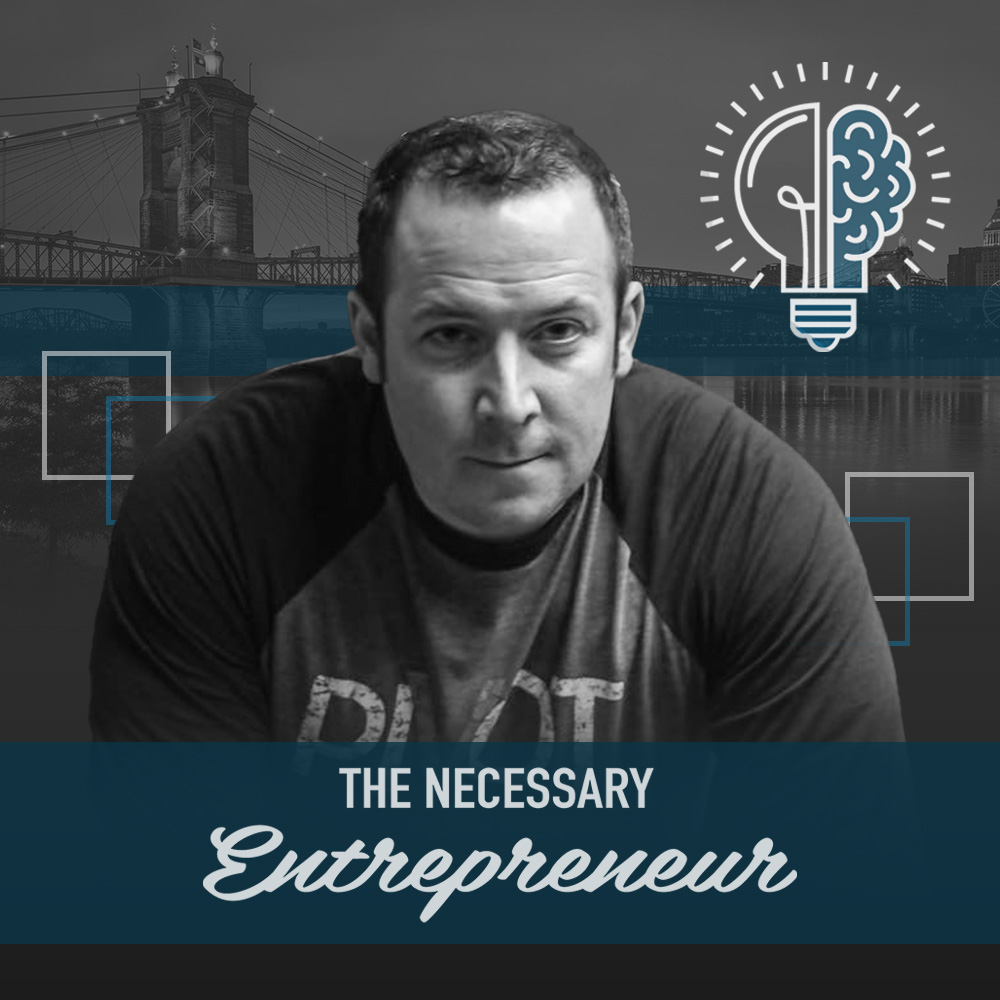
In this episode of The Necessary Entrepreneur, host Mark Perkins sits down with Chuck Lipp, President of Dewey’s Pizza, to talk about leadership, scaling culture, and building a beloved restaurant brand across the Midwest.
Chuck shares the inside story of how Dewey’s grew from one location into a 27-store, 1,400-employee company, all while maintaining its famous scratch-made pizzas, open kitchens, and people-first culture. From team hospitality systems that ensure every guest feels cared for, to the leadership lessons of balancing accountability with kindness, Chuck reveals how focusing on people drives sustainable business growth.
Listeners will hear Chuck’s entrepreneurial journey, from his start in the restaurant industry to becoming President, and the philosophies that guide him: creating intentional culture, empowering decision-making, leading with humility, and finding balance between work and life. He and Mark dive deep into topics every entrepreneur can learn from, including:
-
How Dewey’s builds and scales culture across multiple locations
-
Why training and systems are key to consistent customer experiences
-
The difference between managing and true leadership
-
Building accountability without drama in large organizations
-
The sacrifices and rewards of executive leadership
-
Lessons on resilience, ownership, and personal growth
Whether you’re an entrepreneur, business leader, or simply a fan of great pizza, this conversation offers actionable insights on leadership, culture, and growth from one of the Midwest’s most respected restaurant leaders.
📌 Find Out More About Chuck Lipp & Dewey's Pizza:
https://deweyspizza.com/
https://www.instagram.com/deweyspizza/
https://www.youtube.com/@DeweysPizzaRestaurant
https://www.facebook.com/DeweysPizza
https://www.linkedin.com/in/chuck-lipp-6730377/
📌 Connect With Us:
Website: https://www.thenecessaryentrepreneur.com/
YouTube: https://www.youtube.com/@thenecessaryentrepreneur
Instagram: https://www.instagram.com/thenecessaryentrepreneur/
Facebook: https://www.facebook.com/TheNecessaryEntrepreneurPod
X (Formerly Twitter): https://twitter.com/MPerkinsTNE
LinkedIn: https://www.linkedin.com/company/tnepod/
TikTok: https://www.tiktok.com/@tneclips
Spotify: https://open.spotify.com/show/6xhGUE1yzy2N0AemUOlJPx?si=d1c5c316af404f15
Apple Podcasts: https://podcasts.apple.com/no/podcast/the-necessary-entrepreneur/id1547181167
0:00 You know, my first boss at my, my old job, was walking me around, showing me all the opportunities and truly opportunities, but I was taking them as like, this dude just rolls in and tells me how bad I'm doing. He took me aside. went down sat down and he goes, Hey, look, I'm trying to get you and I aligned so that you can be excellent. You All right, y'all today we're joined by Chuck Lipp, CEO of Dewey's Pizza.
0:46 I'll talk about why I'm so pumped about, uh, not just talking to Chuck, but talking about one of my favorite flavors of pizza. Um, it's a brand that's become much more than just a great place to grab a slice. Dewey's is known for scratch made pizza, open kitchen and hospitality driven culture that has earned it a loyal following across the Midwest. Chuck's played a huge role in shaping not only the growth of Dewey's, but also it's people first culture in the industry that often it's hard to find because there's such high turnover and then the margins too. Under his leadership, Dewey's has shown that when you focus on your people, the business takes care of itself. We'll talk about the entrepreneurial journey of growing a regional restaurant brand and what it takes to scale culture across multiple locations and the lessons Chuck has learned leading a company that's built to last.
1:36 Chuck, welcome to the necessary entrepreneur man. Thank you very much. Great to be here. Yeah, man. The only thing I'm more excited about than when I hear Dewey's, um then talking about how good the pizza is, because we talked about that before he jumped on, is that a person that's responsible for leading the place and for those tastes and those flavors. um So why does, I thought about this, like, man, what's the first question? Because today's going be a great conversation, but why is Dewey's taste so good? I'm not trying to have you give a marketing pitch and say it's the best place in town, but It is one of my favorite places to go have pizza. And so why does it taste so good? Wow.
2:16 lot of reasons. I would go number one, ah we make our own dough. We've always made our own dough. It's always fresh. It's never frozen. That's not the marketing pitch. That's just facts. We didn't have freezers in our entire company until we put ice cream in one of our Columbus stores and then we had a little ice cream freezer. ah But we don't freeze it. We make it ourselves in every market. You know, we really focus on key quality ingredients. Our tomato sauce, we've been out to visit the factory and where they make it out in California. See the process. Our pepperoni, we've changed a couple of times, but we've really settled on one for about the last 15 years out of Columbus called Iso Sausage.
3:02 They're not a least cost producer, which just means they keep the ratio of pork and beef constant in their product versus when pork prices go up, they... take pork down and put more beef in and when beef prices go up. So really just great quality ingredients, uh, teaching people, training people how to make it consistently cause it's hand tossed and that's not easy to get some consistency in that. Um, so there's a lot of training that goes into it. It starts with quality ingredients. Hmm. Something I've noticed from being in your stores for a long time, the restaurants is, you pick up the nuance of a place. the food, the quality in the food is essential.
3:44 starts there, but when there's good service, you recognize that too. And there's something in your restaurants that feels unique. I don't just have just my server, waiter or waitress. Everyone stops at the table. If they notice that a refill needs to be given, everyone stops and helps. Is that intentional? Correct. It is. We call it team service. Team hospitality, would rather, I would rather hear it referred to as team hospitality. But when we bring somebody on board and we say, Hey, we do team service. A lot of people will say, yeah, I did team service at my last job. I've been in several restaurants myself. We have team service, which basically just means somebody's looking at your table, walking by it, not really engaging because we're, all tipped and we don't want somebody else screwing up our tips.
4:31 uh Our team service really is integrated and people train each other. So when somebody comes on board, sometimes we might have a server at the table doing the interview process if we're bringing on a new server, because that person is going to be working alongside and with and touching those people's tables, which affects the money they make. So really when we train people in that climate, the investment of the other team members who are doing the training is so great. because they know that that person is, and they'll be the first one to say, nah, this person's not going to work for us. Or yeah, this person's great. Let's go, let's go, let's go.
5:11 So really our managers are charged with making sure they get trained, but our staff is actually training each other because, and even in the kitchen, who wants to work next to somebody who can't remember the toppings or messing up pizzas all the time? So the team in the kitchen is just as well training somebody that's going to be working side by side on a Friday night when we're super busy. and they don't want to have to hold their hands. So they're going to train them really well, give them a great opportunity to be successful and, really celebrate it and be like, Hey, nice job at the end of the night. So, uh, team service, you're right. We have flags in the restaurant. So we know whether you're drinking diet Coke or root beer or Sprite or it's, it's water. have flags.
5:51 So uh we know what, and you don't have to go to the computer, look it up. Like there's a red straw on root beer. There's a clear straw and sprite. There's a lemon on a diet Coke. So these, there's no nothing on a regular Coke. A cream soda is pretty easy, right? But uh when, when, when, so we know that we know what, if there's plates down, we know that the, the table's been visited and they have their order in. If there's Bev naps down, we know that there's drinks coming. So everybody knows, which then gives them the ability not to interrupt the experience, not to go up to the table and go, Is that diet coke?
6:32 We know it's diet coke. If it's, if it's a half full or less, just grab it, go refill it. So we don't have to interact and interrupt conversation at the table. And we know if somebody's ready to take an order, like I can go take the order at your table. I'm going to do it the same way. The other person's going to do it. We're going to make sure that everybody gets, you know, the opportunity to buy a salad or the opportunity to buy a dessert or the opportunity to have a glass of wine or a beer. And now we have cocktails in some of our restaurants. So, True team service requires systems that allow that team service to happen and a culture that builds trust in their ability to do the same job. So I'm not over there as a different server going, man, they're at my table.
7:15 That would be awful. Like now I'm trying to box you out from getting to my table because I don't trust you. Do you, was that intentional from the beginning, even though you didn't start the company, you've been there for 22 or 23 years now. Yes. And that was intentional. Yes. What was the experience of the founder or founders? so, uh, Joe Schlattman, who was the person who designed the, the S the team service in the dining room. Um, he was at trio prior and he actually. Funny, funny story is that he spent some time in Hilton head, South Carolina working in restaurants. I spent some time in Hilton head working in South Carolina and we both went to university date and not together.
7:58 He's a little bit younger than I am, but he, he was, originally with Andrew at the very beginning. He kind of. took on the dining room and said, I'll take care of this service part of things. And did a wonderful job creating the systems, flexing the systems, what was working and what's not working, kind of changing out pieces and parts and making sure that the team was all engaged and involved. And that's how it got started. And it's lived that way ever since from one to 27 stores. Hmm. When was that? When the first one opened? 97, 98. Has that been hard to maintain that culture as you've grown with 1400 people or is it so ingrained it's easy? it hard or easy?
8:38 So I will say systems, ah training, one thing. Culture, completely different. Speak to what culture means to you and to Dewey's and your leadership. Well, culture is something that, you know, when you're one store, two stores, three stores, I used to say, I knew everybody in the company and every market until we got to seven after seven stores. So I knew something personal about everybody. I would go to all the stores at least four times a year, see everybody, uh meaning other markets. And Cincinnati, was in the stores all of the time. ah So it was easier like the entrepreneurial piece of it. Hey, we're making a lot of different decisions in marketing.
9:21 We're making purchasing decisions where we get to know everybody. We're doing HR decisions. All of those things from an entrepreneurial standpoint lived for quite a while in our organization. and, and culture was built by leadership. And so when you're in it and you're a leader, you inform the culture as we grew. We're not in it every day interacting five days a week with management and interacting five days a week with all the hourly team members. So we have to be a little more intentional about culture. Training still exists. ah You know, you might say culture of hospitality and the culture of the way we deal with people.
10:03 That's an emulation of the leadership in the business. I think our biggest step into culture actually came in 2018. And I can go on and on about this. stop me. I think this is important to these conversations about operating and running and growing these businesses and the person listening maybe that's going to start their first location of whatever the business or entity is. This is great to hear these stories. I think it's essential to learn from the people that have come before us to say how can this be integrated. Yes. So 2018 as a, as a leadership executive team, we were talking about how, how can we get people making independent decisions? And we were working with a consultant who was helping us with strategy and how do we get people to make independent decisions that are aligned with what we feel the culture of our business is?
10:52 And, um, so we started to work on purpose and we were like, Hmm, you know, five people sitting in a room. talking about purpose, talking about it for three months, trying to write it down. We weren't really good at it. So we ended up bringing in a group of 30 team members from across the company, all the markets, different roles from kitchen to management to servers to regional managers. And then we said, Hey, let's get in a room we had. brought in a consultant to run us through this, this program. We had researched him heavily and We sat in a room for three days, came up with our purpose.
11:33 Came back month later, same 30 something people sat in a room for three days, came up with our values. Those are the basis of what I consider to be the culture of our business. That is, and then we have these other tools that are communication tools, which we call conscious communication tools. uh And those are how we talk to each other and how we communicate with each other. all throughout the organization, up and down the organization. So if somebody has a problem with something Chuck did, they go and they go, Hey, I got a moose to name and they have a what moose. So it's like the elephant in the room, but we call it the moose because as our consultant said, when you say moose, it's hard not to smile.
12:15 just like I did. was like, what did you say? want to bring it. was like, no. eh So we say, I got a moose to name. that, that then allows us to get into a conversation with anybody in the organization up and down the organization. We have a thing, it's not our thing. It's called the drama triangle. We try to stay out of the drama triangle. We don't want drama in the organization. mean to you? Um, productive conversation is had and we stay out of the always, every time those guys like use the I statement, say I have a issue or I have a problem. How are we going to solve that?
12:55 We have these values. We have this purpose of where we're going. How do I use those issues or the issue use values and culture or values and purpose. to solve that. So we call it issue value solution. And drama to me means unproductive conversation that's bringing in other people to try to play alongside you and invite them into your drama to really no end or no, no. I guess successful. Yeah, because here's what I want to do. Like I just want to go straight to the seven store people and I'm like, Hey, cut all the BS out.
13:36 Can we just solve the problem? Yeah. But you're trying to find a nice and an engaging way to say that I'm assuming. Right. Cause that's all I want to say all the time is like, Hey, hold on guys. Listen, that's fine. All these feelings and, and what's your opinion? What's the problem? Yeah. Can we just sit here and fix this? That's it. And I used to say back in the day before we had all these tools, said, people would say they have a bad attitude. I said, well, how do you know? And they would say, well, the XYZ I said, so those are all symptoms of their attitude. So if you can address those tangible things, they show up late, their uniforms dirty, they don't smile, they walk slowly. Those are all, you know, like you might say they have a bad attitude because those things are happening.
14:18 But to me, they're all symptoms. You can address every single one of those. So let's be, and we have this thing called kind versus nice. Let's not be nice and, and, well you're dead. Let's be kind. Give them the information that you know, that you observe. they have the opportunity to improve. I was sharing one of our leaders. uh Sometimes I love face-to-face and direct, but you know, when you're in a high intense environment, sometimes this messaging, if you're on a good level with people, you can send texts and emails because you don't need to provide context if you really know each other well. um But I just said, we were talking about having a conversation with someone that really is struggling.
15:00 And I said, Hey, you gotta be honest with them. If we're not honest with them. I said, now you don't have to do it to ruin their personality and ruin their infrastructure and who they are and their identity. But I said, if you're not honest with them, we're not giving them a fair shot. We're just not. And I know it, it feels better to avoid conflict, but it's not conflict. Everybody thinks it's con it's not conflict. It's like, we have a problem. We have to help them work through it because ignoring it is not the option. Right. And so I just said last night, I was like, Hey, you have to go and talk to them and be honest with them and let them know, tell them why it's important. It's not just some tell them why it's important. Right? Like why is the behavior that they're showing? Why is it important that that doesn't continue to exist?
15:43 And the longer we allow the behavior to go on that is frustrating us, the harder it is for us to come at it on an even level. have another part, another tool is intention and impact. What is the intention I have in this conversation with you? Like what you're saying? And then what impact am I having on you? How do I say it in a kind way that matches what I'm trying to convey to you in the moment with you? on a Friday night when we're really, really busy, I might say, take out the trash. And in a slower time, I might say, hey, will you please take out the trash? I probably am not gonna ask them, can you take out the trash?
16:24 Because the opportunity for them to say no is. Yeah. Right. Yeah. Not, and- Not in a mean way. We're busy here, you all. Like, hey, kick in, can you do that? But they should, but they can also ask me, Hey Chuck, can you take out the trash? I'm doing five things here. Okay. Yeah. I'll take out the trash. So you were touching on how do you get people to take initiative maybe around big things, right? I think that was a part of the process. Just decision making. Because I wanted to see the trash be taken out. That's the perfect world. Yeah. Yeah, exactly. So, so when I, when I'm a, when I'm dealing with a, a team member or I'm dealing with a guest, how am I making a decision that will be aligned?
17:08 And like when we were out in Kansas city now, I don't know if, if that person has, you know, the, manager there on the shift or the server there on the shift has a, what their balance of I'm going to take care of this guest is, am I going to give away everything to take care of the guest? Am I going to go way overboard? I would rather have that happen than go under board. But at the same time, what does that look like and how do I make that decision and what guides me? have it. We have a value that that is we are fiscally responsible and we, that is a, it's probably the last value we added, but um, Who added that one? Uh, really everybody, because there was, there was a push and pull of like, well, how do we, it's a business and like everybody understands when you sit around with each other and you're talking to each other, like, Hey, there's an interest in this being a business that's, can carry on and keep everybody employed to, have a job.
18:03 And we have to have some semblance of, well, we're here, we're a for-profit business. We're here to make money. It's not the end all be all, all the time, but it is part of it. If you're not making that, no one's going to put in the effort to be responsible for something where they're giving their life away because entrepreneurs, we can go there. When you're in a C-suite level and you're an entrepreneur and you're in it for the long haul, there is a massive exchange that's happening. Yes. And you're exchanging things like freedom. No matter what everybody says, we're doing this to be, but you're exchanging peace. You're exchanging um the family time. that you'd love to give to them all the time. You're exchanging the extracurricular activities to the fun things, the normal seven o'clock golf.
18:46 You're exchanging a lot of that when you go all in to be at the elite level of leadership. And with that, you're just not going to do it for free. Right. Not going to. And I don't think anybody who's reasonable in this world is going to expect that. So if you don't make a profit and you can show an outcome for the sacrifice you've made, it's probably just not going to Correct. It's just not, I've seen, don't get the best outcome. You get an average outcome. Yeah. um True. And, and if you can't pay the bills, you can't keep the lights on. And you can't go month to month. You have to know there's financial security there. Right. To make an investment in the growth of the business, for sure.
19:27 we don't always think about this way, but it is a way of thinking to say, is my money better spent investing in duees or is my money better spent investing in something else? And we find because of the people we have and how we do it, that our money is often better spent investing in duees ah because we have a system, we have great people and we have a great culture. And again, I will go back to worth 27 individual units. And we talk about this all the time and every unit has a different spirit and every unit is the culture is determined by the leader of that unit. the general managers in our organization are extremely important people.
20:11 And when they, when they walk into a restaurant and they have that, let's go get them today. And they have that, I'm going to make sure that everybody's getting taken care of and both from the consumer side and from the team member side, that usually works really, really well. And they have an accountability for what is going on in the restaurant. It's not pointing fingers at everybody else. Sure. When they need support and they have a question or they have, they can ask that. And it's a totally a strength of somebody picking up the phone. And when I get on the phones with general managers, I talk to our general managers at least three or four times a year, all of them. And when I get on the phone with them and I'm like, Hey, I am a truly would be honored if you just pick up the phone and call me if you have a question.
20:55 Now there, have regional managers, we have director operations and yeah, a lot of that goes through them. I just want to be comfortable with me and being a human and saying, Hey, if I really have a problem or really need want to pick his brain, I can pick up the phone and call him. So when you get to that and you're like, okay, I just, want that person who's leading that store to have these really, really good, culturally based decision-making tools and for everybody. Can you train that or is it found? I think it's a lot of it is intuitive and it's based on the person we, when we hire managers, we have a lengthy interview process.
21:42 And one of those, uh we use a thing called the Berkman analysis and the Berkman analysis, basically a learning styles tool, but it also talks about traits of people. And a lot of times if, if somebody thinks they're always right, that's a red flag for us when we challenge somebody at the interview table and say, have a disagreement with them and watch their reaction just to be able to take somebody else's perspective. You want them to go, Oh, tell me more about why you think that. And if they can go, sweet. I like that. I appreciate that. But let me tell you my perspective as well. And are they listening to understand or are they listening to respond?
22:25 So I'm out there. So they come already, it's already baked in almost, right? You can teach them the business in your style, but you're talking about almost their philosophy as a human. Correct. And it, it, it weeds itself out really quickly when there's somebody that their ego is massive and they, know, like we want them to have enough ego. I was going say, where's the tipping point there of the confidence and the ego and the belief in themselves and they're going to go conquer the world and our location is the best and look at the numbers and. when they're not kind, when they're just, know, the ego becomes all about me.
23:05 All of our values start with we, and there is the I in, when you, I would never want to say is, I am, I'll say that, I am, but when we start with the we and you get to the I, it works a lot better because it says we're a team. I love it too. uh I default on whether I'm doing something personally. If I have a group of, uh you know, contractors that I've gotten to know well, and I use we often, there's something in when you accept that, what you're talking about, it does work well because you're not taking credit for something somebody else did unintentionally. And it just works well too when it doesn't go well, that if everybody can have ownership around it and participate in the growth, it also isn't as much of a critique maybe on an individual as long as everybody's participating.
23:56 But every once in a while someone says, I didn't know we did that. Right. Yep. Um, and so I, but my response always to them is, yeah, we always do everything. Oh, that's it. I will recognize you. You can get the award like your individual, but usually in all of our I successes, there's a lot of we mixed in somewhere. There just is. I don't want to overuse the team thing, but You're not going to do anything big. One of the, one of my most transformation or transformative books, transformational, transformative books, that I ever read was called the Oz principle and the Oz principle talks about personal accountability.
24:38 And then you go on, it goes into, uh, organizational accountability. And when I realized that, and I think I was 20, five, 26 and my mentor introduced me to that book and we ended up having a great relationship. We're still, we still talk today. Um, but when you think about that and you go, Oh, I am responsible for what I can control. And I'm responsible for my, my little organization, my store, my big organization, my team, my, my bigger organization, the company, even bigger than that, the community we're in and even bigger than that, the state, then you're like, I can make it, I can really make a difference and everybody has that opportunity if they choose to and be responsible and take a look inside first and then ask for help second.
25:37 What's it like to be the CEO at the top of the pyramid of a 1400 person company? What's that like? uh very humbling, ah stressful in a good way uh because I hope we're creating great outcomes for our team. uh Why hope? because we're not always going to be right. And we're going to, we're going to break some stuff. And I tell people all the time, break some stuff, know, we're going to, we're going to screw some things up. And, um, we had just have to realize that and we have to listen.
26:20 And I, I, that's something for me that I've matured more in is I said earlier, listening to understand and seeking to understand instead of to respond. So when I, when I'm listening to somebody, I'm hearing all of the things that they're saying when I'm engaged and to be humble enough to go, Hey, we're, not perfect. We're, trying our darnedest to be perfect. And that is our goal. are one of our purposes. are next level. We, that just means we're always trying to improve. We're never going to get there. We know that we just are trying to improve all of the time. So when I say hope, I hope the decisions we're making and then, you we'll be told a lot of times if they're not the right decisions and we'll get pushback because people will name the moose.
27:10 So there's this whole cycle of what we do and how we communicate that, that really works when it's happening. So when I say I hope, uh, it's, it's, it's daunting, but it's also so rewarding when we see people that like we were talking earlier about a person we have that is in the restaurant business and now in real estate. And we got to see that person grow. We offered that person ah feedback. They're successful now. And to me, and when we get to see that, it's just a, it's very humbling. When we see somebody who was, in, you know, as a job with a cook, and then they're a kitchen manager, and then they're a general manager, and what that's meant to them in their lives.
27:57 that's the most humbling thing when we get to see people who are growing and that really wanted it and didn't just say they wanted it and had the opportunity to get from point A to point B to point C to point D and what their life looks like now and how satisfied they are as in their growth as leaders, not just because we, say manager versus leader and like there's a distinct difference between that. Well, let's go there. Because the title, unfortunately, a lot of times is manager. But the responsibility is leadership. So, so I, I often will ask our general managers, Hey, look, who's behind you, who you lead and can you grade yourself?
28:39 Like if you say you're a great leader, well, great leaders have great people behind them, but, great leaders also are able to move people in a certain direction and influence them. They're living really our purpose and values and our conscious communication tools. They're not getting brought into drama. They're not bringing drama into work. The people who bring drama to me were like, people, you're really not that cool that people want to hear you complain about what you have going on because everybody has something going on. That's a little bit of drama in itself, but people have things outside of work that are going on. So when you walk through the doors, being that, and I say the percolator, being that person who is boom, boom, boom, we're here.
29:24 We've got this going on. Let's, let's, let's get things moving. Anything I can do for you today, having this great presence, not walking by something, whether that's a piece of trash or whether it's by a conversation that shouldn't be happening or something that's being said, they address things and these build this culture. What are your non-negotiables as a leader? How many, how do you, and still those in your team and how do you hold people accountable to those? And it's really about the how and then the why. Why is that important? I always said when I was a general manager in a restaurant, I said, if you can be on time and in uniform, we're going to be fine because everything else, if you can start there, everything else will fall into place.
30:09 What are your non-negotiables go beyond that show up in uniform and on time? Those were like those were my verbalized non-negotiables as my for my team. What are yours? Do you separate them that way? Like the non-negotiables for me as a leader and the non-negotiables for me as the individual. Do you? No, no. um, I have, uh, I've, there's a couple of times I've been later, forgot about meetings and it tore me down for days. Um, I don't have a uniform now, but you know, I, I try to look like I would, I would want somebody to look or I want to look and I, it, it, it, I understand the way that the way that I look and form some people's opinion of me, not always in everybody's opinion, but, No, I don't think they're that much different.
31:00 I, I'm a regimented person, which, just is, is part of who I am and my wife of 30 years would, will tell you that like, boy. Yeah. Don't mess with the regiment. Yeah. Were you always regimented? Like if you go all the way back to the college days, were you? I don't know. really don't like it I didn't think about it that way. ah There were certain things I was regimented towards that I probably should have been regimented towards other things. the default code back then though? if you weren't regimented, what do you think you defaulted to from philosophy?
31:43 was it hard work? work. Like, know, so What's that mean? What's that mean today for somebody that's the age that when we started out, what's hard work mean? You kind of have to define it for yourself. Like I don't feel like I could define hard work for everybody. Some people might say hard work is 20 hours a week. Some might say 30 hours a week. Some may say 50. Some might say 80. Some might say a hundred. uh Is it the work within the time then? It's how you work? I think, I think it, I think the hard work usually comes in when you're doing something you're not passionate about. Then it becomes really hard for me when I was working 80, 90 hours a week in a restaurant, in a kitchen, it wasn't that hard of work.
32:30 It was grueling, but I don't, I didn't find it super hard. I found it like, I enjoyed it. I enjoy what I did every day. I enjoyed the hustle and the bustle and the stress and the fast pace. Um, But aren't we talking about the mental hard? Because when we're younger, the physical hard wasn't as hard. You'd be exhausted, but your body was really resilient. that's what I'm saying. The mental hard, when it's not rewarding, when you're not finding joy. So I'll talk to our general manager. Hey, I understand what you go through on a daily basis. I understand that you're dealing with team members who might not have the same work ethic, who might show up late for work, who might not do what they're supposed to do and you have to coach them.
33:17 You deal with customers who sometimes aren't the nicest, the kindest people. ah You deal with vendors who sometimes don't do what they say they're going to do. And you're dealing with all of those things. But my goal would be on the backside of that, you find great joy in being a leader because it is the most rewarding thing that we can do is to see other people be successful. do you think that is? I just think innately as human beings, who get, what do get more excited about giving a gift or getting a gift? Some people it's different. Some people it's different. So for leaders, I think it's giving a gift. when you give a gift, you're so excited.
33:58 Like my kids are, they're funny, like birthdays or Christmas or whatever, they'll be like, dad, I got to give you your gift. you know, whatever it is, they're so happy and proud and they're excited to give me the gift. And sometimes I remember my kid one time got a Jersey and he couldn't contain himself because it really wasn't the Jersey he wanted. And if he listens to this, he'll crack up about it. um, he was, he wanted a Jersey that my other kid got for Christmas and you know, but I think there's like, okay, what's next for that, for that age group of like, okay, that was great, but what's next? What's the next gift? And really they were probably more proud of at that, even at that age of, the gift that they gave.
34:43 And I feel like that's truly like a leader is more apt to want to give than to receive. Yeah, because I'm assuming here as a leader, I'm going through this like a well thought out gift is impactful. Right? Like really trying to find out who someone is, but then I'm also going deeper. There's really not anything from a gift standpoint that Chuck needs. Not that you need. need need no okay correct need versus one correct But that sincere personalized letter about an employee's experience at your company.
35:28 Got every one. Got every one of them. no gift that can beat that. That's what I'm talking about. See that, that's what we're speaking about, about leadership and really why it can be so fulfilling. Correct. And, and, and seeing people, seeing that person who started as a cook, went to a kitchen manager and, and now is, you know, five or 10 years into their career at Dewey's and what they've learned and how, how much they've grown as Isn't it the person they've become? That's what's special. How capable they are. Because that oozes into the rest of their life. Correct. And we have, you know, alumnus of Dewey's who are doing incredible things out there in the world.
36:14 And some of them not in the restaurant space. And a lot of times they'll come back to us and say, my foundation that I got when I was in high school at Dewey's and the way that I was treated has impacted my life. So we have kids of team members who are working for us now that You know, their parents worked for us when they were 20 years old. a 27 year old company. Could you write the book because what's the book about? It's not, it's, like, um, unreasonable service or something. Unreasonable hospitality will Gouda. Yeah. Very good. So, because I said that to say, if you had to write the book, could you simplify the book on how businesses create this?
37:02 And you could do it from, I'm not trying to say Dewey's up here, but the fact is, that the way that you all run and operate the business from a customer from the outside, it does feel a little different. It feels good. Even though I'm just going there like, that's the lunch spot today, guys. You want to go to Dewey's. It's comfortable. You know what you're going to get. The service is on point. The food is good. It feels a little different. And sitting in and talking to you and talking about the impact of team members and people come back after generations. Not that everyone, but some. Is that complicated to build that? Or could you write the book and simplify it? if, if Dewey's went away tomorrow.
37:45 and you still had it inside of you to lead an organization. And someone came to you and said, hey, we're going to do a startup. Could you implement the things that you've learned really quick and lead them? Yeah. It's, it's commitment. So I, it's, there's no secret. We can sit here and talk about it. I can, know, we, kind of giggle about sometimes in the organization where like, well, yeah, anybody can make pizza. Anybody can do team service. Any, anybody can do this, but are they really, really passionate about it? Are they really going to stick to their guns? Like when somebody doesn't drop plates at a table, And that's part of team service.
38:25 Are they really going to go over and coach the person and say, Hey, here's why that's important. Or are they going to do the default drop the damn plates at the table? Don't forget it anymore. And the person's like, well, I don't understand why that's so important. I don't understand how that affects everybody else on the team. So I, I think the answer to your question would be, yeah, I think there's a certain playbook that org organizations agnostic of whether it's a restaurant, or whether it's a sales organization, a manufacturing organization, a financial organization. And we talk to those people. mean, I have friends who are in the financial business and some of them are like, how do you guys do it?
39:07 we're like, Hey, it's every day. It's a grind every day. And when I say grind, that kind of sounds bad. It's like, Oh, it's really, it's a hassle. It's a passion every day when we come in and it's no different in our office culture. Really it's like, Hey, You know, I'm not walking around in the office, you know, head down, pounding, know, demanding anything different than what we do in the store. Is it just a reproduction of Kaizen? Of everything better all the time? the opportunity to do everything better and to get the input on how we can do it better for sure. Yeah. I mean, I, I feel like where we really have grown.
39:49 we, we do a sentiment surveys now and you know, there was a, a time where I'd get, when we first started doing them, where I'd get so upset because you know, when you ask for it, you're going to get it and people are going to use their, their, uh, bring their inside voice out and you take it all personally because, we all take it personally. It's like, Hey, you know, this is, this is kind of a bummer that we're viewed in this light. And then we don't take time to look at the positive feedback and how many great things we're doing in people's lives that are just like, love it here. Best job I've ever had. Can't believe it came from a different organization. And you have to take a little bit of time to look at that, but then also go, okay, what am going to do with this information?
40:33 What can I do with this information? organizationally. And do you even want to? Right? There has to be a desire. Do you want to put in the effort and the time and the commitment to improve? Because isn't that how you receive the feedback as well? Or no? Yeah. Yeah. So part of that is like, man, there, are some things that are at the store level. wish we're getting addressed at the store level. You know, when I said name a moose, like, Hey, I wish they were naming that moose on a daily basis. And sometimes maybe they have, and they just haven't gotten the response they want. So this is an opportunity for them to, to say it directly to us as an, a leadership, uh leadership of the company. And then it gives us the ability to go, Hmm, we need to think about that.
41:15 We need to investigate that. We need to think about ways we can. modify and especially when it's mentioned more than one, two, three, four, five times and it's across several stores or across several markets, then there's a lot of truth to it. like, can we do, how can we be better? How can we be next level? How can we, another one of our purpose statements, how can we nourish our community? When something changes in people's brain, when they look at problems as opportunities, there's something that happens there. Right? I've learned that personally, right? As a leader, even before that in sales, if you look at every moment, even the ones that used to take personal, right?
41:55 If you look at all of them as an opportunity, instead of something you have to defend, growth can be exponential. perspective. So, and I will tell you, I think I've matured in this probably in the last few years is it's all perspective. It's all somebody's perspective. And I truly believe the human spirit is good and there's not a bunch of people that are just really out there trying to be negative. So there's something that's happening to somebody that their perspective is. It's not right. It's not great. It's not next level. And How do we think about, how do we just take that perspective and think about that perspective of that team member?
42:39 And the best way embracing it, just saying, share with me why that's the way you're thinking about it. Tell me more. Yeah. At 1400, it's a lot. It, it, it, but that's why I say like at the store level, if that was coming to the management team and then that management brought it to the regional manager and we could act on it. Awesome. Cause then we get these micro improvements all the time versus when we do the sentiment survey, my goodness. Now we have this and what we do, we, we bring them to our strategic meeting and we talk about like the key takeaways from the sentiment survey and we say, okay, what are we going to do not just to change the sentiment, but to really improve the organization and the business.
43:25 um How the heck does somebody become a CEO? How's that happen? That's a lifelong learner. To me, my story would be, I started out in the restaurant business when I was in college. I was in college, I was gonna go in the medical field. I wanted to be a doctor. Actually, I wanted to be a surgeon. I like to work with my hands. Kind of my two things that I wanted in a career were I wanted to work with people and I wanted to work with my hands. So I was gonna be a surgeon. And then I got into the restaurant business after my sophomore year in South Carolina and got to work in a kitchen, hundred degrees every day.
44:10 And our air conditioner was a screen door. I loved it. And I got to work with my hands. I got to work with people. I learned something new. uh I worked a lot of hours, made some decent money, lived with four other guys in an apartment and uh That's what I did. Then the next summer I went back, worked for the same person and fell in love with it. So really that's what drove my passion. I ended up graduating from university Dayton with a business degree, um, went down and worked after summer for the same people I were for that after graduating and then work for the same people I worked for, uh, in the summer times.
44:54 And, um, that didn't last a real long time. had a, couple other jobs. And then I was like, you know what? I want to go back and really get a degree in culinary arts. I really liked cooking food. Um, I like the, the process was pretty cool and watching it come from an idea to fruition was cool and having a hand in it. Uh, but the seeing people be happy, I never, I, I'll never forget the first time I came back and I was like, mom, dad, I'm going to make you a marinara sauce. And I wasn't a big Italian food fan. I had no idea what marinara sauce was. So I made this marinara sauce and I watched my parents eat it I was like, my goodness, they're really enjoying this.
45:35 It was, it was so cool for me. So I went to culinary school, um, had a couple of different jobs in Cincinnati, worked at, the Omni hotel, uh, at orchids, worked in the banquet kitchen there, got to learn a lot of really, really good stuff. And all along it was, and my dad told me this, my dad, you know, he didn't live a long life, but he told me, said, be a constant learner, observe and understand. And when you, when you're not learning, move on. So if you've sapped it all out of an organization or you've sapped it all out of the leader you're working with or for move along. And I did, I had several jobs in restaurants.
46:18 I learned and learned and learned. learned what the things I didn't like as much as I learned the things I really did like. And I've seen it in organizations where leaders, good leaders do great things and bad leaders. They're leading people. They're just leading people in a bad way. So I think that's all part of the journey, but ultimately like I loved what I did and I found that passion. so working 60, while I was in school, working 60 hours a week while in school, it was just what I did. And the, I love golf, like golf took a, a side, a step back.
47:01 Um, my next job, when I got married, was traveling all over the country. I had restaurants in San Diego, Miami, Detroit, Cleveland, Philadelphia. was on an airplane, 120,000 miles a year. And my family life took a backseat. Uh, it was, and I said, I've been married for 30 years and that was probably the most. intense our relationship was because every, and we had, we had our first son while I was on the, I was at home when he was born, but I was on. Yeah. And when I would come home and my wife would be with our son all the time and I'd walk, I'd walk in the door and she'd be like, let's go out. I'd be like, I just want to be in my, my, my home.
47:47 So there's a lot of different things and sacrifices you make and, and ultimately You look at it you go, okay, is it worth it? And we have a uh value and I'm very aligned with this value is there's balance in work and life. It's not work-life balance. There's balance in work and life. And sometimes we get out of balance. We have too much work and not enough of what we consider life. And it's our job personally to get back to that balance. And how do we as leaders get back to that balance, the right balance so we can be the best leader possible. That might be the biggest trigger word in business right now. Cause all these leaders, you share that with these big time CEOs that we know their name and they laugh at it.
48:27 Even, um I forget her name, but in Hinder or something, she was the CEO of Pepsi and her story, she said, every time someone asked her about balance, this is her. this, can have debate around these things, right? It's just sitting just about like everybody agreeing. She laughed. She said, what do mean? She said, your idea, I'm paraphrasing here for her, but your idea of balance, I don't get to have that with my position. So you have to understand the perspective of every position. So my balance is a CEO of PepsiCo. I'm working seven days a week. There's always things on fire.
49:07 People are always called, there's always things. So if you're looking for a 40 hour a week balance, wherever that came from, You need to make sure you align that with the responsibilities of you have. You want to say something about this, but. um On the way to being great, everything in my life doesn't seem like it's been balanced. But it's okay. This is a great conversation about this. I think, individuals need to determine that for themselves, not organizations. So if, and if the organization doesn't fit or the individual doesn't fit with what the expectations of the job are, then that's different.
49:48 But if you're signing up for it, you know it, you know what it's going to take, or you're signing up for a career and you're saying, Hey, I want to really grow in my career. and I want to be a leader or an executive or whatever, you there, there's a, there might be a different balance in that and what it takes to get the job done. And, the passion for doing that is really what is important. So my, my, look, I'm up at five, five 30 in the morning. Some people might say that's crazy, but for me that's balance. I don't, if I laid in bed until eight, I'd be like, Oh, what is What's going on here?
50:32 Is balance a feeling? Yeah, probably. Probably like, and we know, like I know when I get out of bounds and I get, I get burned out and I'm not the best. And you know, when I get really stressed, I get short with people. And so you have to, you have to nourish that part of your, your soul as well. You can't like they're in there. Like I say, I can't, cause I can't say what you can do. I can say, I can't work a hundred hours a week and give my best. I can work a hundred hours a week for a period of time. When I used to do restaurant openings in my, my past career, I'd be on the road.
51:14 I'd spend 30 days on the road. I'd spend seven days a week working. And those were 12 to 13, 14 hour days. And that's what it took to get the job done. I knew it was a sprint though. And I knew at the end of that sprint, I was probably going to take a little bit of time off. Was that important to your development though of the the Chuck sitting here today? Percent. See, that's the that's the tough part of this conversation, right? Yeah. And if I wasn't willing to do it and I said, Hey, that's 40 hours. You're gonna limit the height that you rise to. That's my perspective. That's what I've seen, not just in my experience, and so many other people I've talked to. You just have to understand by these decisions that you make in life, there are future implications.
52:01 Almost any outcome without some extraordinary happening that wasn't seen can be reverse engineered. And whether or not that person wants to change the ingredients that need to go in. No, no, no, no. This is how the thing over time, time after time, after time, this is what the journey looks like. You could probably take someone in one of your stores. If someone is this happens at times, I bet some young person, one of your stores, maybe it's 19. They have energy and inspiration and they're like, Hey, How do I do this?
52:44 How do I become this? How do I become a general manager? How do I, you actually could reverse engineer exactly how they could go from where they are. Couldn't you? To where they want to be. the, the definitely a roadmap, but, but again, there's so much that comes along the road of trips and falls and like being resilient to the point that you have the accountability, you're not going to fail. I mean, not fail, not fail on a grand scale. because resilience is coming back. It's like just you did the thing, didn't go well. Do you want to be better? OK, we'll get back up. Let's do it again. You're not, you're not, exactly.
53:25 And you're not too proud to say, yeah, that I screwed that up. Because what do you look for that next person who's going to be, I don't know what the level is below sweet C-suite for you guys, but probably like a VP of something. People like titles making something. What do you look for for that person in that, that next VP level? What are you, what are you looking for? Yeah. I mean, and this is kind of everybody in the organization. Are you open-minded? Can you, can you listen to understand here, either choose to change or not to change? And then do you have, are you goal directed? And if you, if you can do those two things, it's, and you really can listen and be open-minded about things and you can really, uh, set goals and really their goals.
54:18 not, they're not, I call them BS goals. They're not BS goals that just sound good. They're actually goals that are going to help you get to where you want to go. And there are sometimes there are stretches and sometimes they're difficult. And sometimes you might fail, but you're never going to fail to get there. Um, that to me is, those are two key ingredients of somebody who, if I was looking at somebody, I'd be like, Yeah. You know what? Something happened. They didn't say, I'm out of office. They took care of it and they made sure it happened. Yeah. Sense of leadership too.
54:59 But you got to own the thing, right? You got to own the thing. You can disagree. It's okay. But you got to because I don't think it's any different than seeing the trash needs to be taken out regardless of your role. You see it, you take ownership of the thing and you make it happen. I'm sure you can lead as well. But ownership to me, when I look around my companies, when I'm running, it is important that we take individual responsibility. on the things that we've accepted that we're responsible for. Yes. And that's the ownership piece. And also what that entity and that organization, what that team needs, they need you to do that well. Because if you don't do it well, someone else, it's either going to suffer or someone else is going to have to step in and take away from their thing to have to make up for the difference.
55:43 Right? That sense of ownership, if everybody has it now, you can own it and make sure you have a good outcome in that role. And then leadership, we could put that stuff in too, right? But Yeah. And sometimes like where I get a little sideways on the ownership is like this sense of ownership. Is it a sense of I own a chunk of the business or I own my decision. I own my outcome. And when we think about it from that perspective of I own my decision, so I'm accountable. I own my outcome. I'm accountable. And I have that and I go back to the Oz principle. I have that internal self accountability to make sure that we're having a good result for our team, our consumers, and for the greater good of what we're doing.
56:27 Yes, you like leadership versus ownership, but I'm thinking about listening to your guys organization and it seems like there is clarity about what everybody's supposed to be doing. Maybe you would frame it differently, but is there clarity around the roles? Yes. is clarity. 100%. Yeah. So there's no, not too often there's anything that people don't understand about, Hey, when I come in today, whatever the thing that we've signed up for, when I come in today, this is what a successful day looks like for me. Yeah. Right. And in any business, the same thing, like why do we have purpose and values, independent decision making? So there are going to be these other decisions you have to make that we don't have on a playbook. you know, and by my sarcasm would be like, Hey, we don't have a playbook when somebody has to go to the restroom.
57:12 Like, what do do? Yeah. We hope, we hope you're coming in with that. Um, but, but yeah, there's checklist, there's, you know, a way we're greeting the table. There's a recipe for the pizza. There's a time frame that the Pete like for our dining pizzas or our salads are out in five minutes. Our pizzas are out in 15 minutes. We know when they're out in 15 minutes or less. And we know when our salads are out in five minutes or less. And that's an accountability that everybody in the business has. ah That's way I speak to ownership. You just know when you're in this role, because we can't say, can't be a bunch of woo woo, like, we just hope everybody, we hope it works out well.
57:53 It's like, no, listen, like, you're supposed to be doing this, this is the job you accepted. I'm supposed to be doing this. I have to make sure that I really hit the targets on these things. Right? mean, and so if we do it, if you accept that, there's just not an opportunity for too many excuses. No, no. Like I say, there is a reason or an excuse. So they might have a reason and that's a legitimate thing. Or is it just an excuse? Like, Hey, that didn't happen because like that, that table didn't have their pizza in 15 minutes. Cause I dropped it in the kitchen. Okay. There's a reason. Um, what approach do you take in leadership when someone isn't performing at a level that you expected them?
58:38 Expectations are weird. I try not to have too many of them anymore. I try not to, like, I'm really trying to tell my brain don't have expectations. Is that good or bad? think it's bad. Okay. feel like... you know, if we have greater expectations and somebody has of themselves, then that's where it becomes a conflict. And that's why asking, asking the question and saying, Hey, what is it you want? Like I might see something in somebody where I'm like, my God, they're a great leader. They have these innate abilities. They're, they don't even, they don't, people just follow them. And, for a good reason for, for their work ethic and for what they're doing and for the way that they're accomplishing their job and for the way they communicate with the people.
59:25 And that could be a server. That could be a cook. That could be a manager. And I'm like, I see so much in them, but you know what? Their, their desire to move up in the organization might not be there. And that's okay. Like, but I might have the expectation like, my God, they're such a great leader. Let's, they need to get, they need to move up in the organization or they need to move up. And they're perfectly happy and content with what they're doing, which is great. Which is, which is a, That's happiness and individual happiness. We can't dictate that. I can't dictate that because I don't know 1200, 1400 people, like what makes each person happy?
1:00:05 There's probably 1400 answers for what makes people happy. What we, what we, what we can control is the environment, the culture of what we have. And that's not easy either. And getting people, you know, like, Hey, I want to work in this environment, in this culture. This is what I'm signing up for and they're living up to what I signed up for. So it's easy to say you have expectations of locations. Is that correct? Yeah. I mean the, the mechanical systems, have expectations that people are following the systems. Yeah. And when those systems are not being followed, uh, you know, then we end up with bad results sometimes because then it's the individual.
1:00:46 always, this is, I didn't make this up. I, I, I really didn't. Um, I forget what the word is. uh urban legend. So when, when we introduce urban legend, this is how we do it over here. So there's 50 pepperonis on a large pepperoni pizza. You guys have decided there's going to be 43. ah so that's, that's, that's a system that we have there for a reason. That's the expectation. Now, if somebody wants to offer an improvement to that and say, Hey, I got a better idea. We should put 51 on and here's why. That's the important part, right? Yeah. Here's why. Right. Here's the market research that I've seen that we should do this.
1:01:28 Right. Hey, thanks for tuning in. If you like these types of conversations, be sure to follow the necessary entrepreneur on your favorite platform so you never miss out on future content. What advice do you give your kids? same advice. Um, you know, it's, is interesting cause I have two of my sons that are out in the work world now and I, I've encouraged them to be lifelong learners. I, I'm not a, a, a pressure dad where like I just, because I do look at them and I go, man, there's, you guys have so much potential there. They're way smarter than I am. Um, they get that from their mom and they have so much potential and what their priorities are sometimes don't align with what I think their priorities should be, but they're their priorities are not my priorities.
1:02:17 And so I just encourage them to, Hey, if you're not happy, be happy. And I think as parents, that's the greatest thing is if your kids are happy, um, that makes me happy. And I, I don't really care what makes them happy. If they can find happiness, And I think I would say that about our team. Like, I just want you to be happy. And if this makes you happy and what we're doing makes you happy and how we're doing it makes you happy, awesome. Do we to define happy or we all just know what it is? I'm not going to define happy for anybody else but me. but when you say for your sons, I just want them to be happy. there's difference between like what I would say financial success and happiness.
1:03:01 And when we think about financial success, for some people that breeds happiness. For some people just bring breeds stress and a whole lot of other issues that come along with financial success. What do think that happiness thing is though? I've really been on a search for this. Like, what is that? Because you know how we have these words like hard work and I said, what is that? it, so when we say happiness, if we say it, are we talking about the meaning of a word that we can look up in a dictionary or when you say it, do the people interpret the definition, meaning to them? Yeah, I think so. mean, what Victor Frankl, Man's Search for Meaning, like, okay, what is my meaning in life?
1:03:44 And that's going to be different than probably everybody else's meaning in life. You know, like my balance and the way that I, my family and I interact is going to be different than some other people. So, you know, like we, I read a lot of books and you take snippets, like there's no way that I'm going to be like, Colin Powell or like, uh, Phil Jackson from the Chicago bulls. Like that's not, that's not going to be my MO, but can I take little things from them to go, Hey, I might try that. I tried that and that just didn't work for me. And that's okay. m I just know that the moments of happiness in my life.
1:04:32 were moments where I wasn't happy to get there. Yeah. Yeah. And it comes along the way. like, I've been married for 30 years. my God. You've got a great relationship. Well, I've worked at it. We know how to fight and we, we try not to, I say we try cause I'm the worst at it. We try not to fight to win. Mr. Um, but my wife is fantastic at it. She's because she, she just comes from a place of love. um, you know, the movie, pursuit of happiness, Will Smith and the whole nine yards.
1:05:13 There's a lot of struggle in there, but there's also something about this idea about happiness in the pursuit. I could define my life more that way. Enjoying the struggle? Yeah. knowing that um The person I'm becoming and the level of capabilities that I'm developing for whatever is to come. Um, I'm building a better infrastructure on me dictating and deciding how I'm going to feel, how I'm going to process these things for me to intentionally evolve what my philosophy is on what this life should be.
1:05:54 Um, and so all the great things that have come in my life that I've been able to impact me and others. They were really hard because I had to do some things that weren't comfortable in that I didn't know how to do at the time. Every single time on the other side are really hard is some good stuff. Was that like, and then I'll be the interviewer for a second. Is that the, uh, was crisis, uh, I think what I think is grew, I grew up a lot of people poor. didn't, I didn't know I was poor. Like I had to, even though the wife is great mom, not a great dad, but I didn't constantly feel pain.
1:06:34 wasn't somebody, I was fortunate, even though was a struggle, was fortunate that I didn't have a lot of the bad things that have happened to people. But you know, we had less than, I mean, there's all the stories. ah No, it didn't come out of any type of crisis. um There's nothing in my wife that I can point to to say that bad, terrible thing happened to me. Nothing like that happened. um I just, this constant learning and this curiosity about things, um but then I, but it's not just that because you'll find people that are constant, just learners.
1:07:15 They just go get another degree. That's not me. Right. It's so something happened where something set in with me and I can't tell you if any adult said it or not or if I just saw it from an example of great work ethic from you know a mother who just put in 16 hour days I I don't remember by telling me but I just knew I had to do it well. I just knew like whatever I did I just knew that and so many people say this person taught me that and what I found in life when you do it well and you really care about doing what everything at 14 at 16 at 18 it's always a better outcome. It's always a better outcome.
1:07:55 And once you learn that you continue to sign up for harder and harder things. You raise your hand for, um, for opportunities that maybe you haven't even done. The self doubt becomes removed and you start to believe that I can do almost anything I set my mind to, but I accepted that it was going to be really hard. And in those really hard, uncomfortable moments where you question yourself as an adolescent and you're wondering, are you good enough? Can you do this thing? Those moments are hard and I don't remember feeling happy in those moments. Not, what I would say happiness is, but once I changed this and accepted that to be great at anything and I'm competitive being great is I want to win.
1:08:43 And sometimes it's competing against someone else. Sometimes it is the job I used to do doing a better job than I did yesterday. But when you want to win, And when it's a grind and you're trying to psychologically figure this life out, there's a lot of days that weren't happy. And I'm not saying I wasn't depressed. I think it's just the average experience of a human being. So I can't really go back to it a ton. And that's why so often when you said your sons are smarter than you, I'm like, why is this guy saying that? Why is Chuck saying it? Because where my brain, my curious brain grows, like that's not, that's not accurate. That's not accurate. Maybe their potential is, but everything that you've learned from the struggle. from the hard, from the sacrifice. That's what makes an intellectual mind.
1:09:27 From all the experience of now seeing a situation, see that's smarts, of seeing a situation, intelligence, and knowing what to do. Isn't it? Yeah, I can agree with that. I think, scholastically they, they've achieved more than I achieved. Um, and, and probably with just as much effort. So, um, but yeah, I mean, I have a, uh, history of learning and continuing to learn and trying to part that part of that to them and go, Hey, you know, like my middle son, he's on early on time on time as late late as never.
1:10:14 That's a, he's, he's got that one. And you were talking about like, uh, to me, motivation and like the two greatest motivators, fear and pride. Okay. Which one is it? it, or, know, like your pride, you were saying, Hey, I'm, I'm very proud of the work that I did. And that's what is a motivator for me. There's also the side of Hey, I'm afraid of failure. I'm running away from being poor every day of life. Yeah. Every day. And I, and I don't intellectually have a conversation with it all the time, but if you go deep, that's it. That's it. When, you see financial struggle and you see pain, cause kids feel everything. When you feel that you don't want to feel that anymore.
1:10:55 Right. And so, um, the things that you learn, because let's say your boys are scholastically and from a, um, book smarts perspective. because that's what we're talking about. It means that they probably can achieve more than you have, but man, you better get started. Because that journey, what I haven't found a way to do for folks, and maybe you can do this inside Dewey's, I haven't found a way to shorten the experience learning curve. for our brain to see a scenario and to refer on experience and know what to do.
1:11:36 I haven't, maybe you have, I haven't found a way to input that into someone's brain. No, no. mean, because, you know, this was, this is a, think a fairly good example, COVID. So nobody in my generation had ever experienced a worldwide pandemic that had massive impact on medical, community, everything. So decisions that were made during COVID. whether by the government or whether by organizations, there was no playbook for that. So, you know, I'll say, what do we go back to?
1:12:19 Well, we go back to our purpose and values. How do we, how do we live our culture? And we try to make those decisions. And some of the decisions that I made were not the best decisions. And some of the decisions I made were good, but, um, you know, how are we making decisions? And then how are those being like everybody, not everybody that's drama, but there are people throwing darts. can't believe you would do this because people had different views of what was going on. So we had to draw a line at some point and make some decisions, but COVID was one like, was novel. The whole thing was novel to all of us. And how are we learning and how are we like, so some people might say, you made that decision during COVID. said, and I'll say this to people.
1:13:00 Next time there's a worldwide pandemic, I've got a pretty good playbook. So I can go back to those and go, well, what decisions did I, so experience, like you're saying, this is just an extreme. experience. It does inform how you might make a future decision. And if you learn from what you did, whether good or bad, cause it's, I just learned from my mistakes. No, you should also learn from your successes and things you did well. And then that should help inform you. So yeah, you're right. Like I have a wealth of knowledge because I've spent 35 years in the restaurant business. I've seen a lot of different things. Now things change over time too, but, um, yeah, my kids don't have that.
1:13:42 I can tell them stories and you know, crazy old man. Um, yeah, I 90 hours a week, crazy old man. Um, why the hell did you do that? Well, it's kind of what it took. And that, that could be an accelerator of learning because I'm getting more experiences. If I'm working 90 hours a week. Now, how many of those were like totally coherent and I was really learning because after a certain point you kind of become more of Yeah. So, but I feel like. that accelerated my learning because I was seeing things constantly and absorbing things constantly. Worked for like in my past company and if they, if they listen to this, they don't know who they are.
1:14:26 But the CEO, when I started in the company was an unbelievable man. He was people he would, he w he would walk in and he was, he lived in Phoenix, came here. had a It was Redfish. I don't know if you remember Redfish was downtown. So he came in my restaurant and it was during Christmas and we were busy. were two and a half hour wait and he rolls in and I was he, he, um, he, I get page from the person at the front desk and come on up. I walk up and he's up there and I had met him three times and he walks up to me. He's like, Chuck, I love you.
1:15:08 I'm like, I'm like, what's going on Bart? And he's like, they told me it's a two and a half hour wait. And I'm like, you want a table? He's like, no, no, no. He's like, I'm going to get out of your hair. And I'm like, you know, he, he just was that way. He was like, I don't want special treatment. I'm thankful that you're here running this business. And the next guy, next CEO of the organization, not so good. was more point the finger at. at myself and we didn't see eye to eye on how to treat people and I didn't last very long after that. I was gone.
1:15:48 Do you think that old Chuck that went through that or are there some things that that CEO pointed out that you could have done better? Yeah. the, the, the second guy for sure. So, um, you know, I opened a restaurant in Phoenix. He was in there all the time. I was there a lot of hours and we had a lot of conversations. He came from the convenience store side of things and he, know, he would walk in my store room and he would go, everything should be grocery stored. And I'm like, that's a great point. He said, if you take pride in making sure everything is lined up, your, your team will take pride in that. And I was like, that's a, that's a great point from a leadership standpoint.
1:16:34 think those are kind of like, yeah, that's just how to be a better leader. Walk the talk. Um, you know, my first boss at, at, my, my old job, spent a half hour in the men's restroom, the first time he was in my restaurant and he, he, he was walking me around, showing me all the opportunities and truly opportunities. But I was taking them as like, this dude just rolls in and tells me how bad I'm doing. He took me aside. We went down sat down and he goes, Hey, look, he goes, see you're getting looking defeated. And I said, well, yeah, you're killing me on my restroom. haven't even gotten to the kitchen. And he goes, he goes, do you think I'm telling those things you those things because I want to beat you down or just sharing a vision of what excellence looks like?
1:17:23 I just flipped that way. And he goes, I'm like, that's what excellence looks like. And he's, he's like, I'm trying to get you and I aligned so that you can be excellent. I'm like, boom, literally talked to him two weeks ago, 20, almost 30 something years ago that we last worked together and we still talk. So it's not that the bad CEO didn't know what he was talking about. It's the approach. There you go. So that has, see that's trained your brain on how not to be. Yeah. Correct. Yeah. Experience. Yep. And that wasn't happy.
1:18:03 No, I was, I was not happy. Um, but you know, then again, you're like, okay, well, I see that guy every once in a while. I'm a different leader than that person. I don't want to be that person. And the other part of is I've got a family now. I need to work. have to have a job. so what am going do? Just go, ah, I don't, I don't want to work for that guy. out. That wasn't in my DNA. eh What's your approach to, I think what businesses are struggling with now, and if entrepreneurs don't know they're struggling with it, just wait, if their business grows, they will, is developing future talent to be in leadership positions in your company.
1:18:47 Yeah, we have uh a roadmap for people and a lot of it, like I go back to being open-minded and goal-directed and if people can set goals and we call them stretch goals and what are the things that you, I think where we can do better is the leadership development side of it. Like there's a process management side of it that I think we nail pretty well. ah But the, how do I become a better leader and what does that really, really mean? Like it doesn't mean I, I just manage things really well. Um, it means that people believe in what we're doing and why we're doing the things. And I can explain that I live it, I walk it.
1:19:29 And, and then like, there's no pointing the finger at Chuck for this is what's going on because I can, I can make a difference as a general manager. can bring that up and, and, hopefully move. EQ part right? That's the intellectual stuff. Correct. Have you found a way to teach that well? No, I don't, I don't think, I don't think we have, I think we can challenge people, bring them the awareness of, and that's what it takes. It takes somebody else who's saying, who's willing to invest in somebody to go, Hey, you're missing that opportunity. You know, the way you just talk to that person, that's not going to work. I had a, uh this is just a quick aside.
1:20:12 We had a high school and one of our stores, we had a uh kid who was going to, he was in high school, was senior in high school and he was coming up on his prom and our kitchen manager said, Hey, you know, are you going to prom? And the kid said, no, I don't have a date. The kid ends up getting a date, tells the kitchen manager, Hey, I got to get my shift covered. can't get it covered. You know, the, well, then the kitchen manager says to him, Hey, you better show up for work or you're going to get fired. High school. Kids not showing up to work. Right. So he didn't show up. So we fired him. So I felt like I went, I went back.
1:20:55 said, Hey, you know, yeah, that is our standard way of doing business. But at the same time, knew who you hired. You knew what the expectation was. You knew the decision was made the other 360 days a year, 365 days a year, the kids doing a great job. Is that how you would approach your son? Well, not old enough to have a son, but is that is that really what you expected the outcome to be that that person would show up to work? What would you probably closer to? It's like, Hey, if were in those shoes, is that how you would have wanted to be treated? How would you have felt about the manager, the place that you worked at versus sitting down and say, Hey, we're in a tough spot here. Let's see if we can figure out how to make this thing work.
1:21:37 That's the EQ part of it. That then you have to go, I can put myself in that person's shoes. like they're emotional intelligence. And that is a heart. Unless somebody's really willing to be open-minded, it's really hard for somebody who doesn't have a high level of EQ. do think it starts? Does it start in human caring? Does it start in empathy? Does it start in being outcome oriented? Where's this? Because here in the story, I instantly knew where it was going to go. Right? The kid's not going to show up, but I also know exactly how that outcome could have been changed. And what I'm assuming, never working in your restaurants, man, it's valuable to have someone who does a good job, who knows the process and system.
1:22:17 I don't have to retrain that. That shit's expensive and not expensive. Am I going to find someone else that cares as much? all of that, the EQ would be like, hey, I need to approach this differently. Right. And there might be a hundred of those moments a day. This is the challenge. Right. Correct. So where's that start on? Because what I'm talking about, this isn't just a Dewey's challenge. No, this is, this is a business challenge in 2025, especially with how the next generations aren't communicating. Yeah, yeah, um man Because that's the unlock to future leaders, right? Correct. Correct. Like that is leadership. Being able to take a situation and digest the situation, sometimes reflect on experience and explain to somebody the why or why not behind something and have them believe you because they trust you.
1:23:13 And when people trust people like that, that they have the other person's best interest in mind and the organ is that you, cause you have to have some at some place you have to have the organization. Yeah. So, but to have the other person's best interests in mind is, very important. So there has to be a level of trust, but you know, back to the EQ question, it's, I think it's very hard for somebody and I don't know when it starts or if they just didn't have that, the friend that would say, Hey, quit being a jerk. Why are you, why do you, why are you acting like a jerk? Like, or somebody in their lives to say that to them.
1:23:55 And then being able to go, Oh, I'm reflecting. I'm self-aware enough to go, yeah, that's probably not the right thing to say. Yeah, they probably didn't have someone in their life that did that for them. Yeah. That's why they're that way. Yeah. They don't know there's a better way. So it's like, how could we say you have that great restaurant manager and they want to be a GM. Yeah. But you're like, man, they're just missing that piece. I see there any of them, but they want it. They're putting in 50 and 60 hours. Sometimes the, sometimes that light bulb will go off. Like I don't need to, like my management style is X. I, I think generally people have kind hearts.
1:24:36 It's just, how do I bring that kind heart out? How do I authentically connect with somebody versus let me read a script here. Here's what I say during this conversation. And how'd that feel? It doesn't feel so good. So there has to be a level of authenticity as well. When you come up with the training program to do this, I'd love to hear about it. And so would a lot of other people. Yeah. it's tough. It sounds like it's the leader's responsibility to just work and develop the leader, the next leader. to challenge them for sure. Like that, that is it.
1:25:16 And like this, this whole kind versus nice thing is, is, is a massive struggle because you know, if, if anything else happened during COVID short, short people, like there were people who were not working. So we didn't have an abundance of people coming in that wanted to work in a restaurant. So we get that fear and then we are afraid to give people the feedback, the kind feedback, because we're afraid that they're going to leave. We, you know, warm bodies, warm bodies, warm bodies. And you're like, okay, now there's this retooling of, we have to be able to give you the kind of, because we really want to invest in you. And we probably lost both good and bad people during that time because the really good people want accountability.
1:26:00 They want their team to be accountable. They want everybody to come in and work just as hard as them. And you'll lose the good people if you're not holding the rest. of the team to the same standard. um Boy, isn't this stuff hard at times. Yeah, it is. But I also find it to be so rewarding because when you have that light bulb moment or that rock star moment or, you know, that person who is just, my God, this is the best place that I've ever been or worked. And it's so satisfying that it's like, Hey, I'm dying to get to that next one of those moments.
1:26:46 And they happen very frequently if, we're doing a great job. How do you all set goals? Meaning as an entity, as a company, as an organization, how do you set them? So we used to, we, we, we'd been doing quote strategic planning, uh, air quotes there. And, um, you know, a lot of it was at the beginning, strategic planning was a lot of, like how many stores are we going to open? Um, who's going to run the, those stores? Um, what tactics or tasks did we need to accomplish, uh, to get, to keep the business moving?
1:27:28 And they were more like, you know, We need training manuals. Okay. Let's get training. We need recipes. Let's get recipes. We need to change some menu items. Those are to me more tactical things. Important, very important. Um, in 2000 and I think it was 2000, 2021, something like that, probably 21. Um, we, we brought on traction and had read traction and thought about it. And then we fully adopted We call it EOS. We adopted, call it DOS. We call it DOS, Dewey's operating system. So that's how we do it.
1:28:09 have, uh and really the system we use, there's software that's used, but it goes down to the regional management level. Every department has a DOS meeting once a week. And that's how we manage the business. And then Every quarter we get together, take a day and do strategic planning with a consultant who is kind of sharp as a salon in that very productive meetings. We set what we call rocks. And those are 90 day rocks. We map those out and those are kind of the things that we want to get done in the organization. Those bleed down through the other, through the departments and through the operations team so that everybody's kind of focused and rowing in the same direction.
1:28:59 Um, from a strategy standpoint, um, we do every year, uh, we do ours in October because I feel like getting a running start in January. If you do it in January, you're already a month behind. We do, uh, we do ours in October. So we have a little bit of time towards the end of the year to get the traction going, to get a good start at the beginning of the year, two days doing that. And then that kind of sets up, sets us up for goals for the, for the following year. How do you know when something's really good that you shouldn't tweak it? It's weird because we always talk about this next level thing. Cause I'm from a customer standpoint, the Dewey's thing is good.
1:29:40 Yeah, I think there's so many other, like the good stuff. We don't, we probably don't celebrate it enough, um, because we're always focused on how do we get better. But I think there are parts of the business like, that's, that doesn't really need our attention right now. Like let's, let's just keep that going. We have the system in place that keep it going. Maybe we have a little emphasis on the system, but, um, you know, product is super important and I We do hand tossed pizzas. We craft salads. So it's not like, uh, there's a, a dough press pressing things out. have people tossing pizzas. There's a certain, the dough is made fresh.
1:30:22 There's time it sits out and how stretchy or elastic it is. So there's a lot that goes into that. And you know it when you get a great, great pizza, it is. It's unbelievable when you get a really like an under top pizza or an old dough. It is. That doesn't happen very often at your places. It's just not a great experience. So we don't know when we shouldn't tweak anymore is what you're saying. I think we have an internal compass to go like there's no, when, when we, I think if, if I were to say it properly, like if, if ego's getting in the way of what we need to tweak, because we need to tweak it because I've got an ego, that's a problem.
1:31:06 um Why the condensed menu? Uh, keep it simple, do it right. Don't, you know, like there's so many places out there that I'm not saying they don't make great product, but they have so many things that they're focusing on. Like, let's just focus on the company I used to work for. were largest franchisee of TGA TGI Fridays in the world. And I think they're, they had some focus on quality product, but there were so many things that were just the way they were going to be. because they had so many other things that they had to do. when you lose that focus, when you focus on a lot of things, takes away from the focus on just a very finite number of things.
1:31:57 It's because I've always wondered like there's no breadsticks Yeah. I've made breadsticks with do these. They're really good. I don't think, well, I think there's a couple of things. Number one, we don't have a lot of quote appetizers. it's another part of the service cycle that we would have to adjust the entire service cycle. we added appetizers. Um, also I don't know how successful we would be at doing those at volume. Your salads are damn good though. Yeah. You got that thing down. Yeah. We're getting ready to launch our harvest salad, which that's a shameless plug, but we're getting ready to do that. ah It hasn't always been on the menu.
1:32:39 It was a seasonal salad. ah And I used to do a lot of the food development. That was one of the ones that I came up with ah in the fall of God, I don't know when. That was, yeah. I will say, I think Andrew tested that. He took it to his family and said, Hey, what do think about this salad? So it's going to be a staple item now on the menu. No, no, no, no, it's still going to be CZs. you can talk about it, what is it? It is a really good ingredient. So the genesis of it was I was, when I was in stores all the time, I'd go mess around in the kitchen, drink slower service periods.
1:33:22 And uh I was one day going, man, we need a fall salad. What are, what are the fall ingredients? Well, pumpkin, apple cider came to mind. And I always had this, cause back in my days at orchids, we did an appetizer and it had bores and cheese in it. I love this cheese and I got to figure out a way to get it on the menu. It's super expensive, but at any, any rate, I was like, we got to get on the menu. So that's how bores and cheese ended up in there. It complimented the salad very well. Apple cider, vinaigrette, uh, bacon, course. And we brought in a new skis, Applewood smoked bacon, unbelievable, uh, apple cider, vinaigrette and pumpkin seeds. And that's how it came to be.
1:34:03 And it was, I mean, it took prob a lot of salads take five or six iterations. This took probably. for. Wow. Wow. Good. Yeah, simple. um How did they ask you to be the CEO? m Ha. So the kind of history of that, when we were doing strategic planning in the very beginning, it wasn't, and I had come from a bigger organization where I had a multi-unit role. uh It was like, Hey, regional, regional. That's what I was. I was the regional, regional, and, um, which was basically a multi-unit, multi-unit manager.
1:34:44 And, um, then at some point I, transitioned into COO, was less about uh really being in operations. It was basically about just running all the different arms. uh Through this whole process of purpose and values, we were sitting with our facilitator and Andrew and I had a conversation and you know, he was, his title was CEO and I think founder. And you know, his day-to-day involvement in the business was, was less and less. ah So, you know, it was, we had a conversation and that's how it became.
1:35:28 had a conversation. Really, really, really my title is not CEO, it's president, but ah There's a lot of the similarities between CEO and president. What's different from that from being the COO? Um, well now, so back then, even back then we didn't really have all of the departments filled out. Now we have IT, HR, marketing, finance, operations. So really operations, I was really more operations focused. We had a CFO, um, but now it's working with all of the different departments and kind of making sure everybody's rowing in the same direction.
1:36:11 So if operations are completely stabilized and efficient, because that sounds like what you've done. You've really made all these things. These roles in these, no? Back end office headquarters, not efficient, more efficient than they've ever been? definitely more efficient than they've ever been. We're getting better. wouldn't, you know, like there's, we kind of giggle about this, like, just check it off the list. Like there's never a day where we're going, yeah, just check it off the list. There's, there's always opportunities. Um, if you're getting better every day in that area, why not have. more significant growth from a footprint standpoint. Um, I think DNA wise, you know, we've basically grown opportunistically.
1:36:57 Um, and I think successful growth is so important to us, versus just growth for growth sakes. There's, there's a lot of people that just grow and they might take on money and take on private equity and go, Hey, you know, we're going to grow this thing to X number of units and it's all about unit growth. And I think for us, it's about successful. So how'd you make the decision to go to KC? I mean, that's an extension. mean, that's was, you know, I mean, we were in St. Louis and it was kind of the next westward big city. So how'd the opportunistic growth show up? Did you have the right person, the right operator, account Yeah, we definitely had the right operator going out there to do it. is, yeah.
1:37:37 mean, that's, that's a big, big part of it. Yeah. Be financially sound enough to do it and then also have the right people. I think people before financial. Yeah. So you're still looking for those people. Always looking for great people. Yeah. How important is that to the business? the most important thing in the business. Like we can, we can have all the great product, have great buildings. And if we have crappy people, it's just not going to work. So I mean, I, when I talk to our GMs, I just thank them like, Hey, thank you for what you're doing because it is a massively important role. They're in, they're influencing on a daily basis, way more people than I influence on a daily basis.
1:38:20 They influence team members. fellow managers, influence our guests. They're the people in the business every day that are having that massive influence. Why do think you have such longevity with those folks and smaller turnover? You've probably had moments in history, but why do you have reduced turnover? Yeah, our turnover company wide is 75 % a year, which might sound like a lot to a lot of people, it's, know, industry wide, it's more like 120. I say it's over 100%. Um, why? I think it's our culture. I think, I think the way we treat people is, I think the way we would want to be treated, think.
1:39:02 What's so difficult about that? Because if we actually- lose empathy. People forget or they never have. When our exec team came on board, so our CFO came from a manufacturing organization, uh our marketing director came from a banking industry, they go work in the stores for a little bit. They understand what it's like to be in a store. They understand how hard the work is. Hopefully they understand how rewarding it can be. ah But we have a and empathy for what's going on. we're always trying to go, Hey, if I were in that person's shoes, how would I deal with it?
1:39:43 Yeah, because you can unlock anything with that approach. Personal relationships, probably being a great dad, remembering what it's like to be the son and the pressure of that wife. Right. Yeah, I think if we. I will tell you, my parents were just, they truly wanted to see me happy. My dad was a pediatrician. My mom got her PhD in nursing and she did that when I was in college. She went and got her master or bachelor's master's in PhD. Smart lady. And so when I said, Hey, I'm not going to be a doctor. They were like, great.
1:40:24 What are you going to do? And I said, hey, I'm gonna go in the restaurant business. And they were very proud and happy. Hmm, were they happy? Their smile on their face told me they were happy because they knew I was happy. It's like, where's that? that come because they were happy or do you think there's something I would have done it a little bit different? I think they were generally happy. ah you know, I remember my dad at our rehearsal dinner said the greatest gift you can give to your children is to be kind to your spouse. just that upbringing of having parents that, yeah, they argued.
1:41:08 I are, we argue. Um, but at the end of the day, there was, there's no doubt that we love each other. so I feel like for me, that was kind of foundational. And then for them to truly be happy and see me being happy, which I think they knew I was happy when I came home and I was like, I want to make marinara sauce. And you know, there wasn't like this, why, why the heck do you want to do that? So, so the challenge is what if someone, do you just keep on hitting the reset button? If you feel like you haven't found making the marinara sauce moment, cause that's the challenge. Cause you might get all, you might get all the way to 75 years old and life's not good because you never set down the roots.
1:41:53 Right. Because you stopped when you found Dewey's you stopped. You know how you said earlier in the conversation that once you're done learning somewhere, it's time to move on. but you made a decision as well, like this is the place. Did you or no? Did it evolve? Is it timing? it experience in life? Is it family? What makes that? feel like at certain point, like, I had, I had grown and experienced a lot of different things in a lot of different restaurants. Yeah. I experienced a lot of different things and a lot of different restaurants, good, bad, ugly business, um, you know, culinary cocktails, all of that stuff.
1:42:39 I experienced the good and the bad. I experienced like, if you ever read a kitchen confidential, I experienced all of that. stayed out of the fray. lot of that, that, is a, a lot of the drama and a lot of the drugs and everything that went along within the, in the eighties, nineties. Yeah. You see it all. And anyway, um, it was my career. So I'm like, this is my career. So I'm learning, learning, learning, learning. And then I, you know, with, with Dewey's had an opportunity to put a lot of those things to work and then just to be able at, at, at a very young age in the business, not me being a young age, but the, and I was young, but the, uh, age of the business, be able to put some of those things to work and help to form and shape the business, um, by using some of the things that I had learned and make mistakes and not get crucified for the mistakes, but own up to them.
1:43:37 So yeah, that was it. And like owning the decisions and not having to point at somebody else and going, well, that's what they want. That's what they want. Did you think you knew what you found in the beginning when you went to Dewey's? Did you knew you found or no? Um, I think the culture was, was pretty darn good. Like, uh, just the, the vision of like, I came from a publicly traded company. We were having shareholder meetings. We were sitting with the board. We were, you know, a lot of the financial like profitability and trust me, the, the second concept I took on for them was not a moneymaker.
1:44:18 And so there was a lot of scrutiny on that part of, on that business. And this was, Hey, we're doing the right thing. We're, you know, if we need equipment, we're ordering equipment. That doesn't mean we can be careless with our equipment. We're getting the right products. It fit very well with the way I, I envisioned things. and then system wise, like being able to help develop systems and grow systems so that we could, um, control the financial piece of things better that was kind of in the background. Like we didn't have to talk like, If the systems are right, the finances are going to, are going to take care of themselves. If, if the machine is broken, the machine is broken.
1:44:59 ah You knew what you had in the founder, right? In his mentality and his mindset. That's what you knew. Yeah, both Joe and Andrew, um, I think spoke a similar language and, you know, we all were working hard. We were all doing, uh, and we all were invested in the passion behind it. It wasn't for doing it for somebody else. was doing it for, for the business and for the team and for ourselves. Yeah. The where do you think when you look back on this experience? I'm assuming this is this will be your last CEO job.
1:45:40 I'm assuming. Right. You can't say if it's not going to be if there's something in your head because everybody but I'm assuming it is. When that comes to an end, hopefully in a positive manner, you've worked it out. You get to retire and you're spending time in Hilton head as much as you want to. What do you hope you leave? Let's say it's another 10 years. Yeah. Well, I'm not a retirement guy. like, that's never been a vision of mine. Like I really truly do enjoy what I do. So I want to be consulting, whatever, you know, like that, that might be a next step, but, um, what do I, what do I hope I leave?
1:46:21 do you you behind? What's a legacy? Like, I hate that word. I hate it because it's not about me. Like people, they want to be remembered. I don't care about personally being remembered, right? It's about what's the thing you left behind for everyone else. So if we call it legacy, but I don't need the legacy attached to my name, right? Right. That drives me crazy. All these guys. Well, my name's never going to be on the wall. know, that's, that's, and that's fine. And that's always been. fine with me. didn't name my companies after me. I wouldn't want to work at a place that's named after an individual. I'm sorry, that's very definitive, but I wouldn't want to.
1:47:03 So what do you hope you'll Um. What do think you'll be successful if you're like, okay, you know what? I didn't leave anything on the table. Yeah, I think, I think if, know, like with, with our purpose and our values and going, we have a really, really like strong legacy of a great value system, great purpose. We're treating people, both guests and team members. We're treating them really well. And there's not a lot of like ambiguity in how we do things. Now somebody might come, come along and take the business in a different direction.
1:47:46 Meaning like, they might say, Hey, we're going to do appetizers. We're going to do hamburgers. sticks you make yeah hey what are we those back for if they're are we doing those? You're a guy who's an idiot. Like, but at the end of the day, if we're treating people the right way and we're making, um, decisions that are the best for the team and for the business, then I think that would be, would be awesome because we, we have fought as a group to keep that alive and well in the organization. So when I look back at it, it's not, it's not just going to be my, what I'm leaving behind. ah You're responsible right now.
1:48:28 You are. mean, you're the one driving the vision of this thing now. Certainly. like in, in we've set up a, a support structure. Like to me, that's it. Like in, in, in talking about like, Hey, succession, like we have a great support structure. So who in that is next up? And then hopefully they're bringing people next up. And like you talked about ownership mentality, how does that manifest itself and, do people really believe it? Because that's long lasting. And if they don't believe it, then they're just. saying, can't wait till he leaves because when he leaves all gloves are off. know, that's all bets are off.
1:49:08 All your take off your gloves. whatever it is, it's like, yeah, we're having a real fight now. Yeah, the gloves are off. And you've seen, mean, I've seen it certainly in other restaurant brands, know, Howard Schultz has come back a couple of times to Starbucks. So, you know, he's got a great podcast. I don't know if you listen to it. He's got some great stories. There's tremendous stories on what he learned. That guy is tremendous. Like even, you know, you see turnovers from a tripolt way and stuff and then what's happened there. Yeah, it's fascinating. But, and then you also look a hundred years ago and the companies, most of those companies don't exist anymore. So it's like, what are these things that we're doing here? We don't want to think too big about them, but what are they?
1:49:50 I mean, we're a hospitality company. We're part of a community just as much as we make great pizza and just as much as we make great salads. Like those are the conduit. Like the restaurant is a place for people to go to be restored. And are we doing that? And there's, there's such an emphasis now on off-premise. So how do we get that hospitality and that restaurant off-premise? those are, those are things that we're going to, we're figuring out and, but the, the consumer is going to help dictate some of those things in the future. And hopefully we can still focus on having this hospitality, both internally and externally, creating these exceptional experiences, nourishing the community and being next level.
1:50:35 mean, that for us, like if, if somebody took over, like there, there are so many generational businesses where people take over and they're like, let's just sit back and collect a check. And I don't think that that always works. Sometimes it probably does, but it's pretty tough when, whether it's a second generation, third generation, new ownership group, private equity, whatever it is, like sometimes companies lose their soul. And that's very difficult. That would be very difficult if I was looking back from the grave or whatever and going, man, do he's really lost its soul at some point.
1:51:15 And even how, if that happened under under my leadership, like that would be devastating. um Is AI playing any part in your all's world right now from a restaurant standpoint? We definitely watch it and we definitely are, you know, like there's a difference between automation and AI. so we definitely have done some things with automation and now we're trying to go, how, how can it learn and be predictive? Um, but not, we're not too deep into that, right? humans are touching every part of what you're doing. Yeah.
1:51:55 Yeah. For sure. And we're working on some things like, because we know on busy nights when people want to pick up a pizza, sometimes we're quoting times that are like, I don't really want to wait an hour for my pizza. So we're trying to say, well, what actually could that be? And how, if we take the human emotion out of the promise to, my gosh, we're really, really busy. There's a lot of pizzas coming in. Let's just quote an hour. We'll slow that whole thing down. we feel like we can automate that. it takes really the stress off of the team member who's having to quote those things. it be 37 minutes? Does the system know through automation that is 37 minutes?
1:52:36 with a backlog looking at it. Yeah, it doesn't know it. Can it know it? And we have so many inputs, it's a little bit difficult, but that's something we're Yeah, that's a question too. Do you over engineer the thing where you make it less than what it was? There's a lot of stories out there where to collect it and to try and do something actually slows things down. um Yeah. Um, so you think, uh, a few stores a year, that's growth, right? Yeah. Are you there for those cutting the ribbons? yeah, yeah, yeah, yeah. Generally. Yes. Um, yeah, we just opened our first care out only store in March in South Hampton, which is in St.
1:53:22 Louis. And, uh, just to, know, like we've seen the off-premise thing go crazy. and it's doing well. It's doing well. Was that anti to your culture on who you were? was like, are we really going to do that? Like, was it, was it tough to overcome the idea of doing that? Because you don't have to put all your special things on it. The things that makes Dewey's great team service, all these, you're just bake, you're just baking a pizza and giving it to them. That's definitely in the conversation. So pre COVID we were, you know, we were ramping up in the amount of off-premise we were doing. Um, and not by our choice, just by consumer choice.
1:54:04 we were at 40 % off-premise pre COVID. We went to obviously a hundred and then we kind of settled back down around 60 off-premise to on-premise. So it definitely flipped. And what we saw, and this is a an area in St. Louis where we have two pretty busy stores, we still see long wait times and there's a, it's it's an easier, more simple mousetrap to do it. Yes. If we, I don't think we would ever, and I say this now from in the seat that I'm in, I don't think we'll ever do a just off-premise carryout store unless we have a full service store. Cause that is the brand.
1:54:45 That is the Dewey story. That is the experience piece of it. If people were choosing to get their pizza off premise, whether through third party delivery or through picking the pizza up, they're not coming in to get that experience anyway. We do talk about how do we give, what does hospitality look like from an off premise standpoint and how can we do that better? Because I feel like we do a really, really good job of hospitality on premise. Hm. You're trying to figure that out. Yeah, yeah, yeah. I mean, it's a, it's a constant conversation. Like just from answering a phone. Now people are ordering online. How do we get hospitality baked into that third party?
1:55:28 The most Your specialty is not just being a commodity. Right. oh So, I mean, how do we, how do we get that? And what are the things that could take that to the next level? cool. It could be fun. It could be cool. could be something you waste a lot of money on, but it could be fun. Yes, but failure. Yeah, well, failure only matters if you're going to learn something. I don't want failure where I learned we shouldn't have done it and we don't then move forward with something else. That's never good in my book. That's an expensive lesson that I wish I didn't pay for unless I learn something that we are going to compound and grow and figure some other way to exponentially grow the business. But if it's a hard lesson, I was like, we never should have done that.
1:56:08 We don't do anything with that knowledge. I don't like that lesson. That's a bad lesson. Right. And you know, we talk about some of these innovations. It's like, what's the saying? Perfection is the enemy of Yeah, it's, it's, it's, perfection's the enemy of speed or something like that. Like you don't, if you're trying to be perfect, you'll never. statement even if it's not been said. That's a true statement. So what do you think? you're framing yourself as an average human.
1:56:56 I think I'm a really good human being. Um, I think my desire to continue to learn and figure things out is probably where that comes from. Like I don't rest on what I've done or what accomplishments or looking back at, at successes and that's a, you know, probably something I could do better for myself is celebrate a little bit. and I'm just not good at it. So, you know, and it is nice when people say thank you or you go back to your comment about like notes that people write.
1:57:41 It is nice. Um, yeah. Just is, don't. I don't get too high on the highs anymore and don't get too low on the lows. Um, and so I'm not looking for the awards and the accolades because I always know there's a next level to achieve, right? To your point. so, but when someone shows that the thing that I've gone all in with really impacted them, that's the thing. And you can see little things in people where you're like, yeah. know, you see, you see the growth, you see the movement, you see the improved mindset, how they're improving their life and you're not allowed to take the credit nor do you need it, but the knowing says it's worthwhile.
1:58:29 There was a guy that I work with uh who's in another professional organization, development, organizational group. I won't name it, but anyway, he said to me one day after he had been to his group meeting, he said, Hey, I think these are a quote, but I might be wrong. said, Hey, thanks for not being an asshole. And I said, I guess that's a compliment. And he's like, no, he goes, I go to this this group and every time I'm in there, everybody's complaining about their boss and what an asshole they are. And he goes, I don't feel like you're an asshole. And I was like, sweet.
1:59:09 Thank you for saying it. You like just thanks for saying it. Yeah. Do you think, um, isn't that funny that, um, you have people in either middle management or upper middle management will get together in a group and they all share that sentiment. That's a problem. I don't want to be dramatic about it, but it's like if a vast majority of people feel that and those people are also responsible for leading others and that you were the outlier, okay, kudos to you. But I'm assuming the way you feel is there should be a lot more of you. Yeah. I, again, like that to me is a leadership style, probably a lack of emotional intelligence, probably unapproachable, probably, you know, um, somebody's never, never had the courage to tell them that they were wrong.
2:00:05 They suck. Yeah. Yeah. Yeah. Yeah. And how unfortunate is that? Like that, those are the not open-minded people that I want to steer clear of a lot. Stay away from me. So what about this idea of whoever came up with it first about we are impacted by the people we spend the most time around. You look at the top five people you spend the most time around, your life is going to look similar to this. yeah, I agree with that. I mean, because, you know, I don't know if opposites attract is, is, but like, I also, for me, I wouldn't want to be around people who are always agreeing with me, but I also wouldn't want to be around people who just are devil's advocate.
2:00:50 Yeah. Yeah. Like, well, did you think about it this way? Yeah. I also thought about this way and I thought about this way and like, just people who are constant, like to me, that's a true bummer, but like also I want people who think about, be around people who think about things. Yeah, isn't it nice to be around folks that you don't provide context to? I've got a group of 10 high school buddies that we are on a text chain every day. And actually there's, think seven or nine of us going out on a trip in a couple of weeks and we're all over the country.
2:01:31 So Seattle, Florida, Texas, Michigan, but we are, we're connected. And when we get together, it's it's just fabulous because we've known each other now since we were 15 years old and we don't have to explain. And there is just Tom foolery and it's funny and ah we laugh a lot. We, but you know, what's awesome is we're there for each other when the, when the rough things in life happen. So seven to nine people or 10 on a text chain.
2:02:12 That's gone on for years. all day long. So distracting, at night I'll have my phone by my bed and my wife will be, she just, cause I keep it on silent. What do the guys want? Yeah. Cause they're in Seattle, you know, just waking up. What would life be without that? Uh, different, a lot less fun, think, um, lot less meaningful, you know, it's, uh yeah. I mean, when you're in a role that I'm in, how much opportunity you get to have candid conversations, not a lot.
2:02:56 So, you know, I mean, I feel very connected with my team at work. uh But, you know, there's a little time to blow off some steam. How do you give the 1400 people at your company the space to be able to do that same type of thing? Sometimes I don't talk about the intimate details of that, I do. I think the majority of the team that I work with know that I have a group of high school buddies that we text every day. It's just being a real human. Hey, we're no different.
2:03:37 We might have a different role or different title or whatever, but we're not different people. All right, so if we're not different, what makes us different then? Because I'm going to say I agree. But what makes us different? What part of us is not different first? If we're not different, you're talking about the other people that you're around and working with and all that, you're like, we're not different. we all have a story, you know, like we all have a story and I wouldn't, I wouldn't say anybody's less driven, but there's some people that are more risk adverse.
2:04:17 There are some people who, um, might not want the responsibility in, in, that, don't mean like they don't have any responsibility. They certainly have a lot of responsibility, but, uh, I don't think there's an inability to, like in our executive team, don't think there's an inability to do anybody to do what I do. ah So again, like what makes us different? I don't know. Experience? Yeah, because I what I try to do is to try to let these folks I don't Nobody needs to live up to any expectations.
2:05:00 I have of them anymore but the requirement that I do have is that you live up to the expectations you have yourself right and with that um What they need to understand is they're capable pretty much of all of it. And that, think that's what makes us similar in the same, but there's a limiting belief in so many humans. That's the difference that I've found. I agree with you that once you're, once you've developed the skills to be on an executive team, you probably have the intelligence and the knowledge and the background to perform any of the functions. Right. And so, but everyone at every level, it's trying to say, because person that's working 12 hours a week in one of your 27 locations, they feel different than they think you are.
2:05:56 Yeah. Yeah. And again, like, don't know. mean, I could say it till I'm blue in the face. I'm a human being. sometimes it gets lost because you have a title and that what's, and it's the same thing. Like I, I try to think about the human being. There's a name with every human being in every role in our company and a story. an experience and what brought them here. That's why I call it perspective and I become way more in tune with just different perspectives How are you able to do that? Because what I've realized is I'm the best when my brain is called.
2:06:41 in any conversation in a moment, being present. Because if there's anything going on in my brain that's thinking about me, I can't be with them. And that's actually what I'm trying to figure out with everyone to, for you to accomplish the level of success, whatever that is in your life more, your brain needs to calm down. And you have to, and what I mean by that is you have to stop worrying about and thinking about you, your next thoughts. It needs to be all about this moment, this human, this experience. all the time. And so often, that's the advice they need to hear. It's like, hey, hold on. It's not, you need to calm down. It's not relax. It's not all those things, but it's like, hey, all the stuff that's going on in your brain right now, right now, all of that, that's what's clouding the ability for you to be able to evaluate the situation and impact it.
2:07:32 So that's the move is the thing that makes them think that they're different. You, that's the problem. The thing that I'm trying to figure out, like I have this upset person, I have this scenario. It's like, no, hold on. Just what, what's the situation? What's the best outcome for that human? What's going through their mind and what's happening to them today? It's not about what I need to say to them. It's not the Rolodex of the thing. So That's why I don't think too many humans are that many deviations where probably where you currently are. It's all about this approach. It's about this perspective. It's about we're searching for the thing to say next. Who cares what you have to say, right?
2:08:14 Yes. And that's what I think too many people are worried about when they meet the CEO. What are they supposed to say? How are they supposed to act? How do I not say the wrong thing? It's like, no, say, Hey, it's great to meet you. Like, Hey, when you did my job, like what's one or two of the things that like you found that really made you successful. The things. and, so often with the, with the people working at my companies and I see other places, I'm like, just be in the moment. Just be in the moment. every time all the time you will have wins every part of your life. Yeah. So I know. you do, mean like the meditation, just like thinking about that, like, okay, I'm going to meditate and I'm going to meditate.
2:08:58 Like I have an app, I use it and I insight timer and I do meditation insight timer. So you can pick whatever you want. 10 minutes, five minutes, 20 minutes, 30 minutes and you meditate. And like just when you get done with that, it's like, my God, I thought about nothing and the ability to think about nothing except for the person you're sitting across from. and have a conversation and shut her down. That's the, think the problem with phones these days and the, and, the way that they're used, you're always connected to things, always buzzing. It's always something to look at. And that takes you away from being in the moment with the person that you're across from. And you're right. Like, Hey, I'm trying to solve a problem for somebody.
2:09:40 don't even know what their problem is because I'm determining what their problem is, whether that's a team member or whether that's a guest, like Just walk out, like, listen, don't be afraid of the, Hey, I heard you want to talk to me. What's going on? And then listen, don't prescribe. Listen. And similar with a team member. Just listen. I envision myself if I were, um, I don't know what you call it positions, but if I was someone I had the table and I was in a role of being a server, my brain, my curious brain would make me wonder what brought them in today. Every person. And I'd find a way to ask them.
2:10:23 And I'd probably double my tip by doing that. And they'd probably remember my name and they'd remember the location. And also. If you make it about them and you ask those types of questions, any problem that does come up while they're there, it's not going be as big of a problem. Right. Yeah. Yeah. Just caring about the person. I'm just wondering like what's happening with them. What's going on today? What brought you in today? Everyone's gonna have a story every single person if you said hey like what led you here today? hungry? Like man, huh? Why this stuff today? I know this pizza is awesome, but like, why not? Why not the other place? eh I don't know.
2:11:04 Just, I think if you engage with people that way, you don't need to worry about the thing that we're supposed to say. eh And that's where these relationships are lost. And also I think this where the development of humans are lost. Yeah, it is true. mean, how are you doing? Fine. No, no, really. Like if you if you ever do that to somebody, go, how are doing? They walk by and go find a no, no, no, no. Really? How are you doing? better be to listen because I'm tell you. Yeah. Right. Well, and you like me, I hope that they do like, Hey, what's up? Nothing. No, no, no. What do you got going on? You do that as a dad, I bet. Oh, my wife is so much better than me at it, but like, yes, I do.
2:11:47 Like, tell me about your weekend. And she, there's no, mean, boys, no one more to answers, but no, no. What, who, what, where, when. And can't you learn everything you want to know anyway about asking the questions? Yeah. Way more than probing, right? Way more than telling you, talking about you. Um, I'm pumped about the next moment I get to go into Dewey's. think, uh, you're, you're a cool guy. think, I think you're, very relatable. Well, thank you. And, there's no doubt that the experience there that the two founders started and that you've taken, there's a reason why I go in there and the pizza is good, but no one, I didn't do any research about why you had that team service environment.
2:12:27 I felt it. And since I felt, was like, this is good. I'm never waiting. They're always aware the attention to details, but I have, I have wondered about the breadsticks though. Yeah So if I go to a location... We don't ... That's something like we don't want to suck at it. Yeah. You could be great too. And you could probably add like eight or 10 bucks to each ticket. That wouldn't suck. That would increase some margins. I'm sure the same people throwing the stuff in the back and probably roll some bread too. All right. Anyway, so if I walk in there and say, Hey, um, the CEO of your company, I don't know if you got to call him Chuck or we call him Mr.
2:13:09 Lip, but he said, you guys know how to make breadsticks. He said he's made them before. You guys can't make me breadsticks. They'll say no. Okay. I'd hope they say no. I don't know how. There's only been one person, it was a friend of my kids, was working at Dewey's, they called me Mr. Lipp and everybody in the kitchen goes, it's Chuck. Yeah. Isn't that nice though about having that relationship with folks? Yeah. I like that. Something feels wrong about the mister to me. It just, does in these work environments. Yeah. Um, what do you think you want to look back on to wrap this up? What do you want to look? Are you going to write the book? Do you want to have, said as a consultant, you want to consult, like, what do you still want to do beyond the CEO role?
2:13:50 I love our business. meaning the restaurant business in general. I'm a restaurant geeked out restaurant guy. love the culinary part of it. Love the service part. I love the hospitality part. I love the people part of it. I even like the freaking facilities part of it when like a urinal breaks and how do you fix a urinal or fix an oven or whatever. Like I'm that geeked out in the restaurant business. ah My goal would be to help others. My literally like I think about that and, I'm in different restaurant groups and my goal is always like, what perspective can I add? Like in there's some level of like, just wish I could use that, my experience to help other restaurateurs because it's such a tough business.
2:14:41 And like you point out, like there's things that you've learned over time that are successful and not successful. We talk about purpose and values and having those as part of the organization as guideposts for decision-making. Imagine if a single unit operator had those, how many less hours they potentially could work if they weren't trying to save labor and things not go off the rails. To me, those are the kind of things where I'm like, I would just love to be able to sit down and talk to restaurant people and really help them. If they want to grow their business, what are the pitfalls of growing? Do know how difficult it is to go from one to two, two to three, and three to four? Where you just now are one quarter of yourself that now you're looking over an organization.
2:15:24 How are you going to backfill that and what is going to help guide this? You know, you could do this in this new technological world. You could make the top 200 videos. The things that you know that you could probably enunciate and translate within 15 minutes on each video on topic would be next level. You don't have to make it public if you don't want, these restaurant groups that you're a part of, if you put together those 200 videos, I bet that those people would probably say this is one of the most valuable things I've ever had. Good thought. So when you said you wish you could do it, you get to control the time of making the videos. You could have private YouTube channels.
2:16:05 If you wanted to put some of them out, could. But also what I know is it actually would highlight the Dewey brand. 100%. If you're the source of the information to help other people grow, tremendous impact. And how the community would see somebody doing that as well. Yeah, I mean, there is a lot in there, you know, but... I used to share it. doesn't have to be a podcast form. I think we're doing it more internally. That's how we're doing education now more and more. You don't have to come to class with me or other people about the real estate business. found the 50, we started out with a 50. What are the 50 most critical moments and points that everyone has this challenge with?
2:16:46 And since we can't be present with every individual in the moment, when they're having the problem, they can go back and reference it. It seems to be it's having tremendous impact and we're getting a ton of feedback. So if you want to do that from restaurant people, you know how busy an entrepreneur is with one or two locations. They have to feel overwhelmed in everything they're doing. That could be significant. You don't have to write the book. Don't have to do the podcast. That could be just huge. We've broken a lot of things, there's a lot of, you know. I think that could be, it could be tremendous for people. Yeah. mean, cause in my brain every day, what I'm using AI for is a lot of people are scared of it. don't know what it's going to do to our world, but I'm actually taking a problem and I'm putting it in there and it is significant what it's spinning out.
2:17:32 I don't know if you've messed around with it a ton. It is giving me access to information that would have been really, really tough to get. Right. And even if I was willing to pay for it, I wouldn't know the right place to go get it. Right. You could be that for these people. don't know. I think that would be awesome. If I had somebody in the real estate business that would speak to brokers as I'm growing mine that talked about the 200 lessons that they wish someone else had taught them. Hmm. Could be a hundred lessons. could be, Hey, also here's a hundred of the things that we've learned that we think we did really well. Here's the mistake we made around the subject, but here's also the thing that went really well. And if we had to do it again, this is what we'd do.
2:18:15 That could be cool. I think what's weird for me is like, I'm so invested in the result too. And like, if I throw that, like what, how's it working for people? Like, Hey, tell me how it worked for they would engage. They would engage now. would. would be cool. Right? So that's a way for you to consult from afar while you still are in the CEO role. Yeah. And you all could brand this as coming from Dewey's as well. It would be tremendous because what it could do too, it could give the public insight on how you guys do things. Sure. Because if the world wants authenticity from us, we'd love to hear the things didn't go well. Right. Because what I do is I walk into the restaurants when I walk in there, I'm experiencing what I love. That's why I'm going back. I don't care about the imperfections. The story would be pretty cool.
2:18:55 It could be really, really impactful and it's free. there you go. You didn't need any advice for me, but yeah, man. Thanks for coming in. I'm excited to, uh what's good about these. gives me perspective when I sit down now and have a pizza in your guys place the next time that when I'm eating the salads about that cheese, about like, man, this was intentional. And I'm to look for the different colored straws. Cause I'm gonna be like, cause I have one. I'm like, man, how do you know that's sweet or unsweet tea? How do you know it's a diet Coke versus a Coke? Giving us insight behind the brand, think it's really valuable in today's world. Sure. Thanks for being. Yeah, And Dave will make you uh sound like an all star that you are. Thanks Dave, that's going be difficult.
2:19:38 All right,