

 RSS Feed

 Apple Podcasts

 Spotify

 YouTube
#142 - Mario Baddour on Balancing AI, Empathy, and Global Growth at InteLogix
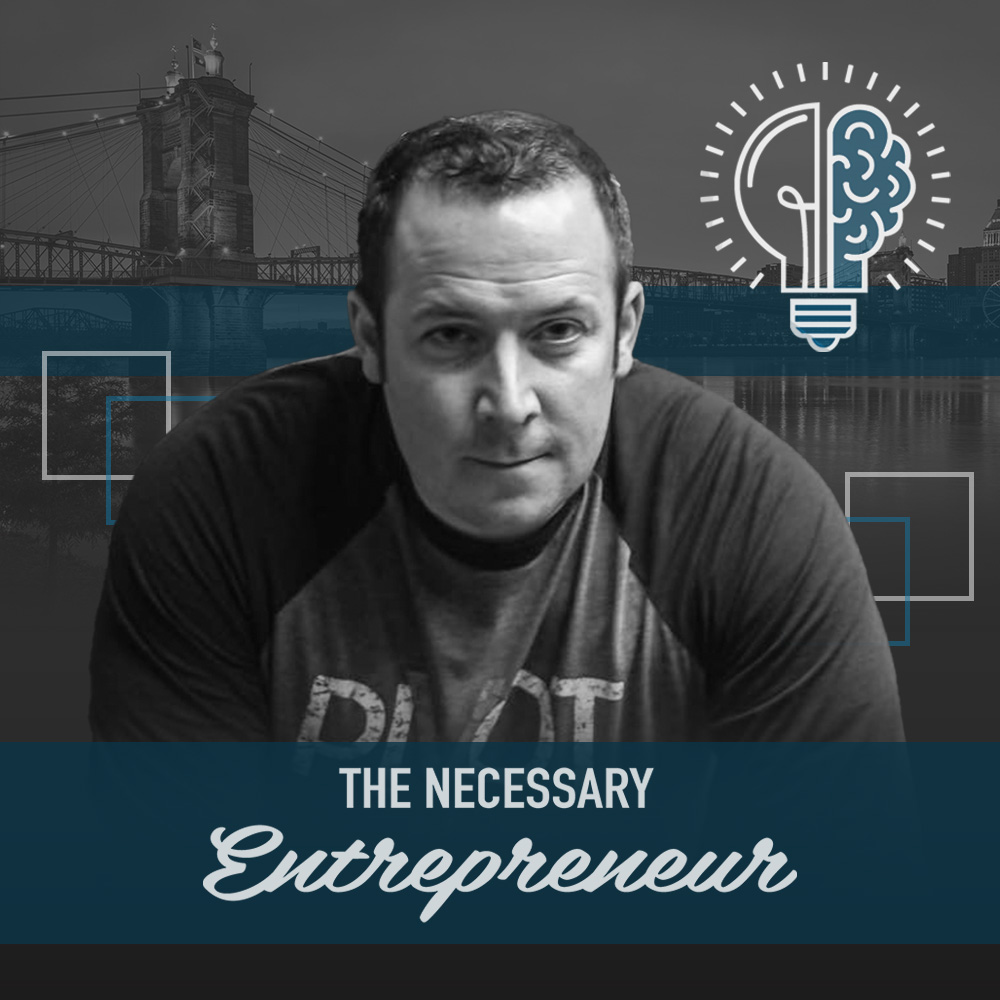
In this episode of The Necessary Entrepreneur, host Mark Perkins sits down with Mario Baddour, CEO and President of Intelogix (formerly GC Services), one of North America’s largest privately held BPO and customer experience providers.
Mario shares how he rebranded and transformed Intelogix into a global leader at the intersection of technology, human connection, and customer experience. From embracing AI, digital twins, and automation to embedding ESG practices into everyday business, Mario proves that growth and responsibility can go hand in hand.
He also opens up about the moments where technology falls short, especially when human empathy and life experiences are irreplaceable. This conversation dives into leadership, scaling across continents, building resilient teams, and why technology should amplify, not replace, the human touch.
If you want to understand the future of customer experience, global outsourcing, and leadership in a rapidly changing business world, this episode is a must-listen.
📌 Find Out More About Mario Baddour & InteLogix:
https://intelogix.com/
https://www.linkedin.com/company/intelogix/
https://www.linkedin.com/in/mariobaddour/
📌 Connect With Us:
Website: https://www.thenecessaryentrepreneur.com/
YouTube: https://www.youtube.com/@thenecessaryentrepreneur
Instagram: https://www.instagram.com/thenecessaryentrepreneur/
Facebook: https://www.facebook.com/TheNecessaryEntrepreneurPod
X (Formerly Twitter): https://twitter.com/MPerkinsTNE
LinkedIn: https://www.linkedin.com/company/tnepod/
TikTok: https://www.tiktok.com/@tneclips
Spotify: https://open.spotify.com/show/6xhGUE1yzy2N0AemUOlJPx?si=d1c5c316af404f15
Apple Podcasts: https://podcasts.apple.com/no/podcast/the-necessary-entrepreneur/id1547181167
0:00 What you cannot transact to a digital solution on is when you go get diagnosed by a terminal illness and you come back to talk to a representative from your healthcare provider to put a new plan now to suit your needs for the next six months. That is a very, very sensitive conversation. This is a conversation where you're shedding tears with the customer, with the patient, uh and you're sharing life experiences together as you put that plan together. And I don't see AI ready or able to do that yet.
0:44 oh All right, so today on The Necessary Entrepreneur, we're joined by a leader who's redefining what it means to run a modern business at the intersection of technology and human connection. Mario Bedor is the CEO and president of Entologic, formerly GC Services, one of North America's largest privately held BPO and customer experience providers. Since taking the helm, Mario has led a major transformation rebranding the company, embracing cutting edge tools like AI and digital twins and expanding globally. all while keeping people and empathy at the heart of operations. He believes technology should amplify, not replace the human touch.
1:30 And he's built a culture around resilience, adaptability, and doing right by both employees and clients. From scaling organizations across continents to embedding ESG and everyday business practices, Mario has proven that growth and responsibility can go hand in hand. We're going to dig into his journey. the future of customer experience and the leadership principles that drive him. Mario, welcome to the necessary entrepreneur, man. Thank you, Mark. It's a pleasure to be here. I look forward to our uh dialogue. ah So give us the breakdown on this business BPO. You know, it's business process outsourcing, but from the layman's term and layman's perspective to really break down what this industry means and what you guys are doing with it.
2:13 Yeah, look, this industry has uh evolved a lot. uh think I was reading the other day an article, and many of us in the industry didn't know that Coca-Cola started that in 1950. They needed a bit of some labor arbitrage and augmentation, the resources, uh simple fingers and toes. And then back. kind of fast forward to the 80s, uh outsourcing in the US at least became a thing. It became part of the supply chain, uh not only uh augmenting resources, but also uh outsourcing processes.
2:59 The company felt the need to, hey, I can bring someone to uh not only help me with labor, augmenting labor, but I can also... uh trust the organization to give them a whole process to go manage it for me. So staffing and recruiting, but also potentially training on a process and delivering that process. uh Fast forward to the nineties and uh I would go even to the last 10, 20 years, uh the industry became much, much more evolved and it now Outsourcing is really an extension of the brand that you partner with.
3:44 And by that, mean, you truly, there is a value from outsourcing beyond simple labor arbitrage. The value is a consultative value. um It's a em learning things before we used to go bring bunch of consultants to kind of take a look at your process, see how they can approve it, how they can deliver continuous improvement. Well, now your outsourcer is expected to always be closing the loop on defects and improving the process, providing feedback to the brand on how to improve the product and how to elevate the product. uh So labor arbitrage, the way it started, is table stakes at this point.
4:29 Delivering on certain service levels are basic. uh The organization now is expected as an outsourcer to partner with the brand and truly be a trusted advisor, a partner with the brand and say, look, we listen to your customers firsthand. We're learning what the need is. We're learning what the challenge is. And we put a framework together to improve that entire product for you. And by the way, we're going to do it cheaper, better, faster by lowering your total cost of ownership. And by the way, we're going to do that through all the digital solutions out there. So it became a much more complicated world.
5:11 And, by the way, we're going to do all this with trust, partnership, and a lot of empathy, because we're to treat your customer like it's ours. So it started with, hey, let's get a couple bodies to help us out 75 years ago, right? To now. It's actually part of that supply chain, part of your supply chain as a, as a company. What's the challenges? if this happened with Coca-Cola in 1950 and it's evolved through all these different decades with businesses, what's the biggest challenge for companies? Cause you would think the old way was hire somebody with the level of expertise in all these areas.
5:55 What's the challenge that caused or really created an opportunity for this business model to evolve in this BPO space? Cause it seems to me that a company again would, they'd want to have access to the person, a normal whatever that normal employee is working just for them. What caused this to happen? Was it access to talent? Is it risk? What is it? A couple of things. I love that you mentioned risk. um The legal framework in this country is fascinating. It's always been built. You know, can think of it. There's two systems in the world, legal systems. There's the English system and the American system.
6:35 And the American legal system is very unique in a way. It was built and designed and constructed. um in order to, in the industrial age, to promote capitalism and to promote business growth, et cetera. And by that, I'm no attorney in any way, or form, but it's fascinating to understand how our legal system has been built because once you understand that, you realize that unlike other systems in the world, it's ever evolving. It always evolves. And the legal system has allowed in many ways this industry to flourish because now A brand would say, look, I can outsource the liability, back to your comment around risk.
7:17 Look, I can focus on building the product. can focus on design. can build a robust R and D, while let someone else handle the, um, the dynamics and, and labor that I don't have to worry about. We're the most litigious country in the world. So when you start dealing with labor, as you know, you, you have a lot of intricacies that you have to kind of. plan for and design for uh from a compliance standpoint. And it's very, very valuable for a brand to focus on what they do best, build the product and let someone else manage the labor for you. So that's kind of how it started in the beginning.
7:59 uh I love that you use the word risk because truly risk and need of labor uh pushed this industry significantly to to uh become what it is today. uh Of course, there was cost reduction pressures at some point. em You built a product, you were unique delivering that product, but then competition happened and now other companies are competing with you, the incumbents have similar products, therefore now you need to start reducing your costs, companies realized they could lower. labor costs and operational costs by contracting uh work to uh an outsourcer that has a lesser uh expenses internally and they can deliver a process in a leaner way.
8:53 And probably at some point in this dialogue, we'll get to how it even evolved beyond the US uh in offshoring markets such as global markets, such as the Philippines, India, Eastern Europe, Latin America. So now you're like, Hey, we can even do it even cheaper in other countries. em There was repercussions to that where you had to send a lot of expats to build these markets and build two things, a, the affinity to the U S culture. So when you're calling, you're talking to someone who uh understands em the U S culture, understands the way we talk, the way what's interesting to us, et cetera.
9:37 Um, but also it evolved so much offshore to the point where now you do it because you gain experience by, um, outsourcing to certain, um, hyper scalers, countries, I would say. Um, but that's, um, but that's a topic I think we should probably touch on later on. Or benefits, pros and cons, you know, um, maybe you want to talk a little bit about some, um, the politics that. uh different governments bring to the table when it comes to offshoring and keeping the work onshore as well. Yeah. I think what we can do is we can go ahead and do that.
10:18 Maybe we can get back to later is I was thinking about what the journey was that attracted you uh here to this industry. Yeah, look, it's fine. mean, I, I, uh, I went to school for architectural engineering, so this was not the plan. Uh, right. as an architect, I realized very quickly, I don't think I'm going to get a job if I don't learn AutoCAD at some point, because we were doing drafting everything manually. So, um, as an intern at Hewlett Packard, I had an opportunity to go in and, uh, learn AutoCAD and, and practice, uh, my, my AutoCAD skillset and, uh I happen to speak languages as well.
11:02 As you know, Canada is, I was in Canada at the time. is a bilingual country in French and English. were building our first, HP was building our first call center and they needed the legislation in Canada is to deliver services in both official languages. So they needed someone who spoke French as well. Lo-be-hold, I was called on. I was a young engineer at the time and I found myself with a headset on in the call center, uh designing curriculums, learning curriculums. was back in the days, it was much, much different. uh You would talk to the customer uh and uh we were working on product line 30 and product line 30, a Hewlett Packard used to be those large pre-press machines, uh the large plotters.
11:55 So you'll be talking with a press house, um configuring the plotter, trying to diagnose um issues with it. And at some point you would say, look, give me your address. I'll drive down and we'll finish by tuning it on site. So that was the dynamics was much different at the time, but fast forward, the business grew. um We uh had a need to outsource. similar to kind of what we talked about earlier. We had a need to augment our labor. It was simply labor arbitrage at the time. I'm talking 25 years ago. And then, uh you know, it evolved to uh myself managing and being engaged with our vendors, uh building relationships with our vendors.
12:43 And soon enough, I jumped on the other side of the fence and I don't regret uh anything of it. uh The other side of the fence is operations, right? It's outsourcing. on the client side, you're an uh inch wide and a mile deep. You're highly specialized. And on the outsourcing side, you start with being a mile uh wide and an inch deep. But as you progress in your career, you realize that The opportunities are great.
13:25 The exposure is fantastic. You get exposed to various industries, fintech, hospitality, travel, automotives, healthcare, e-commerce, et cetera, et cetera, then telecom, et cetera. And then you eventually become, there is an opportunity if you take it seriously and you actually are curious enough. and engage appropriately with your clients, you can become a mile wide and a mile deep. And that's something very, very unique in this industry and it's hard to let go of. So why come be the CEO of the company that you're running and operating now?
14:06 Why come do this? What led you here through this journey? Look, this was, this was fascinating. I've always been involved in public companies, much larger organizations. uh My last uh engagement was with a, a global firm. were about in 13 countries, 50,000 employees plus. uh We've had lots of fun. spent there almost 10 years. Learned a lot, became the global COO, uh led various regions and there was an opportunity here to come in and take all these lessons learned throughout my career and, um, deploy them to do something unique, um, to, do something, something unique on an asset that was frankly, uh, in distress at the time.
14:59 And I thought, what a great opportunity. If you can come in, do it right. Um, do it thoughtfully. and strategically and make money also for the investors at the same time. And, and, and, and that's kind of what we set sail on. came in here, uh, when I say we, because when you're a CEO, I think your value is no longer whether you can operate or not. Your value is can you assemble a team that will come join you on the journey and, um, do what you do best. And as easy as this sounds, As a CEO, think your biggest challenge is being able to assemble a team for the various phases of the organization and various stages of the organization.
15:45 uh There are teams that are very good in demolishing things and cleaning things. So, so you can pave the way to, for rebuild. There are teams that are great at building and they are teams that are amazing at stretching and growing uh what you've built. And. Sometimes you're lucky if you have the same team members that can do all these stages and sometimes you have to pivot. It's almost like um Think of it as a I use a football analogy you have to trade your your players depends on what your strategy is for the season So you said the lessons that you learned brought you here, sometimes the hard lessons of being a CEO.
16:32 And then also you mentioned about really the difficulty, what makes you really valuable is being able to assemble a team, a great team to execute the business plan for ROI, to give a great experience to the current employees, to help them. I'm assuming it matters to you and reading some of your bio, it matters to you to help build people to this next place as well, to give them the opportunity, the same one that Mario had 20 or 30 years ago. So what are some of the critical things that you've learned about assembling this team? Yeah, Marga, that's a great question. I've had amazing mentors and I've had not so great mentors that I still consider great mentors because you learn equally from both.
17:15 ah learn things that you shouldn't be doing, ah but you also learn things that you should be doing, doing more of. I, and I'm, um, I always looked at any, I still till today, go to work thinking, how can I surround myself with better people than I? And how can I learn from the team around me? um And this is not just because, I'm trying to be humble here. No, it's because this is what motivates me. I've always been the reason why I'm in this, in this industry, because nothing irritates me more throughout my life since I was a kid.
17:58 Um, it's other than being faced with something that doesn't work. It just gets irritated. I want things to work. Um, and, and sometimes, you know, I realize some people are okay with facing something that doesn't work. They just move on to the next thing. I get irritated by it. And I think harnessing all that and bringing it into the office every day to make sure that we build things that work, um, has been very rewarding to me. And I've been with leaders and mentors where they're okay with working with things that are not working very well, as long as they can make some profit out of it.
18:40 And I've been with others that are extremely irritated with things that don't work. I have seen that if you take the time to fix something that isn't working, not only could be profitable, it could be very profitable and sticky to the marketplace as well. um I have had in my journey the... the luxury I would say and the fortune to work with a lot of private equities in the past 10 years or so. And this BPO space has been uh lately accumulation of many companies put together by private equities, merged, acquired, et cetera.
19:26 And you've seen some that have treated the assets very well. They invested in it. thinking of the long-term growth, of skating where the puck is going. Or I have seen the other side where uh their only interest was to extract capital m and dividends from the asset without reinvesting in it. And I have seen the end result of that as well. So what I try to do here at Interlogix is come in, build a team. uh that believe in the mission, build a team that are loyal to the missions more than the individuals, because I think that's very important.
20:10 And when you're dealing with companies of our size, it's very easy to become loyal to certain individuals and then you lose sight of the mission. I always give my team a uh horrible visual, but it's on purpose for them to remember that a pilot's mission is to land the plane safely. uh even if the copilot is misbehaving, uh they're within their rights to do whatever they want to uh contain that copilot, right? Tie them to their seat, lock them in the restroom, do whatever they want to do with them, as long as the plane lands safely and the passengers are safe. And that's what I mean by loyalty to the mission, not to the individuals.
20:52 If you keep that in mind, uh it gives you a true north. as to how to operate and how to lead an organization of this size. And we brought a team that thinks exactly the same way. And we're having lots of fun working together and turning things around. Are you also referring to everyone taking ownership of their things? Yes. Yes. um You have to, you have to take ownership. You have to show up, first of all, and you have to be present and you have to be engaged. And, and then, and then you, you have to take ownership and do what's right and ensure at the end of the day to, once you deliver the results, you win as a team.
21:39 Don't take credit for it by yourself. And by the way, what I just, um went through is our values at Entilogix. Awesome. Of course, right? They're, being branded in your brain there. You talked to internationally to circle back here about, um, offshoring and about labor in these other countries and stuff. Where's your, where's your brain out there? I mean, I'm sure you could riff on this for 45 minutes and just go with. Right. That's a fascinating topic for me. um Because um the international business has evolved significantly, especially in BPO. Many companies have crossed that.
22:22 threshold to become transnational. Some are still stuck, maybe not stuck, maybe intentional. They just want to remain international. And maybe I should take a moment and explain in my mind how I define both. International was how this industry started. We are the largest GDP in the world. We have a need, an immense need for customer service in this country. And we had this need to uh augment our resources while remaining competitive in the international markets. So if you listen to everything I said, it actually is US brands outsourcing services to international countries, and these international countries are servicing these US brands.
23:11 So really, we haven't gone outside of the US. We just changed the delivery location to outside of the US. Transnational is much different. Transnational is when you do that, you go through that phase of international, you build an amazing talent in these offshore markets and you now say, hey, I am delivering services, I don't know, in Egypt or in uh El Salvador or in India or in the Philippines or in Poland. Why not delivering the same services for Polish brands and European brands and Southeast Asian brands? and the Middle Eastern brands, et cetera.
23:52 So now not only you're international, but also you're transnational. Now you're doing business across uh local domestic business through your U.S. brand in these local markets. That's very powerful, Mark, because it diversify your balance sheets. You're no longer relying on one currency. You have multiple currencies within your balance sheets. You have talent uh and mobility across your talent in the organization. It is amazing what you do when you put different brains, different minds, different cultures in one room and say, here's a problem statement, solve it for me. The dynamics are by far different than having someone that eat the same food, walks the same streets and live in the same community to come and try to solve a problem together.
24:39 So what about the complexity of compliance if it's not understood? Um, I think you can teach compliance. Um, and, and we used to say that I'll actually leapfrog that whole statement. It is, um, a teach compliance because you can automate compliance now. So, so really, I mean, I have, we have a platform Mark that basically I was in Cairo two weeks ago and I'm standing behind a workstation. on one of our U S clients programs. And I saw how they're interacting with our automated platforms where you get a widget on the screen telling you, Mark, who's on the phone, helping the customer.
25:25 Hey, what you just said is not necessarily true. I just checked in the knowledge base and that's the right answer. And you see the agent or the rep pivoting just in time while on the call and, changing, um, kind of the outcome. of that conversation. And that leads to an increase of first call resolution, a critical metric, FCR, that we measure. Why it's critical, because if you increase your first call resolution, you essentially reduce your repeat calls to the call center. It goes back to reducing total cost of ownership that I talked about. Instilling massive deficiency into the process. Correct. So, so before we used to say it, we can say, look, you can put the right controls in place, whether through a DMAIC Six Sigma approach or whether through a framework and you can teach it and you can train it.
26:16 I don't need to worry about any of that right now. It's on the station. I have an AI listening to every word being said, transcribing it, pegging it against the knowledge base. The telemetry is crunched so fast that the result comes back on the screen just in time telling the individual, hey, pivot a little bit that wasn't necessarily accurate. This is what you need to read to the customer. Read it the way it is and that's the right answer. So good. obviously AI has been a hot topic now for two or three years, but if people dig into business, it's being utilized, been utilized in different ways for decades. Just not to the hip term, but is the current evolution, is it allowing you to take your company now and really do something unique and different with it?
27:00 Are you able now with the evolution to really build a different company? It's a great question and I love how you asked it. 99 % of time I get asked that question differently. Are you worried it's going to take your jobs away? So I love how you asked it. Thank you. But I still want to address the other 99%. Okay. So, so look, first of all, it's very exciting for me to see what's happening in the marketplace. I mean, it's about time that we actually go and automate and do things and stop working like we were in the 1950s anymore. Okay. Um, and, and so that, that idea in itself, it's very fascinating. It's very exciting. And I think we should go embrace it and do more of it, not be afraid of it.
27:45 I've heard, uh, industry peers saying, ah, AI isn't, isn't taking our jobs. AI is a conversation over, over, over, um, uh, Friday evening barbecue. It's not a, it's not, it's not a real thing. Well, that's what many people said about .com as well back in 1999. Okay. So, so this is, I don't believe in that. I think AI is real. I think AI is going to reduce the traffic, i.e. potentially people think of it as revenue because we transact traffic, we handle traffic. So if the traffic of calls coming into the center are lowered, therefore your revenue is lower. But there's a whole catch to all this.
28:26 Number one, to address your first statement, yes, AI has evolved. We used to call it RPAs, RPOs, we used to call it uh generative AI, and now all of a sudden the market is talking about agentic. What does all that mean? We really evolved from predicting. So we had a digital automation solution that was able to predict based on algorithms. run some regression analysis and you can predict what the outcomes are.
29:08 So we went from predicting to creating. And AI now is able to create. And once you have creation, now you could have decision-making and strategizing. And that is the kind of dangerous part, right? Because it's fun and it's dangerous. So, but let's first establish. In a very simple terms with what the journey has been, it was predicting to creating and now strategizing. Why this is dangerous because now the source becomes very, very critical. And this is where you're hearing more and more in the industry mark, ethical AI.
29:51 What is AI? AI at end of the day is it just feeds from a repository of an LLM large language model and that large language model. has structured uh data in it and it basically pulls from there to uh predict, create and analyze. But if that large language, if that well is contaminated. Yeah, who's writing the language, right? Who's writing the language that it's going to talk and learn from? And it's more than writing the language. Writing the language is only for that engine to function. Or that well to function.
30:32 But what water are you putting in the well? think that's the question. So the language can be written and it can pull the information based on a question you ask, gives you the answer. But what language content is in that language model? I think that's what's very critical. And look, we're seeing it every day. get vendors offering me the same solution at $2 a license and others at $50 a license. And then you start digging deep and you're like, yeah, someone is writing it in some part of the world and there's no compliance. There's no regulatory framework and they can put whatever they want in it. And sure, you can sell it for $2. But for the non savvy operator and but a non AI savvy operator would say, they would look at this and say, Gosh, I can buy it for $2.
31:19 Why would I go pay $50 somewhere else? Let's just go do it. And then you're seeing a lot of that feeding social media, the web, the, um, you ha you can't trust anything you ask right now before checking the source, as you know. Um, so, so, so this is very critical. I think it, at some, I will summit, summarize it down to this. The content is critical. You put a crappy contract, get content, you get a crappy outcome. I mean, that's just that simple. So you need to understand. So you can have the best. a more sophisticated, well-designed language model coded in the most sophisticated way. Content is king at the end of the day. So whatever you put in there has to come out after.
32:01 So basically, let me try to reframe more of the language. It's what's the philosophy of the thing, right? How does it think? What's the, what are the, what's, not to use this word too, but it's like, what are the morals of the system? Yes, 100%. I love that. What are the morals of the system? And then imagine if you put that on a whiteboard as a statement, and then you're going through a procurement exercise. Imagine how powerful that statement is. Because now you're thinking, I don't care how much these partners cost. Do we have those same values? And should we even bring them and consider them? Should they come into this room and pitch for us?
32:42 And how do they do business? Where are they getting their content from? ah What's the fidelity of all that content looks like, et cetera? So yes, that statement is very powerful. And it could be the true north and the guiding star for your procurement exercise. Do you think that our human brains can design and control the system to think properly? Is that a part of the debate? Um, you know, I, I think yes, but like anything in life, it's kind of like asking, do you think every human that will be born from here on will be a ethical human?
33:28 Right? So you're all, we always have bad actors that are motivated by, um It's usually who they're influenced by though, right? It's usually they, almost everyone could. It's usually the environment that they're influenced by. Yes, thank you. And that's where it becomes critical to understand who you're doing business with. Yeah. So is there any more to talk about about the uh international labor and intercontinental? Is there any more to discuss there? Yeah, I think we should. think it's uh fascinating this industry right now. uh Many will go to the pitch table and pitch a deal to a client or to a company that's in need of outsourcing or expanding their labor.
34:17 And they will pitch it based on cost. And they will bring these countries based on uh the labor rate in these countries. Okay, that's important. Let's not deny that. But there's more to it too. There are languages that you get out of these countries. Let's take Egypt, for example. We just went into Egypt very intentionally. People may say, why Egypt? I could have gone into Morocco. I could have gone into Tunisia, Algeria. I can get French and English out of these countries as well. Well, Egypt, I get Italian, I get German, I get English, Turkish, Arabic. So think of... that particular uh employee in Egypt uh for that cost, what are you getting back?
35:04 And all of a sudden now I'm servicing most of Europe, right? You start thinking of uh locations. mean, the top five locations in the world right now for BPO, the most popular that are intentional and strategic are uh India and the Philippines for scale, okay? So we don't have to explain those. think they're very known. You have the population that can scale. put a job request and you have a lobby filled with 900, 1000 people overnight, right? It takes you six months to get that kind of pipeline here in the U.S.
35:44 Poland is also rising. Poland, I don't know if it's worth noting that... their currency, there are a European country, but their currency is still the Zolci. It's not, it's not Europe. So you got a little advantage there. Uh, South Africa is a location that's also rising. and, and Egypt. So these are the countries in general between South Africa, Poland, India, the Philippines, Egypt, top kind of five where, um, people are looking to outsource. Now you have to be careful. I mean, Policy can impact this business significantly.
36:25 There was a bill that was just introduced two weeks ago. It's gaining bipartisan support in the house and it's titled, don't quote me exactly on the title, but something along the lines, Keep Call Centers in America 2025. So what does that mean? And this is where I feel having a transnational strategy. It's critical for companies like ours versus an international strategy. Because now you're you reduce the risk and you can continue to operate. can bring labor back on shore, doesn't mean you're closing your entities and doesn't mean you stop operating in international markets because you're really servicing international markets and in these markets and not just the U S.
37:11 Hey, thanks for tuning in. If you like these types of conversations, be sure to follow the necessary entrepreneur on your favorite platform so you never miss out on future content. Is this an evolution? almost think retail's done this, whether it be some franchise model or Apple, it seems like the automotive industry's done this, right? So you're trying to, you're bringing this to the BPO industry. Yes. Yes, 100%. I think it's important too as we do this. It's not as easy as it sounds to just go into a market and uh treat it like a cookie cutter approach and try to, uh I will use the controversial uh word of let's Americanize everyone.
37:56 Well, it doesn't work that way. uh People bring a lot of value from the cultures that they are. they are coming from. just need to uh assist them in learning the US brand that they are uh servicing, but also encourage them to bring the knowledge, the talent, the flavor that made them successful. So think what I'm trying to say is what I use always at work is we ought to think global, but act local. And that's very critical. So good. hey, through this rebrand, when you came over to Wedditt, I'm assuming the rebrand was coincided with you coming over as a CEO, moving the old brand, the new one.
38:37 So like rebranding, it's just not how I see it. It's not just cosmetic. It signals a strategic shift in the company. Thank you. That's critical. And rebranding has been so much fun at Intelogix because uh we came in, the company was a financial institution built in 1968. The family that built it did an amazing job. They got this company, I mean, think about it, in the 80s, this company was almost a billion dollar organization. It was a collection agency. You know, collecting our student loans, collecting on behalf of government organizations, Department of Transportation, etc.
39:17 It's not a, you don't think you want to grow up and go be a collector and build a a sexy business as I throw the word out there, yeah. Yeah, exactly. It is not. But it's needed. You're running a business at the end of the day. Again, not everybody. are some bad actors out there and you need your money back at some point. People can use your services and leave. So we still have that arm. um That industry changed significantly. um Collections is very tied to demographics, believe it or not. In the past, um Our parents open an envelope in the mail.
39:58 Good luck right now. You open your mailbox and if you don't know where it's from, you just throw in everything in the recycle bin before you even get home, right? So you don't collect through snail mail like before. There are digital solutions now. um If you're collecting from a millennial or Gen Z, you're really sending them a text message. So the industry has changed a lot. There was a need to digitalize. And by the way, by the time you reach someone now, It's not like before, please sign a check and put it in an envelope. It's can I Venmo you the money? Can I Zelle? Can I PayPal you the money? And can I Apple pay the money? And you need to be able to meet customers at the channels of their choice and, and, and, uh, move on it very quickly.
40:38 So all that required an entire overall for the collection agency as it was known in the past. So, so that was the first step. And then the second step was us recognizing myself, my team. all together recognizing that, look, we came in here to build something unique and something great, and we're going international. This is not going to continue to be a company bound to the U.S. only. We will grow our U.S. footprint, but we want to venture near shore. And with that, we opened El Salvador. We wanted to venture far shore. By that, we opened the Philippines, both in Metro Manila and in one of the islands, Provincial Philippines.
41:21 And then we went on to Egypt. we, and all that in the past two and a half years, by the way. And, and, uh, when the company, as you can tell, changed significantly, now we're delivering customer experience. We're delivering, um, the entire customer life cycle journey. Um, while we kept, we stayed true to our, um, origins, I would say, and the collection agency is here and alive. It's just. modern digital collection agency. We toll roads also in this country, right? um So we have various practices and there was this need uh for Intelogix to be born.
42:01 And Intelogix is Intel logic. Logic is the main PCA main board on a computer. So that's digital, that's systems. Intelligence, Intel is usually attributed to a human. So that's the intersection of human. and digital and the X at the end, it's not because we couldn't find our name on the .com domain, it's because we wanted to have a human and digital intersection across all platforms. And that's what the X was for. As I'm sitting here listening in my brain through this evolution of the company and collections, it's almost as if someone could run a professional company now the same way that they run a drop ship company.
42:44 Yes, almost. It was very different. And the capital required to put on a company of our size, the entry to the market and to the business has changed significantly. 20 years ago, you needed a substantial amount of capital to build something like this. You had to build your data center. You had to get your IT gear, uh all that kind of stuff. Now you can easily pay by the drink by having a cloud solution. and you simply pay for usage. So the entry to this industry, the cost to entry has become much more reasonable.
43:26 What percentage of a professional company do you think could be utilized with your firm on the BPO front? Because a lot of times it's front end and back end and the core things are happening right inside the emptying company. But what percentage of a company do you think could run through you? um I can't think of any company that can't. um When you say run through me, I'm understanding this question as utilize our services. Yeah, yeah, but I'm actually saying not all the expanse of the companies. I'm saying what percentage of the actual complete entity do you think could outsource the services through your company?
44:07 A supply chain is multiple logistics. And if you start thinking of the different logistics, you need someone to manage your cart on your .com website. That's BPO. You need someone to actually uh fulfill that cart. That's BPO. You need someone to actually follow up with the customer to see how that experience is going with that product. That's BPO. That's us. um At times, the customer will reach out to you because they're having difficulties with that product. That's us. um You may need to also upgrade at some point or add more ancillaries. That's us.
44:48 And by the way, things go bad and you can no longer pay for that service. um We call that first party collections where you're still within the brand. We're helping you devise a plan to pay your bills. At times you can no longer pay your bills period. And that's a post-charge account. um And you're no longer a customer for that reason. And that's also us. So Intelogix has this uh entire spectrum from end to end where we follow the customer journey from the minute they start to interact with the brand all the way to after they leave the brand. I'm thinking about this.
45:29 I'm assuming, let's say I jumped on a plane to just going to pull a country out of there to China. Yeah. weeks. We get my visa. go to China and said, I'm going to go find a product to import. And let's say I go find scooters of some sort and I find the manufacturer at a great price point. I know I can two or three or four exit. If I come back and just build the brand, I could almost use Intelogix through the BPO source to operate the complete company. Yeah, 100%. 100%. Intelogix understands the, and that's the value creation that I am highly interested in as we continue to build Intelogix.
46:11 It's how do we not only do the mundane things that everybody else is doing, but how do we continue to challenge ourselves to deliver uniqueness? Because when you come and build that scooter mark, You're like, look, I'm a great designer. I'm a great engineer. built it. You know what? I'll even go to the extent to say I'm a great sales guy. I know how to even sell it and market it. But how do you scale it? And how do you get this free consultancy? Um, from what your competition is doing, what the market is facing. having Intel Logix as a partner or anyone who's kind of delivering similar services, they're talking to you. But by the time they hang up, they also have Intel.
46:52 from 250, 500 other clients that they're talking to also. And all that together will come to the conversation when you talk to your partner and they will tell you, hey, look, we're hearing this is happening. This challenge happened with XYZ companies and that's kind of how they approach it. And I encourage you to approach it the same way. You're not necessarily uh divulging trade secrets or intellectual properties. You're just actually sharing a way of thinking that you probably haven't thought of. Yeah, market trends. mean, and if, and if you're truly building something transnational, it means that you're going to have Intel on the ground about what's happening in those countries that someone operating in just one country is not going to have.
47:34 Exactly. Yeah. big benefit. what's Mario's leadership style? What is it? I know it's a crazy question, if you were sitting, imagine we're having a coffee or an espresso. It's like, man, come on, man. You seem cool. You have all this experience. You got a little bit of gray in there. um What's the leadership style? What is it? Um, that's a great question. Look, I, um, I'm very controversial even within the company. Um, and I, I get very irritated by things that don't work. Um, I think I, I get also very, um, impatient with sloppiness.
48:16 Um, so leadership is character at the end of the day. never, I try to never forget that. People try to define leadership in various ways. um You know, when you're in business school and you're going through this, it's always a topic, what's leadership? And people can name horrible names in the world that were great leaders, or leaders, maybe not great leaders, but they were leaders, solid leaders. um We don't have to name them here, but it's always been defined as these two axes of... um quality and or quantity I should say and and The academic word I don't like it's called followership, but I would call it Partners or wherever you want to call it, right?
49:08 But let's just call it followership here for the sake of simplicity and and it's these two axes and you want a lot of followerships But you want quality Followership so quality on one axe. I said quantity earlier. It's quality And then the quantity of followership on these, on this axis. Ideally, you want the point to be somewhere up there. You want high quality and you want a lot of quantity of followerships and start playing with that dot. If you have a lot of followerships, but little quality, then that's not good. That's that's a leader, but that's a bad leader in a way.
49:48 And if you have a uh high quality. uh engaged network uh or followership, but uh little of it, then you can't make an impact in the world, right? We all have as leaders a societal impact and responsibility of some sort. So I keep all that stuff in mind. And that's where it gets very complicated because now you come to the office. I didn't share with you what I get irritated by just because I, you know, uh I wanted to, I shared it because I want to tie it to this right now. You have to, all humans and we have things that irritate us in the office. And then how do you actually keep that in mind as you address these deficiencies or have you address these opportunities and challenges?
50:35 And I think it comes down to look, treat people the way I want to be treated. Um, and I'm, when I say I'm controversial is I want to build a good culture. I'd like to democratize ideas. I'd like to train the entire organization. I don't want to hoard knowledge at the top. I'd like to uh crowdsource ideas. want the people within the organization to help me with ideas. uh At the same time, I would expect individuals not to abuse it. And I expect them to take uh that responsibility and be accountable for it. With responsibilities comes accountability. You can't just say, oh, I came up with the idea, but I'm not going to act on it, et cetera.
51:17 So it's very hard for me because A, you want to be a good character. I realized that not everybody's going to like me. You can't please everyone, but at least if you treat everyone like you want to be treated. I know it sounds cliche, but if you try to keep that in mind, show empathy, and most importantly, and I've learned that in a recent year's mark, is be vulnerable. Leaders tend to not be comfortable. being vulnerable in front of their teams. And it means at times you realize you don't have the answer, or at times you feel you're scared a little bit. There's, there's a big problem in the company and you it's making you very uncomfortable.
52:02 Uh, it doesn't mean wake up every morning and go outsource your, your pain points to the company, right? But it means that times at least was your leadership team. You got to be comfortable in saying, I don't feel good about this and I need your help. It's bothering me and I don't know how to solve this. I've thought about it in various ways. Isn't that the importance of building the right team? Because if you have the right team and you utilize that approach, they're going to empower you, take ownership, not try to undercut you, not try to undermine, and they'll actually take the thing and move it forward versus not having the right team. That is some exposure that could not be the best thing, right?
52:44 I never want to go to bed thinking that my direct team members can't be trusted. That's a very uncomfortable feeling. have, I tell everybody, we're 5,000 employees, but really we're 15,000 members because every employee has on an average two to three dependents at home. So when we make decisions in a boardroom, you have to keep in mind that we're making decisions impacting 15,000 members of the company, not five. Yeah. Okay. And that is very critical. And we got to a point where we had a, a, um, this chair in our boardroom, a different color, red chair to basically represent the employees to basically say, what would the person in that chair say to this decision that we just made?
53:31 Um, you know, it's at least we probably don't have it now in all conference rooms, but at least we have it in our mind. And I think that's something that, that that's very important. So good in the challenge for this. was sitting here thinking we touched on accountability, empathy. Isn't it trying to take a pot and mix it all together? Accountability because you need us all to take ownership on the thing we're responsible for, regardless of the things happening in our life. Cause we still have to have performance and outcome because there are shareholders. We're receiving salaries. We're responsible to other people at the same time to be empathetic about the things that are happening in our lives. And that's a challenge to mix all that together. I think for us to ignore that it's a challenge is just not truthful. It's not true. and, and you have to always, uh, empathy is easier said than applied or done.
54:18 And it's, it's very important to always. And by the time you start crossing continents and you start crossing cultures, uh, things can easily be lost in translations. And it's important to always, um, take a pause and think a little bit. I've often find myself asking someone who's extremely irritated, irritated by something by saying, Can you help me understand why you're feeling that way? Because I'm failing to kind of meet you to where you are right now. And I'd like to be that best listener possible, but I can't understand what you're saying. So could you help me understand how did you get here? And I think that's part of being vulnerable too.
54:59 It's like, look, let's just talk about it. mean, you're super irritated. That's an evolution of Mario, isn't it? yeah. It's, uh, it's, uh, yeah, you've been talking to people. Yeah, absolutely. um What type of communicator have you evolved into from where you started, let's say 20 years ago? Um, think, um, given people the benefit of the doubt, and, um, trying to understand why they're doing what they're doing. Um, and, and I always question, but also don't waste too much time trying to, uh, again, democracy is great, but if you apply way too much, sometimes in the company, you don't make decisions.
55:46 jokingly said there's too many flat squirrels on the road because they can't make a decision. So at some point you gotta make that decision. uh right now, the principal's book, you know, he talks about idea meritocracy. I've really been fascinated by this idea about sitting in a room and you walk into the room and, everyone has opinions, but then there's also the best idea. How do you put a group of 10 people together that are all strong minded, strong willed, very capable? How do you come out with idea meritocracy with the best idea? How's that managed? Look, we always go in, there's a great, great philosophy. It's actually a Franklin Covey research called 4DX, the Four Disciplines of Execution.
56:29 And I love that book, I love that framework. I've applied it in the last 10 years of my operations. And it is basically... How do you get out of the day-to-day whirlwind in a company? Because there's so many things, so many ideas, so many things to prioritize. it's coming, the ability to come up with a wig, which is the wildly important goal. Okay? And then decide, this is X today. We need to get to Y by when. So everything we do, whether we're ideating, whether we are uh solving for a problem, we kind of... break it down to very practical point, which is this is all great, but how is it impacting us today?
57:18 How do we move? Like the next step we're going to make, what part of this idea do we need to make that next step? Let's just stop right here. Let's not solve any further than that. And then let's, and that's, let's call it X. And then we have to sit and solve for the next three hours. How do we get to Y by when? which is that next step. And typically, Mark, when you go through that first two, three steps, then the idea will evolve and then you'll start solving for the bigger pictures. I think you gotta break it to pieces and that's what I'm trying to say. I've never been successful in solving for a big problem like this. You have to break it into pieces and then make it as big as you want after.
57:59 So good. so quit taking so much of your time. She can get back to, traveling all over the world and building this business. What, um, I don't know what time horizons you work on. If it's a, I don't know if it's six months or a year or three years or five years or seven years, but whenever your time ends, leading this company. What do you want? How does it successful? How do you want to end it? And what do you want to look back on and say, Hey, that was successful. What does that look like to you? It has to be on your mind. Yeah. Yes, 100%. We have not addressed that elephant in the room, because you were kind to me, but I'll address it myself.
58:40 Is your job going away with AI, uh with agentic? Because you just told me, Mario, that, hey, we went from prediction to now idea creation to strategy. If AI is able to create ideas and strategize, that agent can sit and have a live conversation with Mark Perkins without even... What I'm not, they could have conversations together and I'm not needed either. Yeah, exactly. Or is that that too, right? So send your PA, your personal assistant AI to go talk with an AI of your wireless company and solve your wireless bill. I mean, just, just think of how mind blowing that is.
59:23 Right. And, and so if, if you're listening to all this, we've established that these AI companies are truly headed in the same direction as Intelogix as BPOs. So we're servicing the same market. We're going after the same client base, not customers, clients, right? And if that's the case, what I want from Intelogix is to find, then the challenge with these AI companies is that they're not maturing fast enough because they don't have access to the large, vast LLM or content that we have, because we have all these knowledge bases that we touch on various industries across the globe.
1:00:08 So imagine if you put these two together. there's a lot that are trying, but then, know, BPO's trade at a lower multiple than AI companies that are trading at an insane 20, 25x multiple right now. So an AI company would say, why would I come be part of Intelogix? And I go from a 25x multiple to a 10x multiple, 8x multiple, whatever, right? No, that's insane. And then BPO's are saying, well, We're way too big. You can't manage us. I can't go and give my company to you because you're a hundred FTE organization as an AI company. We're thousands of people. You don't have the experience, the breadth, and we can't just give you our client portfolio like this. I just saw this morning.
1:00:49 I want to interrupt too much. saw this morning that, um, open AI is in talks or when you hear it's in talks, it's probably happened to sell $6 billion worth of stock to a private entity. And what do they have 50 employees? Yeah. It's, it's, you can't fathom that. Right. good data point. And, um, I think we, uh, I would like to set up into logic in a way where it's open to, uh, have the right AI partner, uh, and come together and be that first AI enabled BPO.
1:01:32 They're not AI enabled. We keep saying they are unable. just made the same mistake. AI BPO that's lit that services enabled. So instead of saying I'm a labor company enabled by AI, I want to be an AI company with a labor branch. That's still the, um, that's capable of delivering human labor still, um, because it's not going to go away. It will be augmented traffic will be reduced, but human. will be focused, humans will be focused on delivering value service versus volume service, the mundane stuff that, hey, what's my bill or can I get a refund?
1:02:13 All that kind of stuff, you know, can transact uh through a digital solution on. But what you cannot transact to a digital solution on is when you go get diagnosed by a terminal illness and you come back to talk to a representative from your healthcare provider to put a new plan now. to suit your needs for the next six months. That is a very, very sensitive conversation. This is a conversation where you're shedding tears with the customer, with the patient, uh and you're sharing life experiences together as you put that plan together. And I don't see AI ready or able to do that yet. Yeah. Um, it seems to me, we have a structure. If there's a good outcome to AI, I don't think we're going to know that in our physical lives.
1:02:57 Me and you, I don't believe so. We'll know the final outcome, but if it is the strong likelihood is it massively improvement improves the human experience. Massive. Yeah. I mean you look at the amount of data that and the amount of telemetry that could be crunched at a super fast speed right now just in time and the amount of uh predictions creation and decision making right and with a very small margin of error that could be made today It is beyond what a human has been capable of.
1:03:40 I read an article that it took us during COVID almost seven to 11 months to come up with the RMA vaccine. Today, NAIAI can get this done in a fraction of that. Yep. Yep. So we're just trying to figure out how we're going to put them together. And maybe the companies that figure that out at the maximum efficiency, that's who's going to dominate every market in their space. yeah. And think about um science, research, um curing disease, ah all of that. Physics, what other um formulas we haven't uncovered yet on the quantum?
1:04:27 We can go deep because just also, you know, in the past six months, now the questions of what did Big Bang really look like? Because what we're learning now is it goes beyond that. And now everything we thought we knew is now questioned. Right? Yeah. 100%. I'll give you an example just to bring it back to our world. Yeah. And then tell us, bring it back to the world and then tell us, you know, all the companies and entrepreneurs and leaders out here. think you helped whether somebody is going to be a customer of Intelogix or not, you've helped increase the brain activity and the knowledge of what's happening, but then also the place they go to interact with you or your company as you, as you bring it back.
1:05:07 Yeah. Yeah. Thank you. think of it, uh, think of a company of 5,000 or 10,000 employees. Um, you really, and you're a brand, you release a product and then in the past we used to have what we call quality analysts. kind of hook up white Jack with that headset, listen to a call, and then you start scoring. Hey, there's no way you can score and listen. to a hundred percent of all calls, millions of calls during the year. There's no way can do that. It's impossible. The cost is super prohibitive if you do that. So yeah, humans do with that. So you used to do that with the goal where us for in the industry used to be listened to three calls um per agent per month.
1:05:57 Okay. Or five calls per agent per month. We'll think of the, and then we used to sit and debate and the segment oh Yeah, we'll sit and debate statistical validity. Like this is less than 10 % of the sample size. Is it truly? And then we always kind of aim to get to 10%. And based on that 10%, we would look at the surveys and start building a cure plan to whatever problem we have based on that 10%. And oftentimes, You're not solving the right problem. You're not solving the right problem. And then it's rinse and repeat. Think of the waste AI today, and to logic's platform, for example, measures a hundred percent of the calls gives me telemetry.
1:06:41 That's non-biased, non-biased fact-based after every single call. just in time, the employee gets a review on how they've done. The supervisor gets a review on how the team is doing after every single call. And then you don't even have to think because AI is already through a uh statistical approach telling you exactly where the problem is and suggesting a potential cure, you just have to go execute it. Numbers don't lie, do they? Through my whole career, numbers and the data do not lie. Exactly. So this is how we evolve. Imagine now if you're building a modem, if we're building a car, or if you're building an insurance policy and you have that telemetry and you have these insights and these analytics, and now you can improve that product significantly in a fraction of the time that you used to take to do it before.
1:07:34 just think of the repercussions of all this. um I see it as positive opportunity. That's why I see it. Fantastic opportunity. Yeah, absolutely. Yeah. Well, tell us how to engage with you and find you and companies to give you all their money and to work with you as clients. I think, yeah, yeah, I know. I appreciate that. think we, it's a logics.com has all the information on our domain. Um, uh, there's a, there's a place where, um, clients can go in and, and, uh, fill a form and we'll get in touch with them right away. We have a great team monitoring all the intakes, uh, all the leads coming in. Um, we also have, um, we're pretty engaged on LinkedIn. Um, so, so I encourage anybody who has any interest to go and look us up on LinkedIn.
1:08:18 Um, you can, uh, email me at mario dot bedore at Intelogix.com anytime. Um, we're lean and mean, and we're very engaged. So, um, and we'll be happy to engage with the, with anyone try to partner with you, uh, solve a problem you may have. The Logix lab is amazing. It's a lab we have where we can actually curate various problems customers have. And at times we engage. pre-engagement, we just do it uh to share the knowledge and if a client likes what they're seeing, then they can engage with us in a more formal way. Awesome. Hey, great conversation.
1:08:59 uh thank you. I wish we have more time. um Next time we have to do it face to face. Yeah, absolutely. Where's the big conferences? Are they still important for you guys? We won't say where you're going, all the CEO security and all that, but is that still real in the evolution of companies? I think cybersecurity is, if I want to spend time, I'd like to go spend it in cybersecurity is moving pretty fast. think we all, not when it's, it's not if it's when we're at war with these threat actors around the world period. um Whether as geopolitics continue to get more tense, I think people are finding and bad actors are finding ways to attack uh us through our private companies or public companies or government entities or wherever that is.
1:09:48 But we see millions, millions of threats on our um dashboard daily, trying to kind of uh get through our firewalls. So it's critical that we maintain a good security posture um because that will uh continue to increase our clients trust in us and continue to grow our business. So for me, that is... uh Where I want to engage. also want to engage with the international market more and try to understand what it means. This bill is real that we're seeing keep call centers in America 2025.
1:10:28 So we need to be ahead of it and we need to pivot. We've learned it through COVID Mark that there was people talking about traditional leadership, modern leadership, but we learned that the third type of leadership, which is a almost uh the ability to navigate in gray areas, right? That's what COVID taught us. And I think we're facing some of that right now is the ability not to panic, continue to be resilient and navigate these gray areas that we're going through from a policy standpoint and how do we keep our business thriving? challenges of the next three to five years. Exactly. All right. You take care. Okay. Okay.
1:11:08 Bye bye.